Ask your question in Luxembourgish, French, German or English





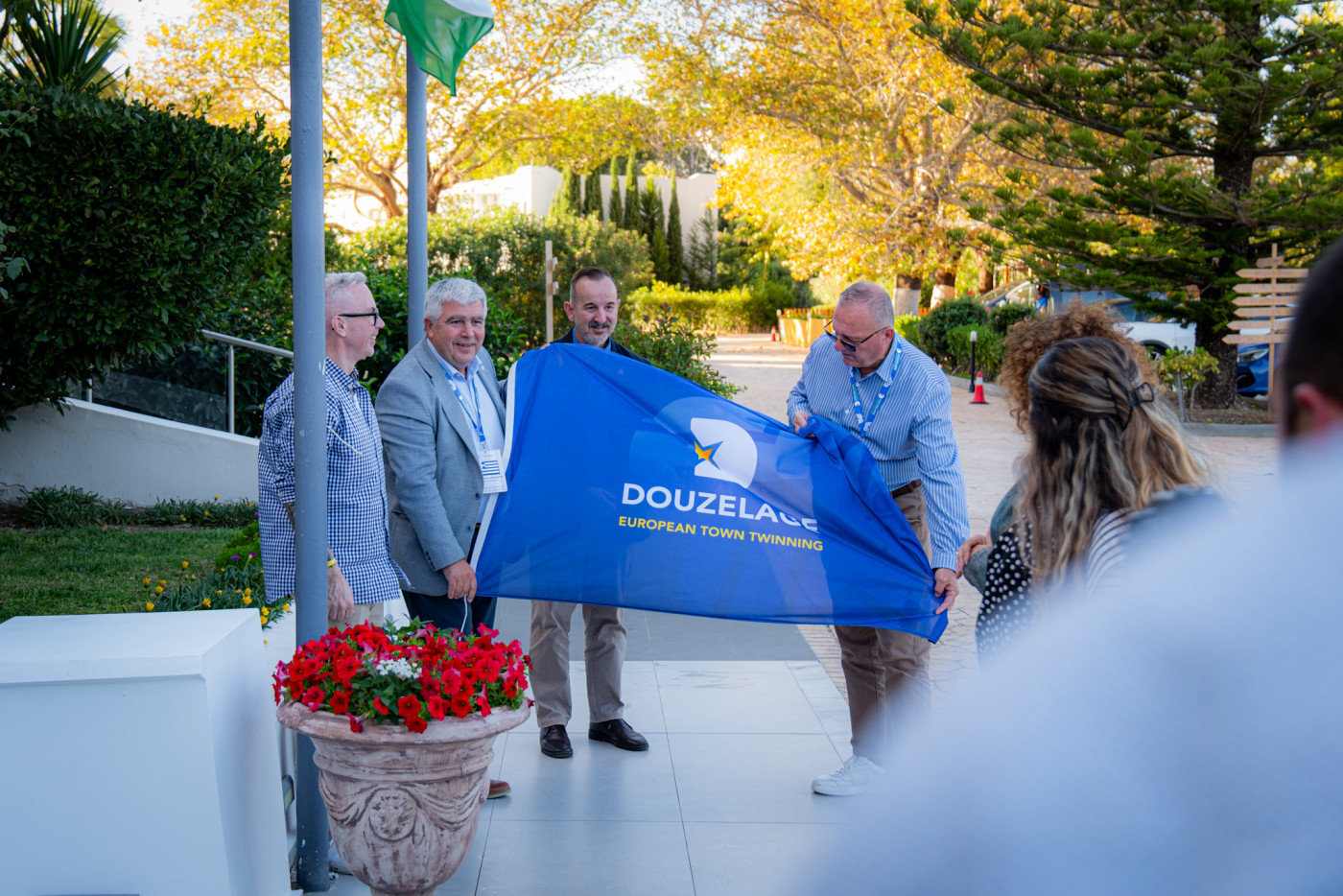
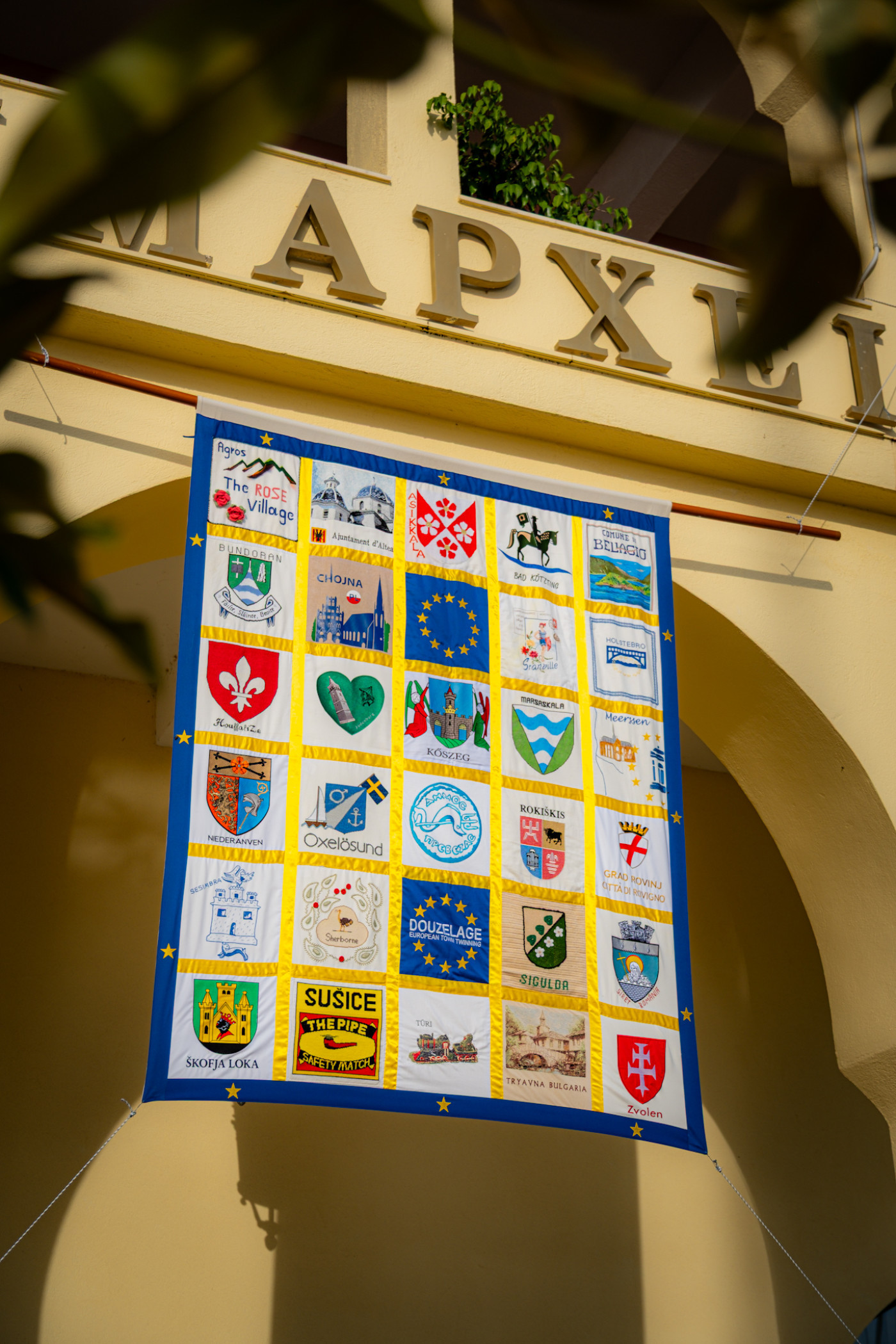
Have you ever heard of the Douzelage? The Douzelage is a town twinning programme that currently consists of 27 twin towns and aims to promote opportunities and friendship throughout Europe through tourist, sporting, educational, cultural, and socio-scientific exchanges. The Commune of Niederanven is a founding member of the Douzelage. In 1991, together with 11 partners, the commune laid the foundations for a unique town twinning.
On this page, you will find all the information about the Douzelage, as well as about the activities of the Douzelage Team, founded in 2023.
Read our latest article on the Douzelage town twinning here or visit the website www.douzelage.eu to delve deeper into this exciting topic.
In 1993, Douzelage was awarded one of the most coveted distinctions in the field of European twinning: The "Etoiles d'Or du Jumelage". Today, the Douzelage is made up of the following member towns:
Agros (Cyprus), Altea (Spain), Asikkala (Finland), Bad Kötzting (Germany), Bellagio (Italy), Bundoran (Ireland), Chojna (Poland), Granville (France), Holstebro (Denmark), Houffalize (Belgium), Judenburg (Austria), Köszeg (Hungary), Marsaskala (Malta), Meerssen (Netherland), Niederanven (Grand-Duchy of Luxembourg), Oxelösund (Sweden), Preveza (Greece), Rokiškis (Lithuania), Rovinj/Rovigno (Croatia), Sesimbra (Portugal), Sherborne (United Kingdom), Sigulda, (Latvia) Siret (Romania), Škofja Loka (Slovenia), Sušice (Czech Republic), Tryavna (Bulgaria), Türi (Estonia), Zvolen (Slovakia).


The Douzelage Team
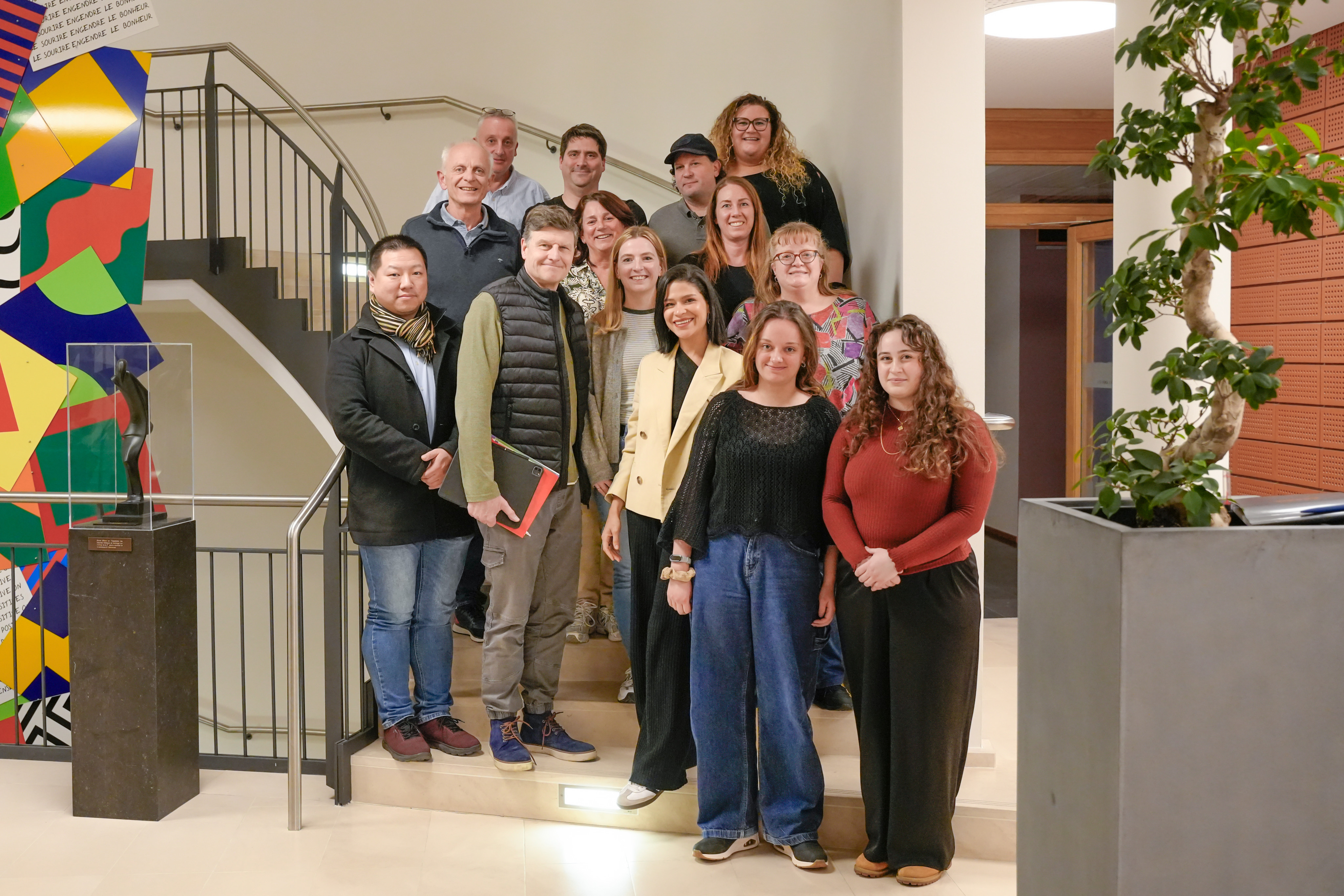
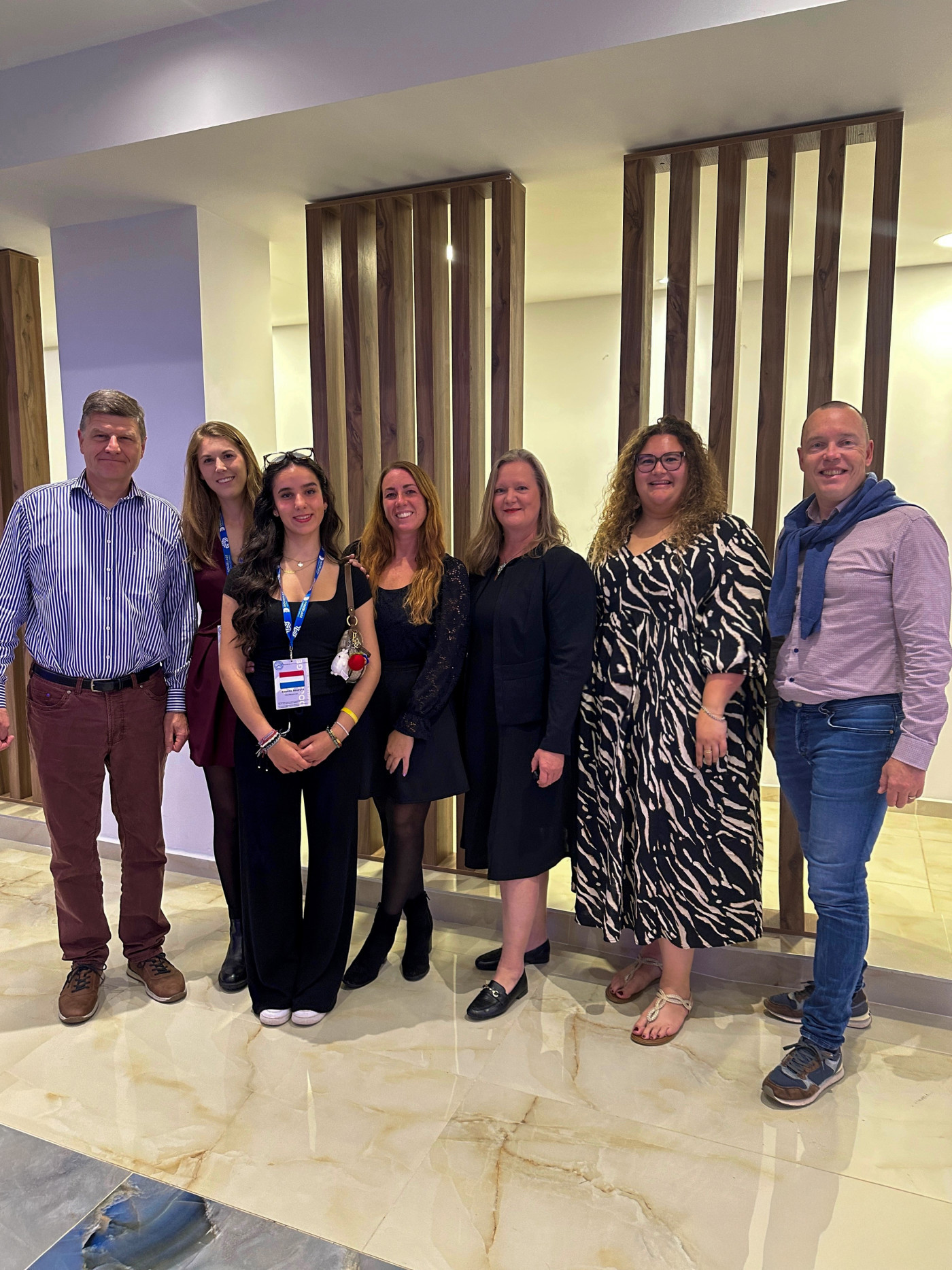
The team's aim is to maintain the European twinning, the Douzelage, and to represent our Commune. The team plans and organises associated activities or develops ideas for such activities. It also prepares the General Meeting, at which all the partner towns meet once a year. Cultural, tourist, sporting, educational and socio-economic exchanges under the European programme are also on the team's agenda.
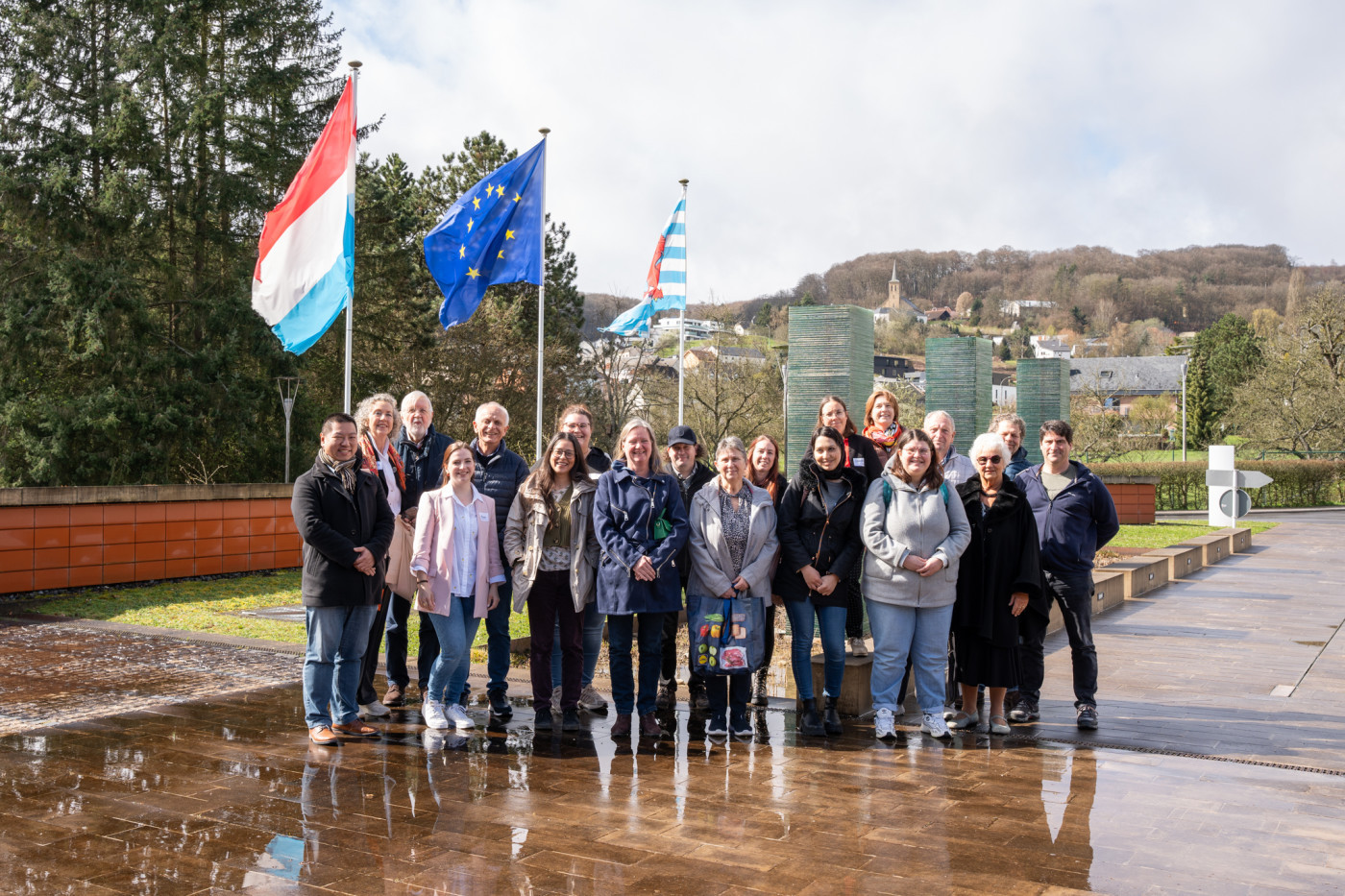
Last row (f.l.t.r.): Alain Winterstein, Georges Paquet, Pierre Welter, Jil Steyer (Secretary)
3rd row: Uli Fielitz (Coordinator), Elke Georg, Lynn Klein
2nd row: Hon Pan Luk, Dietmar Dumlich, Laura Gaul (Secretary), Roberta Dario
1st row: Caroline Hennessy, Axelle Winterstein, Diana Caldeira
Join the Douzelage family!
Would you like to discover new towns, make friends and represent our town abroad? Then register with the Douzelage team using this form and join the Douzelage Europe family!
Douzelage General Meeting 2027 in Niederanven

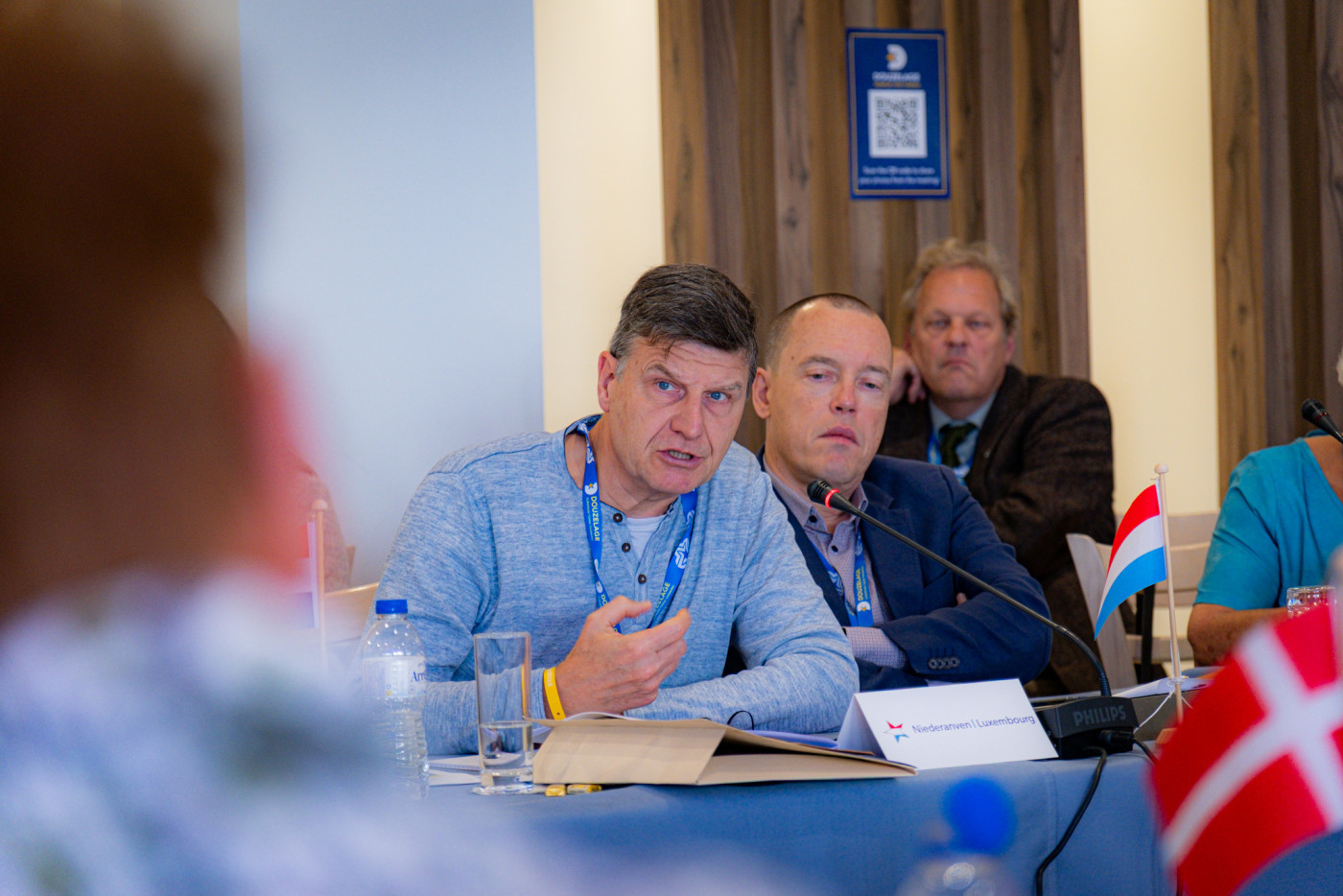
With the Douzelage General Meeting taking place in Niederanven from 20 to 23 May 2027, we will be welcoming around 200 friends from our partner towns to enjoy a friendly and enriching weekend together in our commune.
To ensure the success of this European event, we are looking for volunteers who would like to actively contribute to the organisation of this meeting.
The main theme of the General Meeting will be “citizen participation”, a topic that perfectly reflects the identity of our commune, as only by working together can we move it forward. We therefore count on your involvement – before, during and after the event – and look forward to receiving your ideas and suggestions for the programme.
To ensure the preparation and smooth running of the General Meeting from 20 to 23 May, we are looking for committed individuals who can:
– take part in the various working groups during the preparation phase
– provide support during the event itself
Whether you have plenty of time or just a few hours to spare: your help will make a difference! Sign up now via this form and become part of this unique project!
Douzelage activities


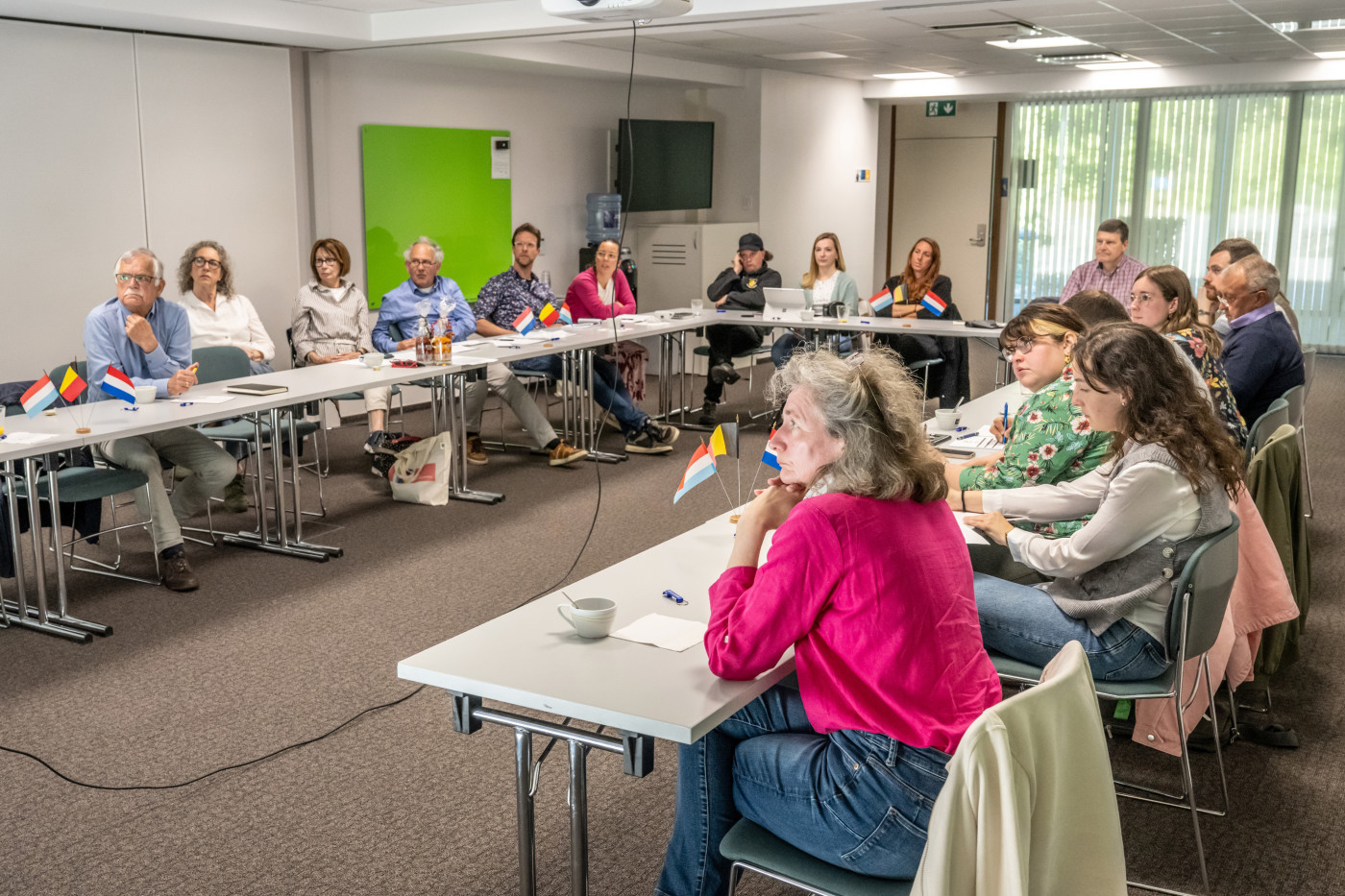
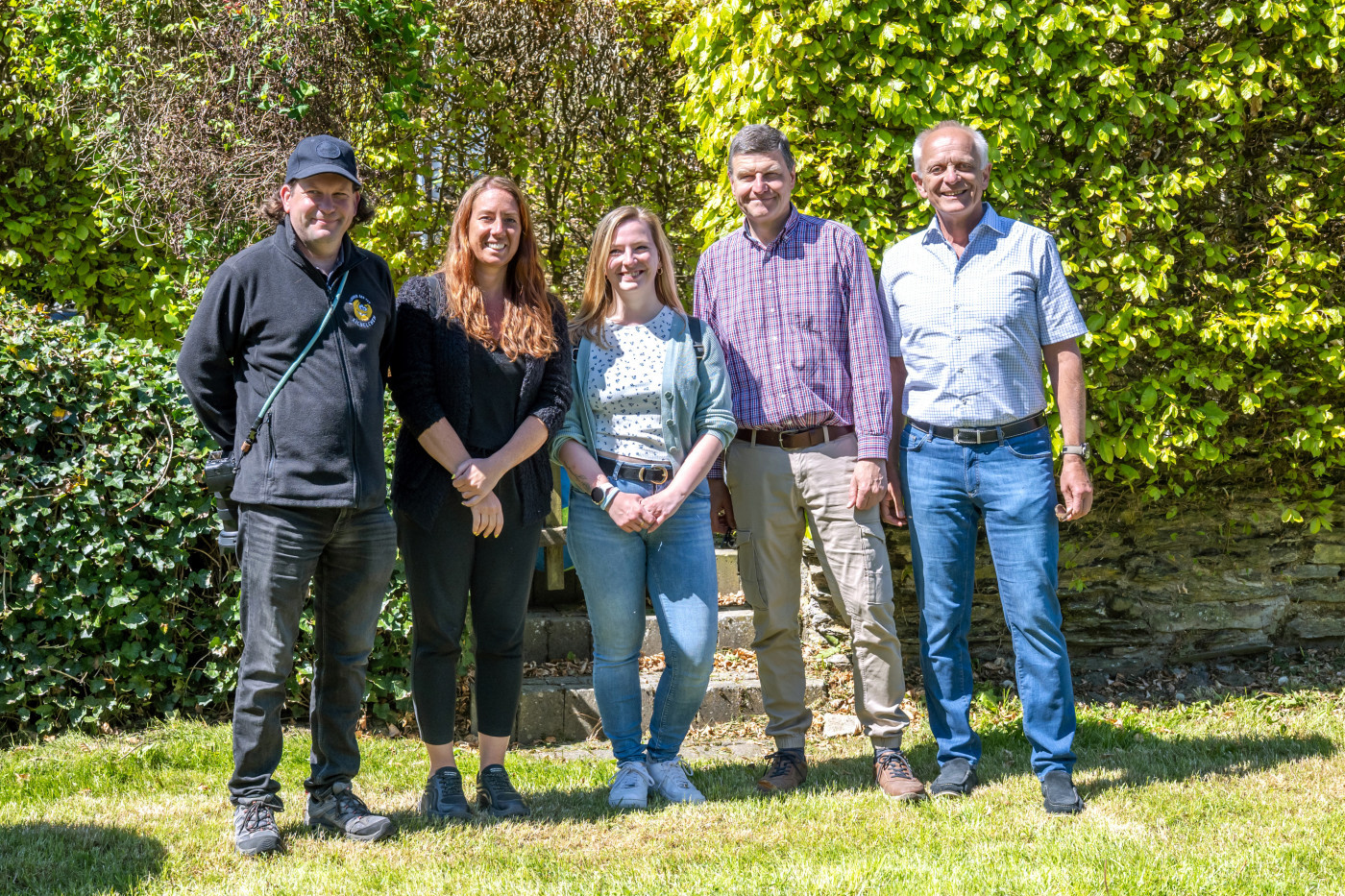
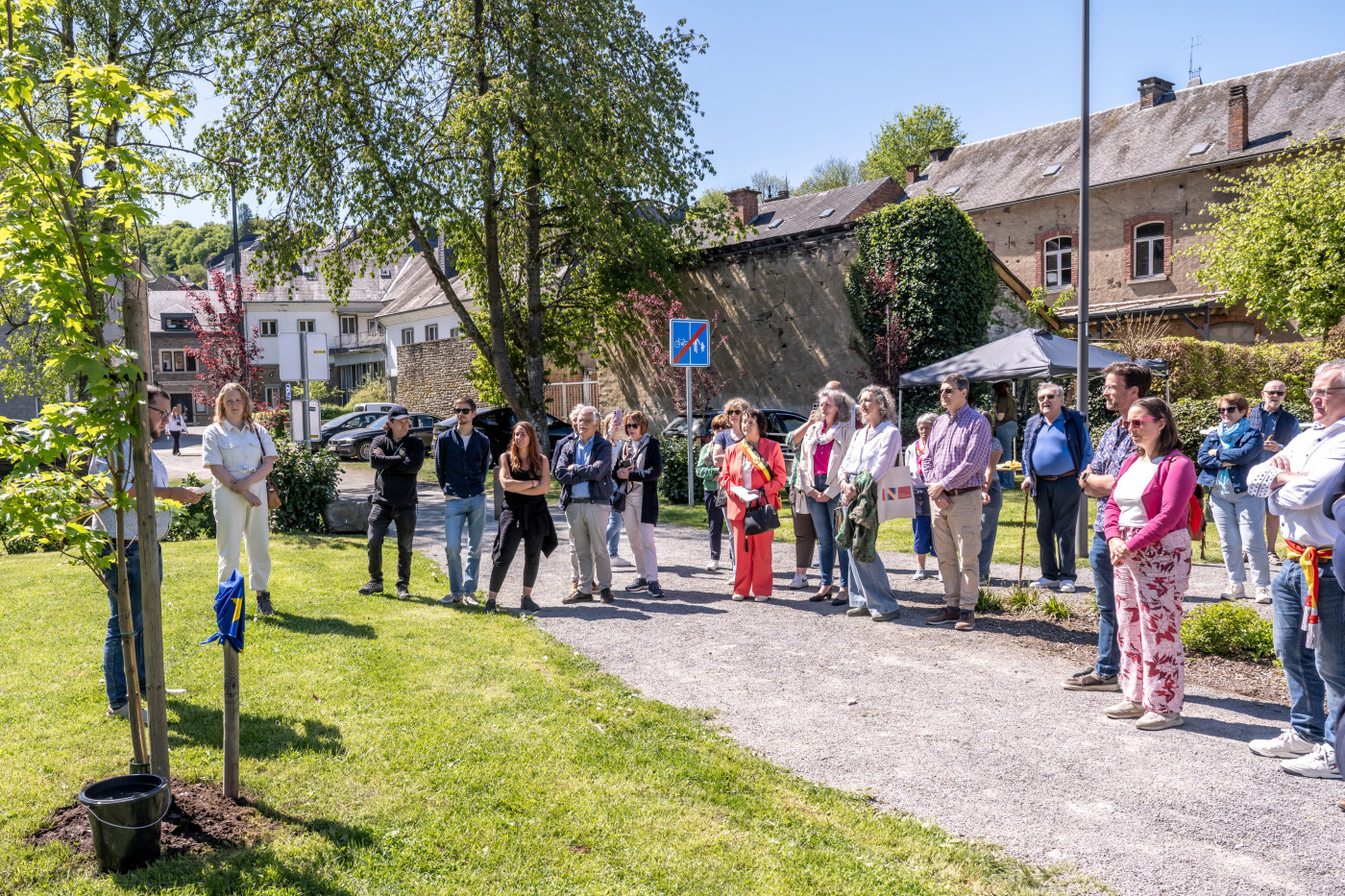
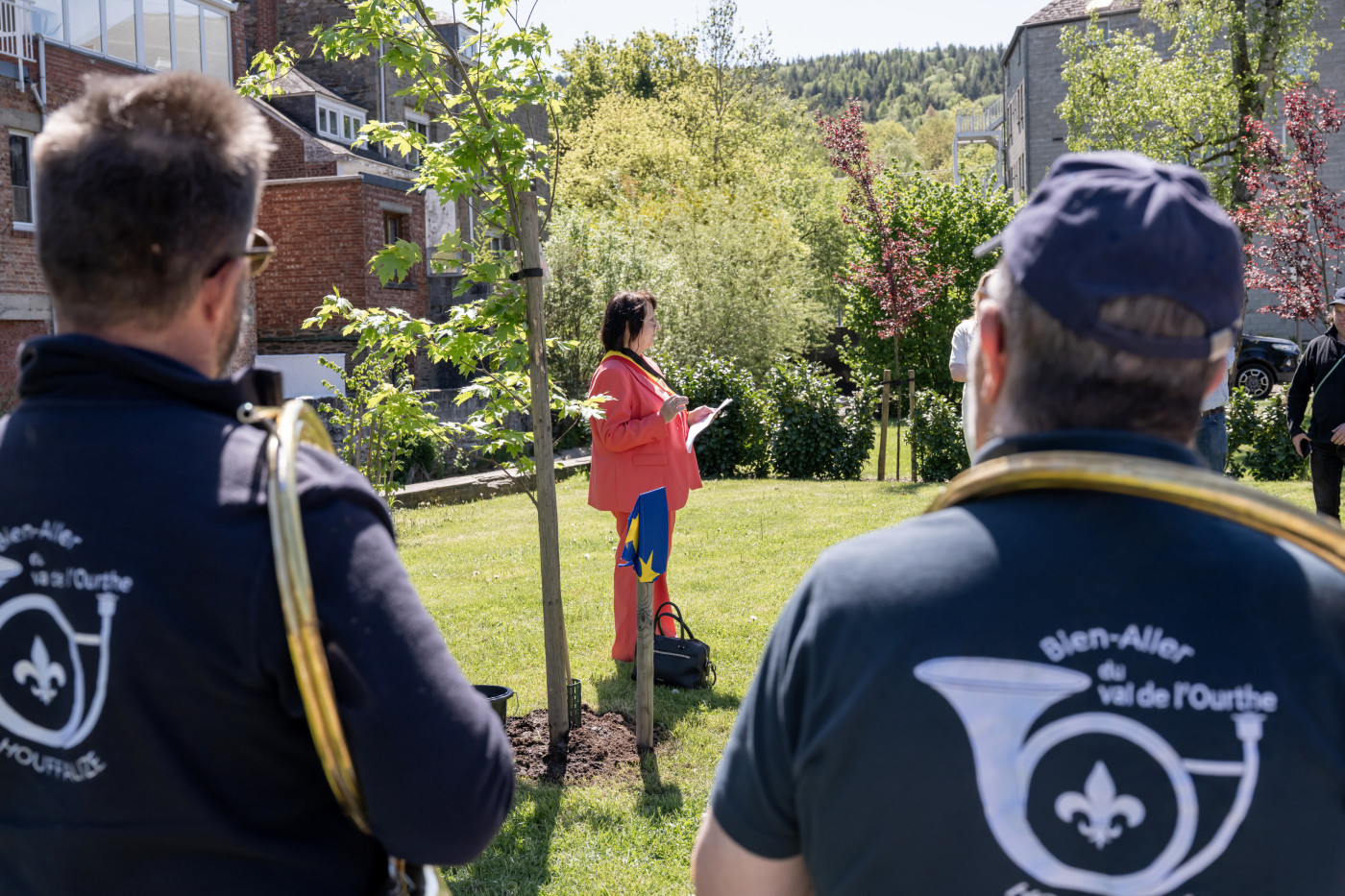
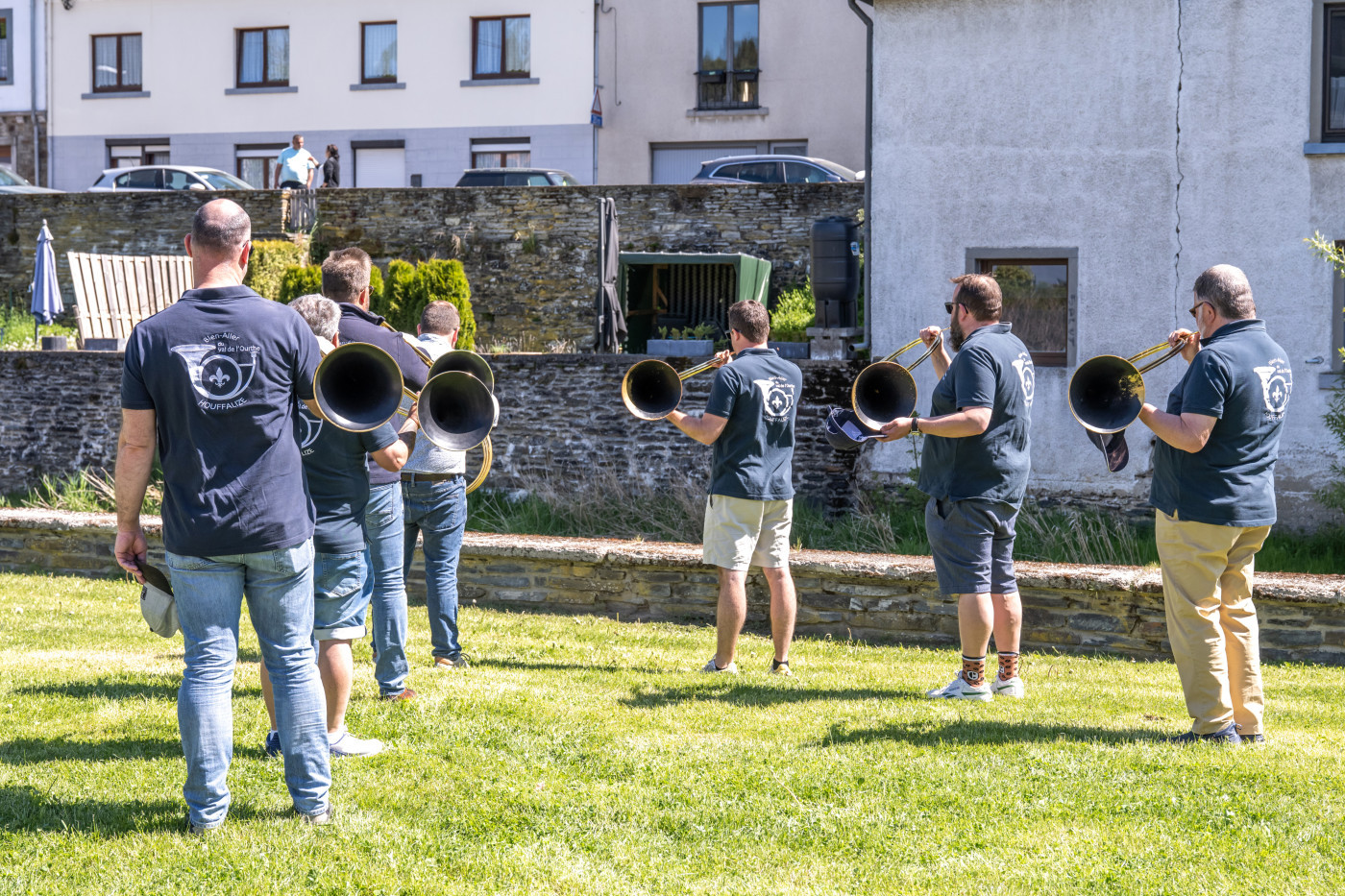
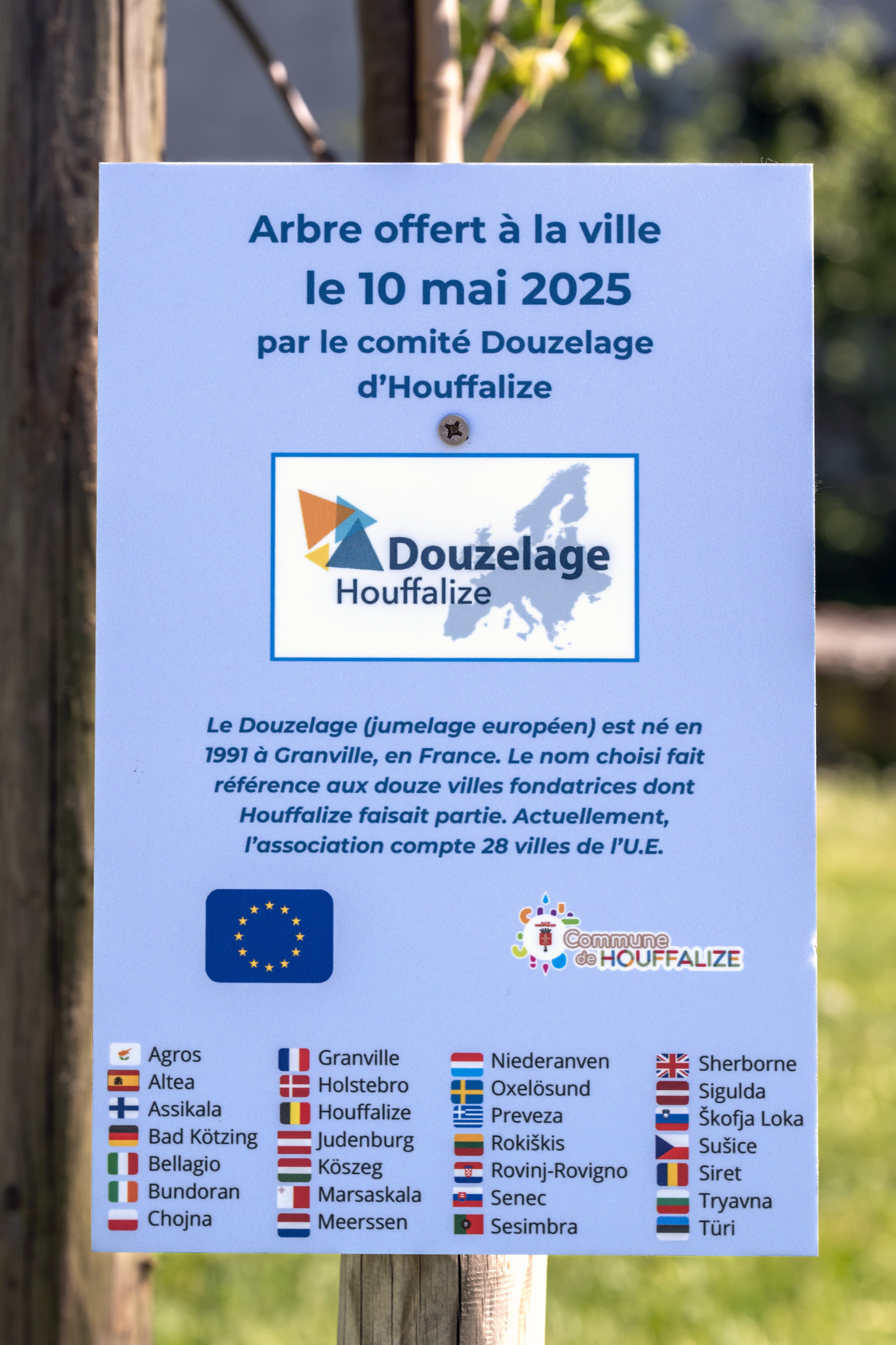
On Saturday, 10 May, the BeNeLux Meeting between the Douzelage partner towns of Niederanven, Meerssen, and Houffalize took place in Houffalize, Belgium. It was a great day filled with new ideas, fruitful discussions, and shared laughter. During the official part of the meeting, important topics were addressed — from recent activities to upcoming projects, including the forthcoming General Meeting in October in Preveza, Greece. Afterwards, the delegations gathered in the park for the symbolic and festive inauguration of the Douzelage Tree in Houffalize. The day ended with a shared lunch and a short guided tour of the town.
A big thank you to our colleagues in Houffalize for the excellent organisation!
Copyright pictures: Uli Fielitz


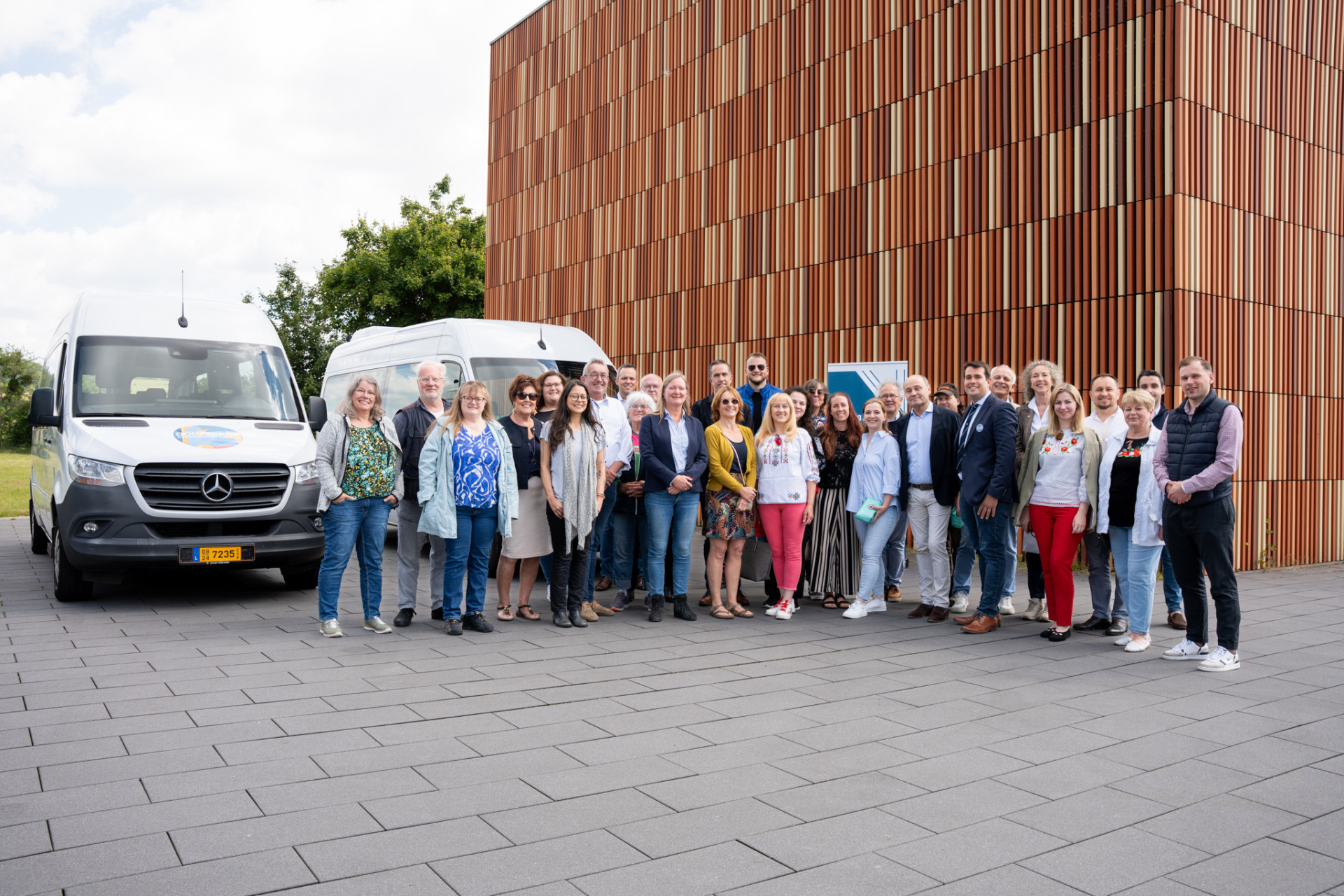
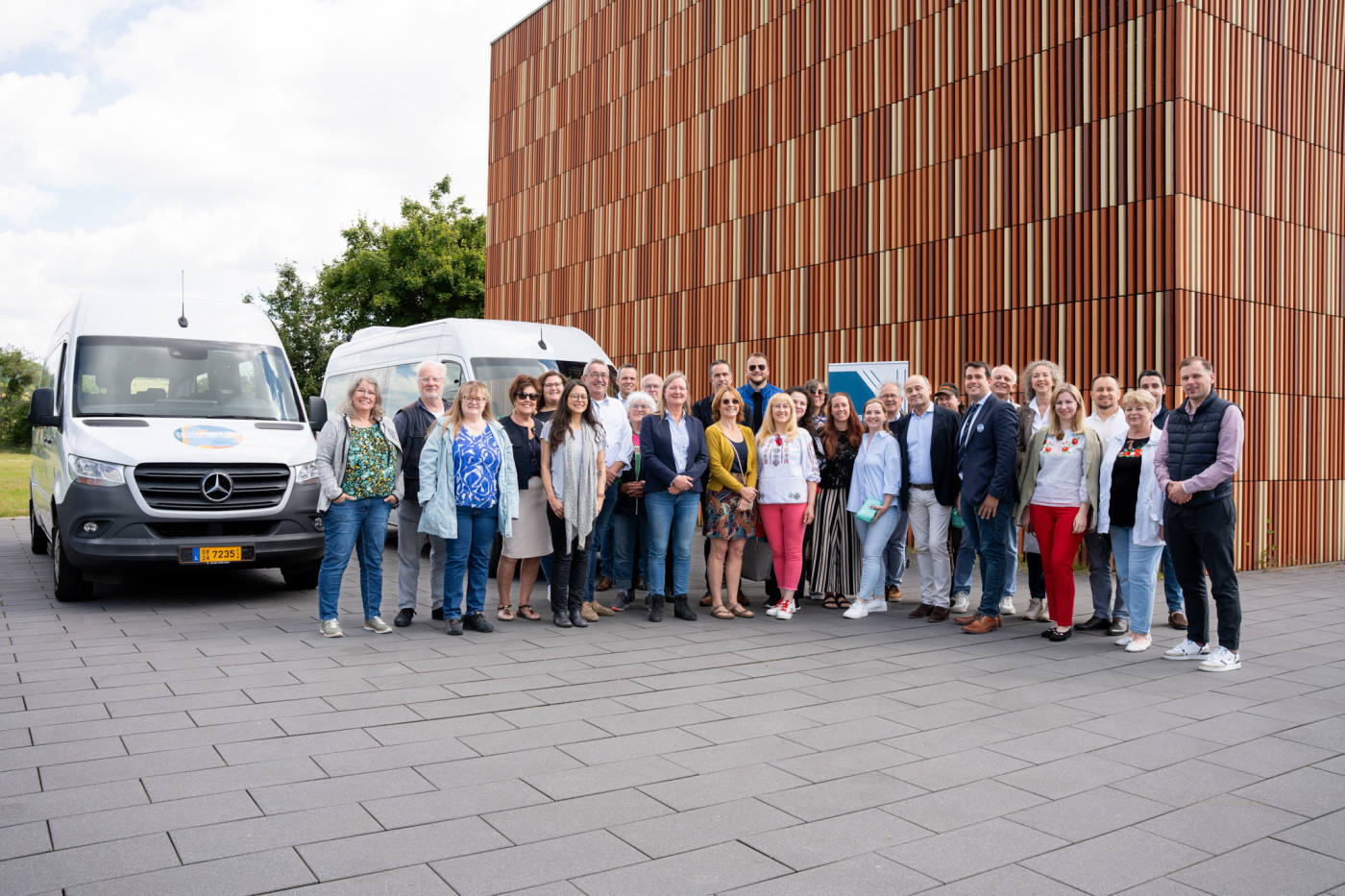
On Thursday 13 June 2024, the College of Aldermen and the Commune Council, together with the Douzelage Team Niederanven, were honoured to invite to the ceremony for the "Road to Ukraine" project in front of the Commune building,
The "Road to Ukraine" humanitarian project was launched last year by the Douzelage board. The initial idea was to appeal to twinned towns to make a donation and thus raise funds for the purchase of two minibuses to help the town of Kamenets in Ukraine meet the basic needs of its new residents, be they elderly people, children or socially vulnerable groups. After the municipality not only made a donation to the project in January 2024, but also found a Luxembourg bus company willing to donate two minibuses, the time came on Thursday 13 June for the minibuses to set off for Ukraine.
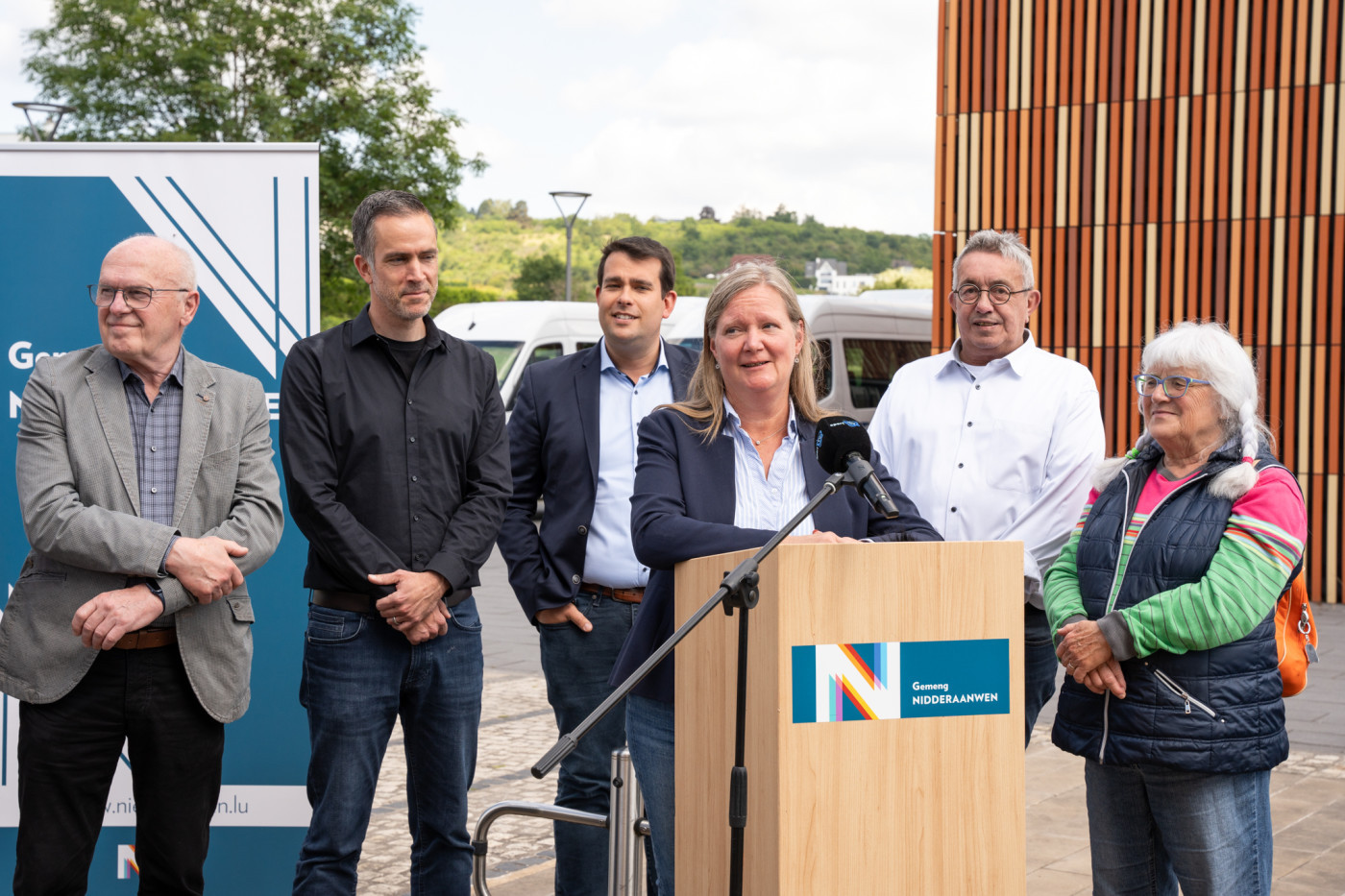
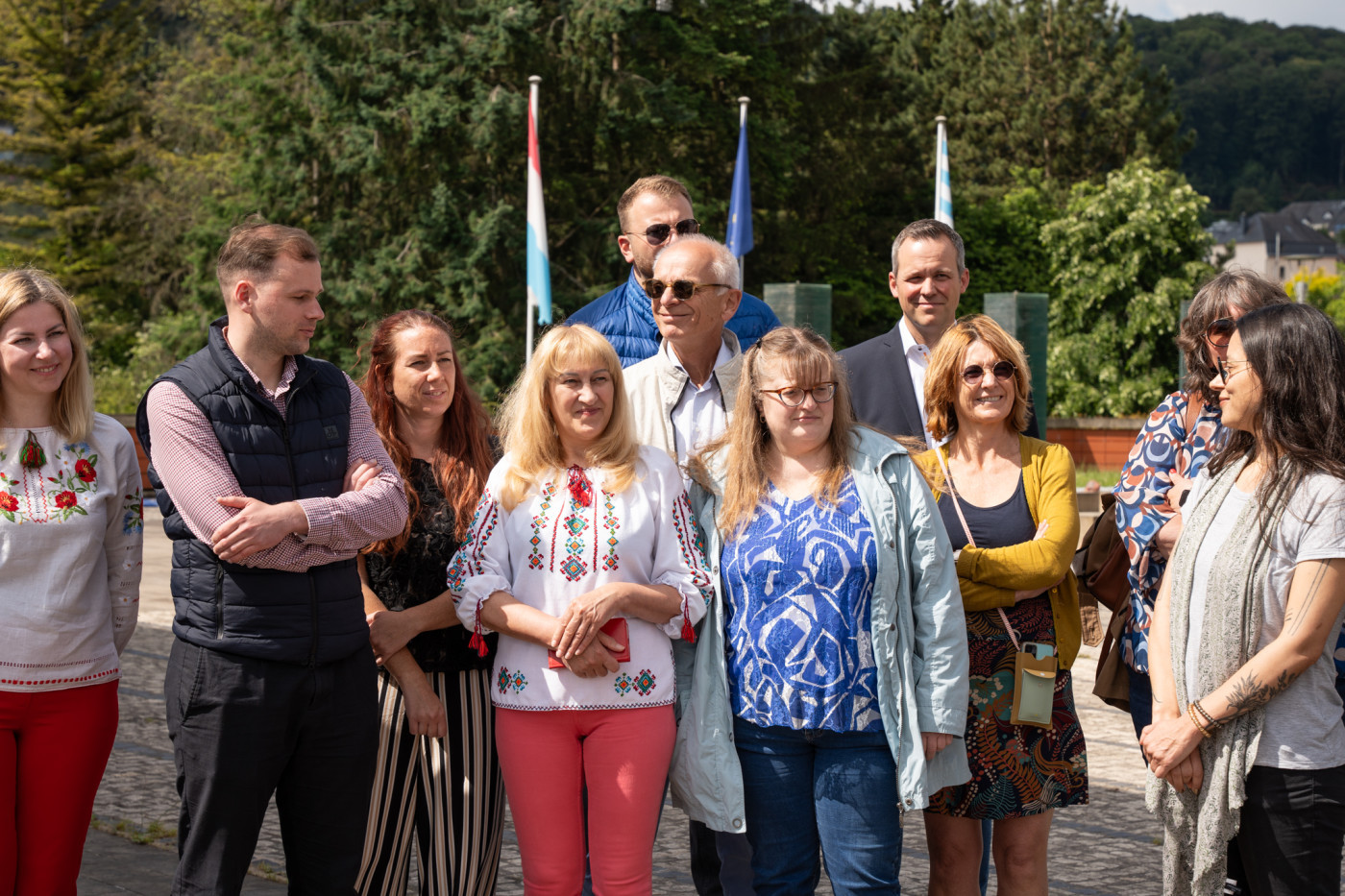
During the ceremony, the Commune of Niederanven welcomed representatives from the twin towns of Meerssen (NL), Holstebro (DK) and Sherborne (UK). The town was also delighted to welcome major sponsors emile weber and euroline. Thanks were also extended to creative corner for their support, and to Hospilux and Doppler s.à r.l. for their generous donation of non-prescription items. Last but not least, the Commune of Niederanven was delighted by the large number of Ukrainian residents in our Commune, as well as by the LUkraine non-profit organisation.
The route to Ukraine was as follows:
- 13 June: Niederanven to Bad Kötzting (DE)
- 14 June: Bad Kötzting to Satu Mare (RO)
- 15 June: Satu Mare to Siret (RO)
- 16 June: Siret to Kamenets (UA) and official handover of the minibuses
- 17 June: Siret to Iasi (RO)
- 18 June: return journey


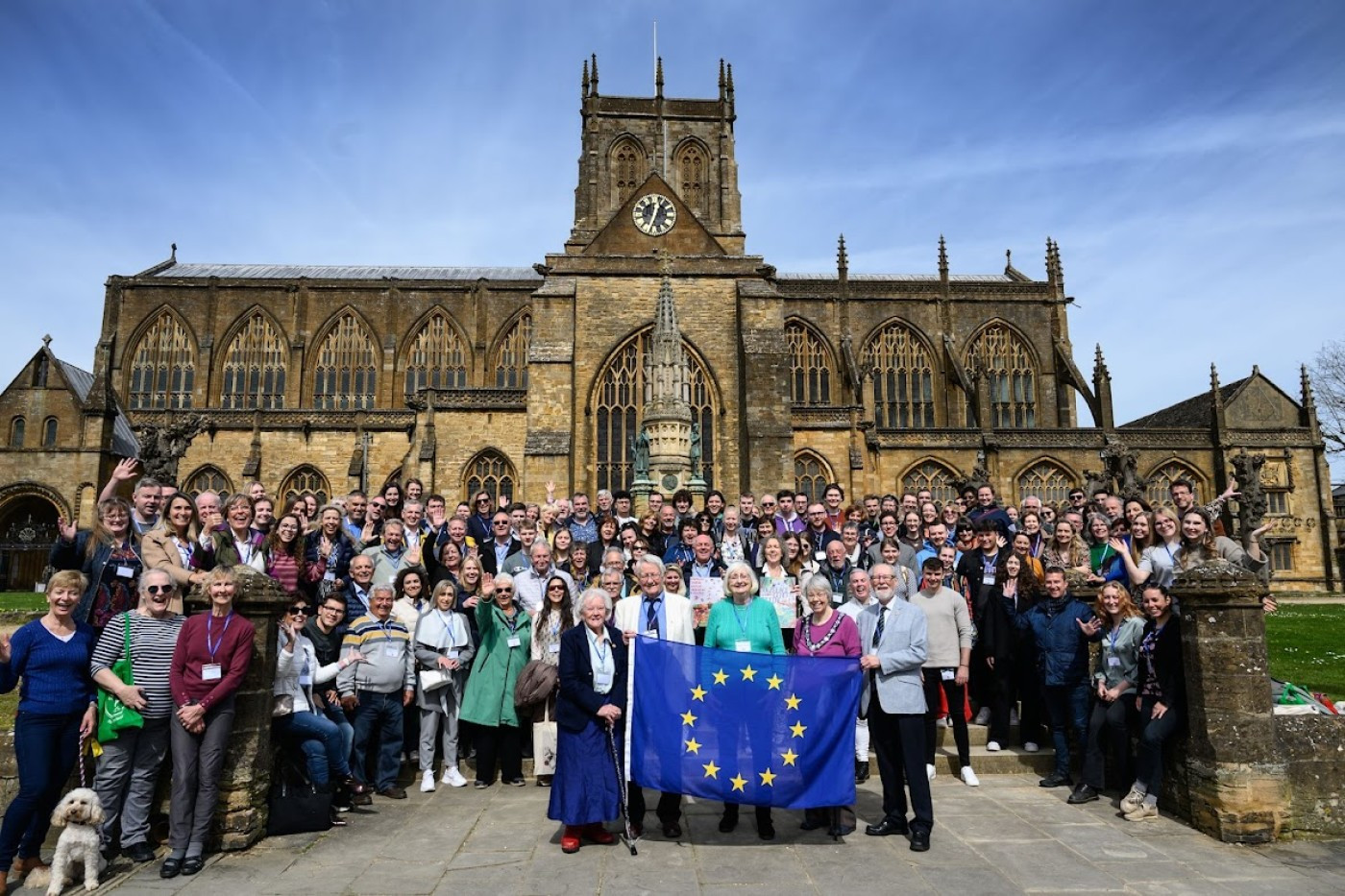
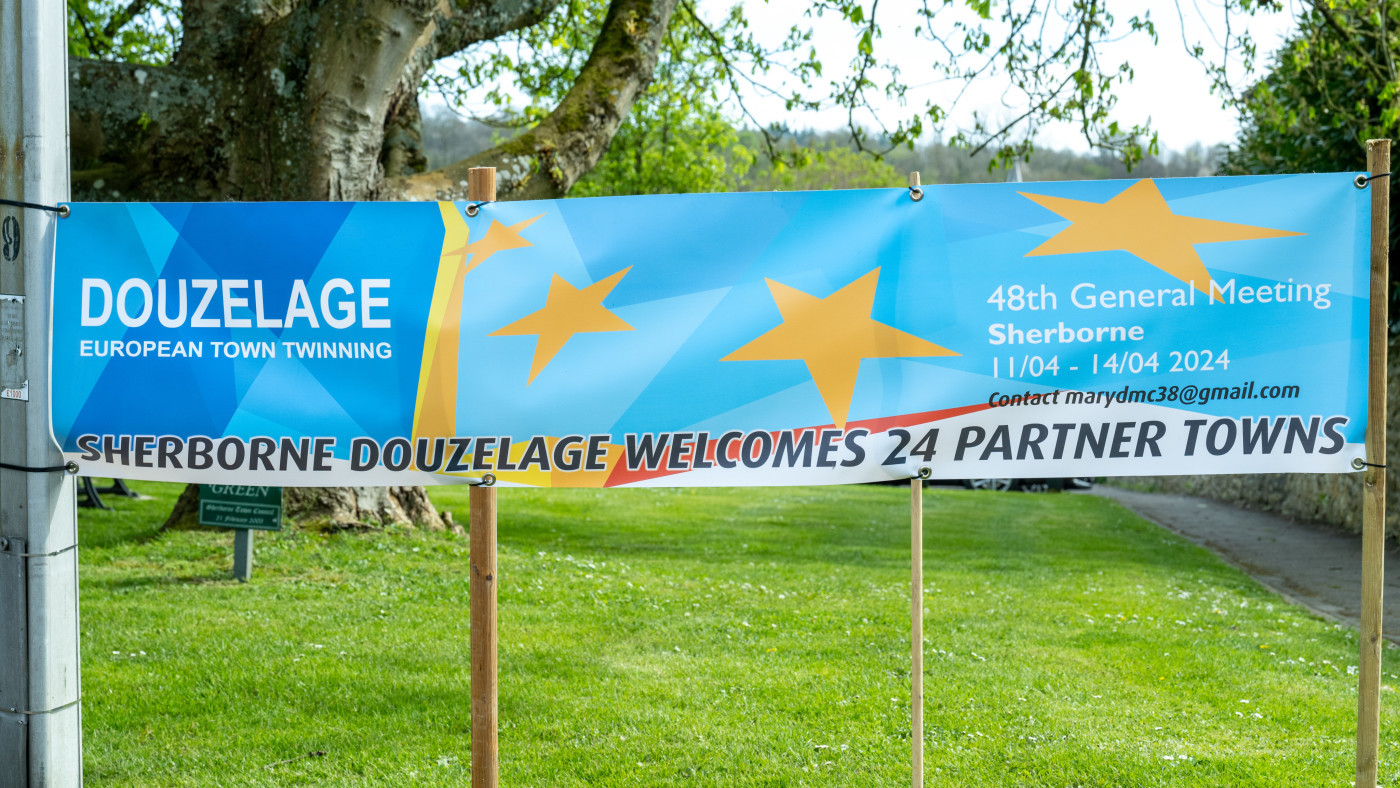
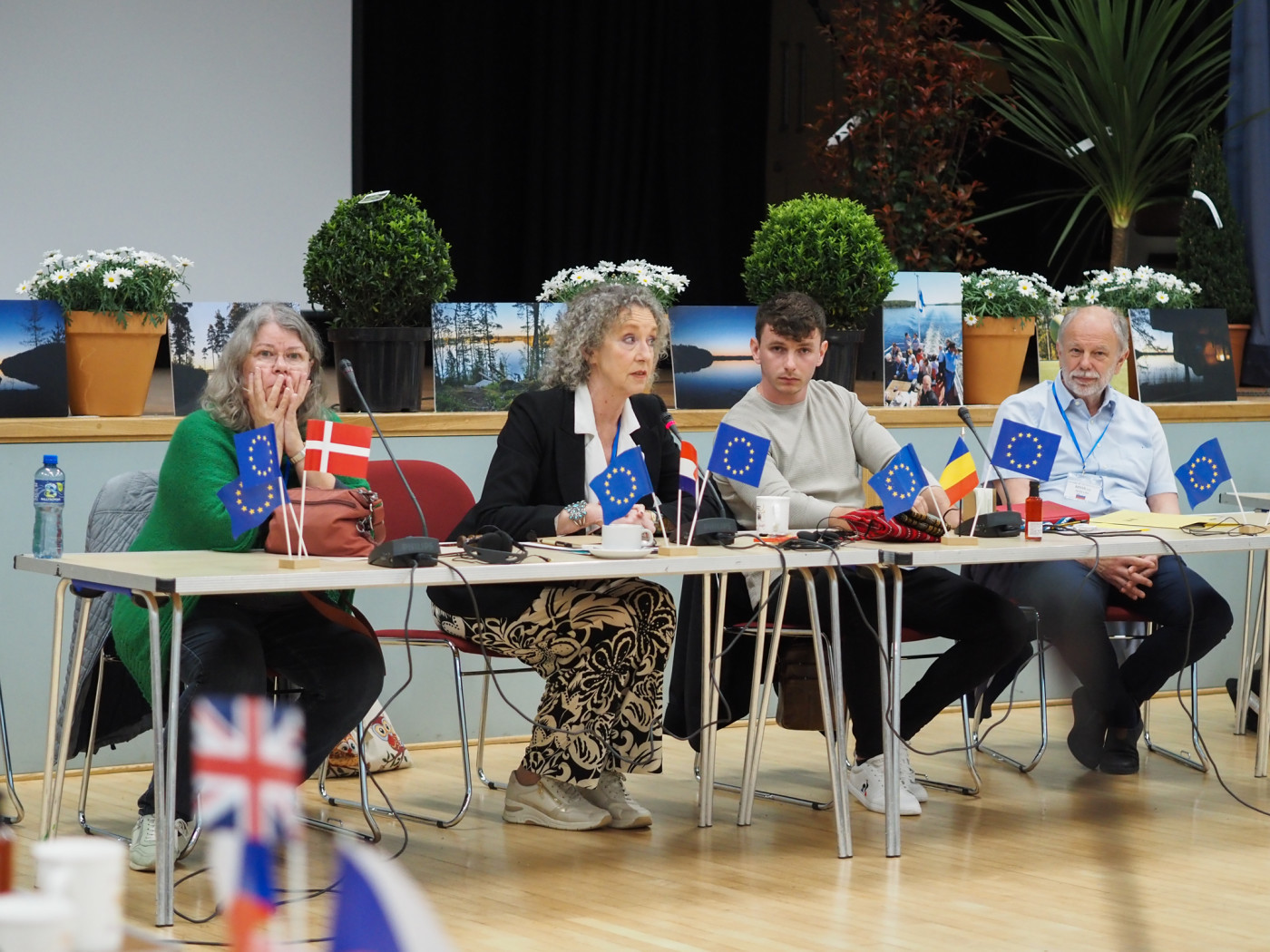
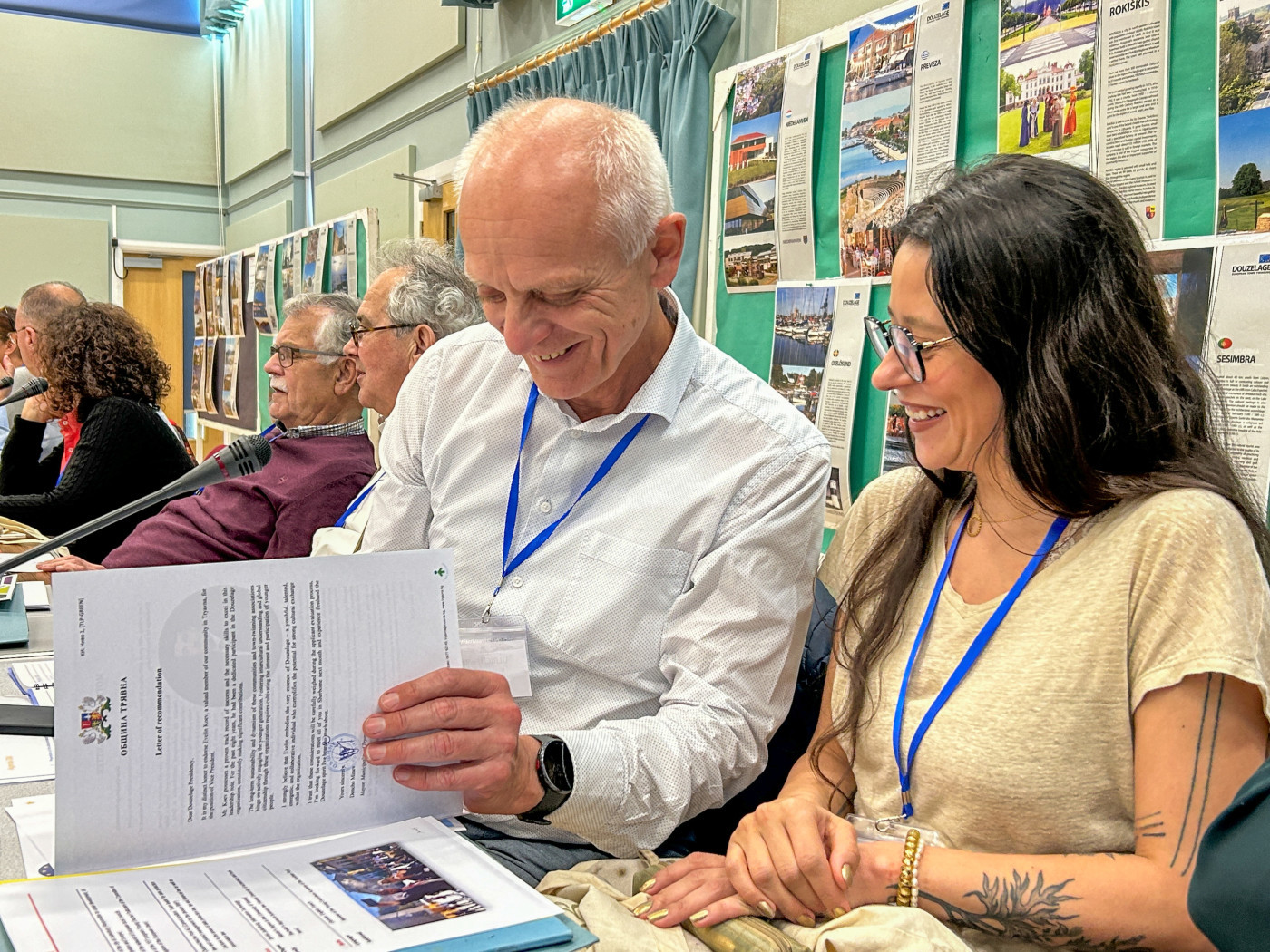
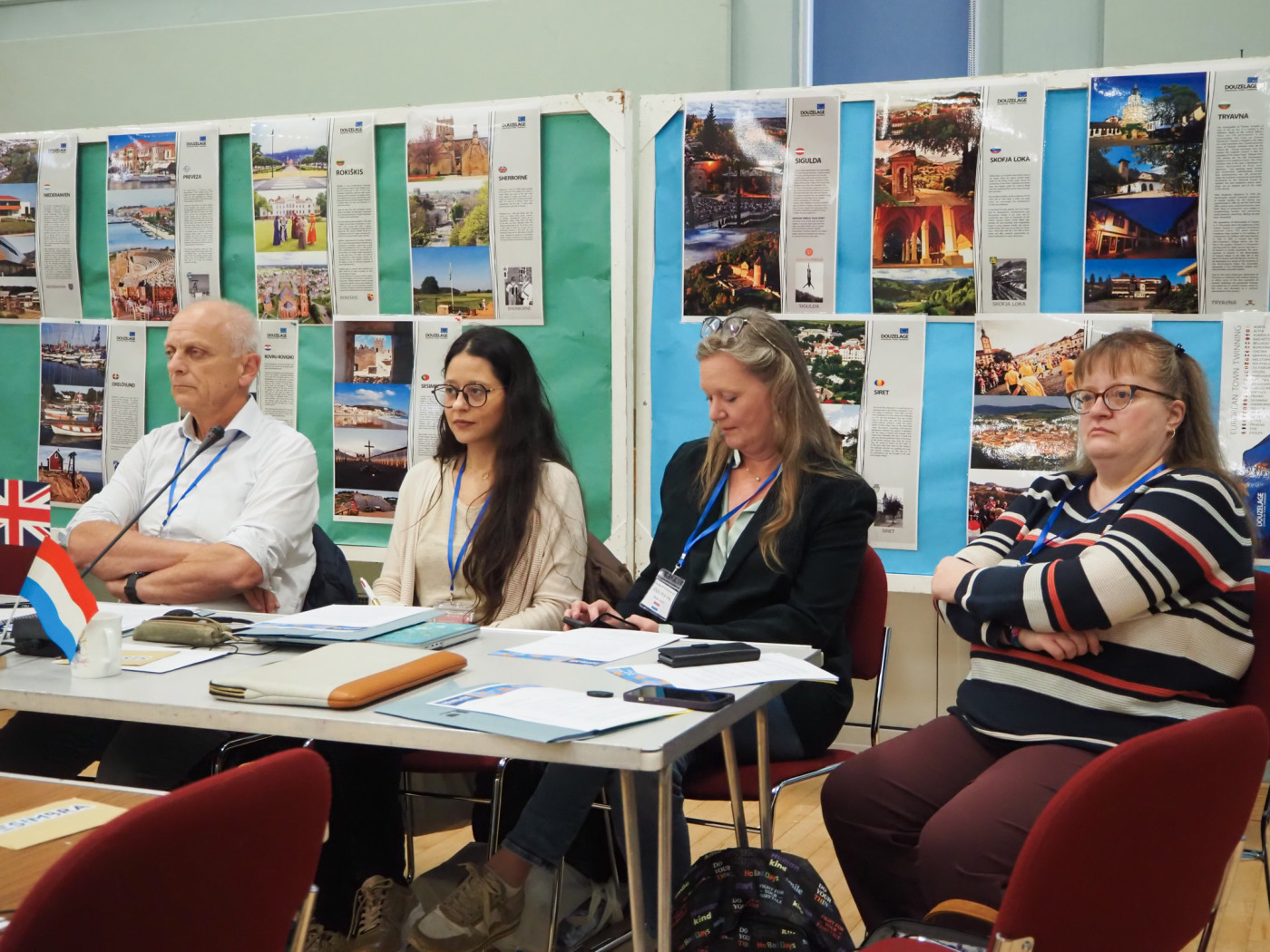
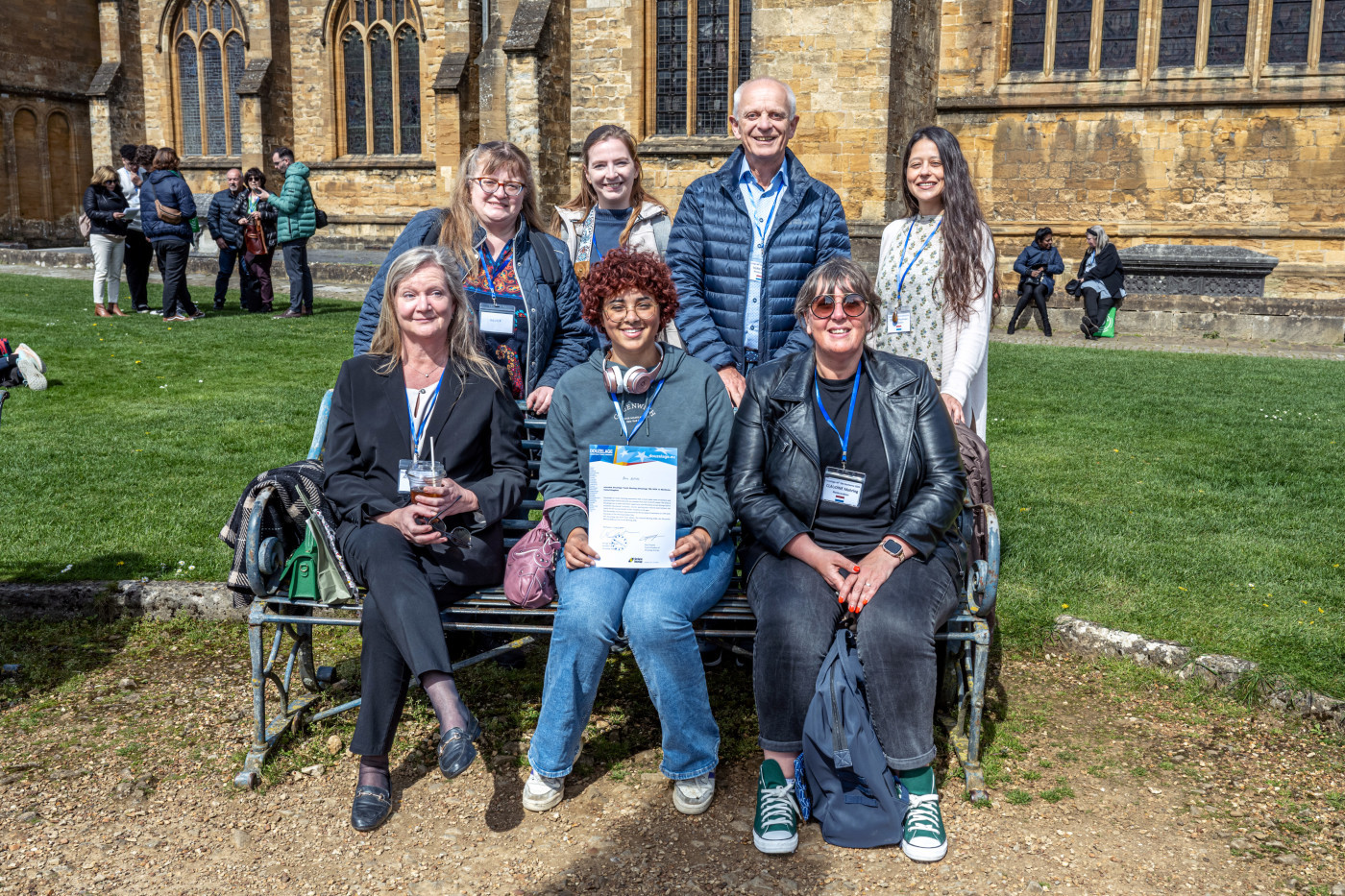
Seven representatives from the Commune of Niederanven were at the General Meeting in Sherborne from the 11th to the 14th of April as part of the Douzelage. Conferences, workshops and concerts were organised under the theme ''Wellbeing through music and nature'', and our team came back with many new ideas for our Commune.
During the General Assembly with the delegates of all twin towns, a new board was also elected this year. Thanks to Annigje Kruytbosch, Tibi Rotaru, Mette Sørensen and Miha Ješe for their wonderful work over the past few years. We wish the new board with Shane Smyth, Thorsten Wohleser, Maria Črnac Rocco and Evelin Koev a happy hand in their new role.
Finally, we would like to thank the team in Sherborne for their warm welcome and excellent organisation!
© Pictures: Commune of Niederanven & Uli Fielitz Photography


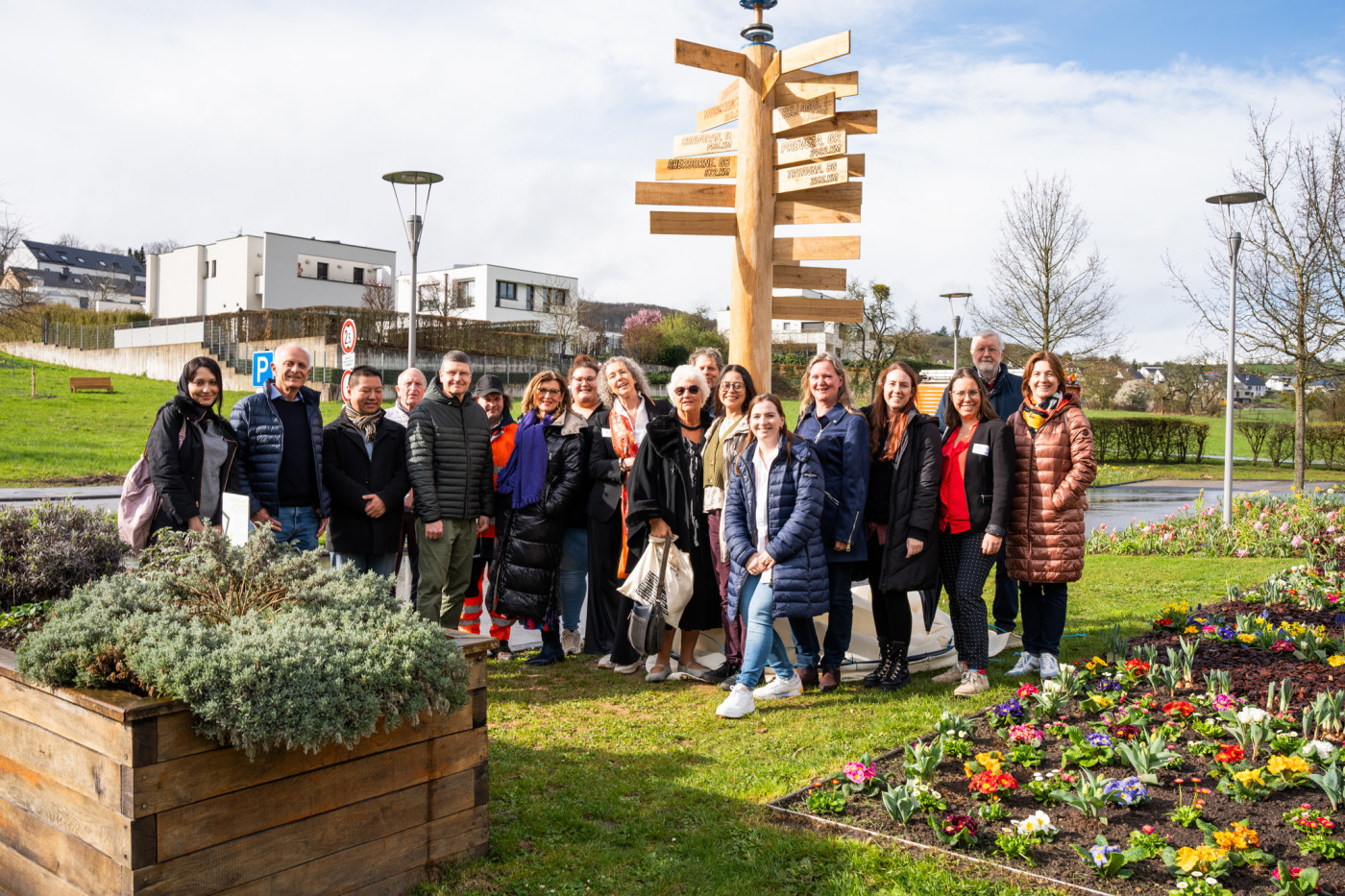
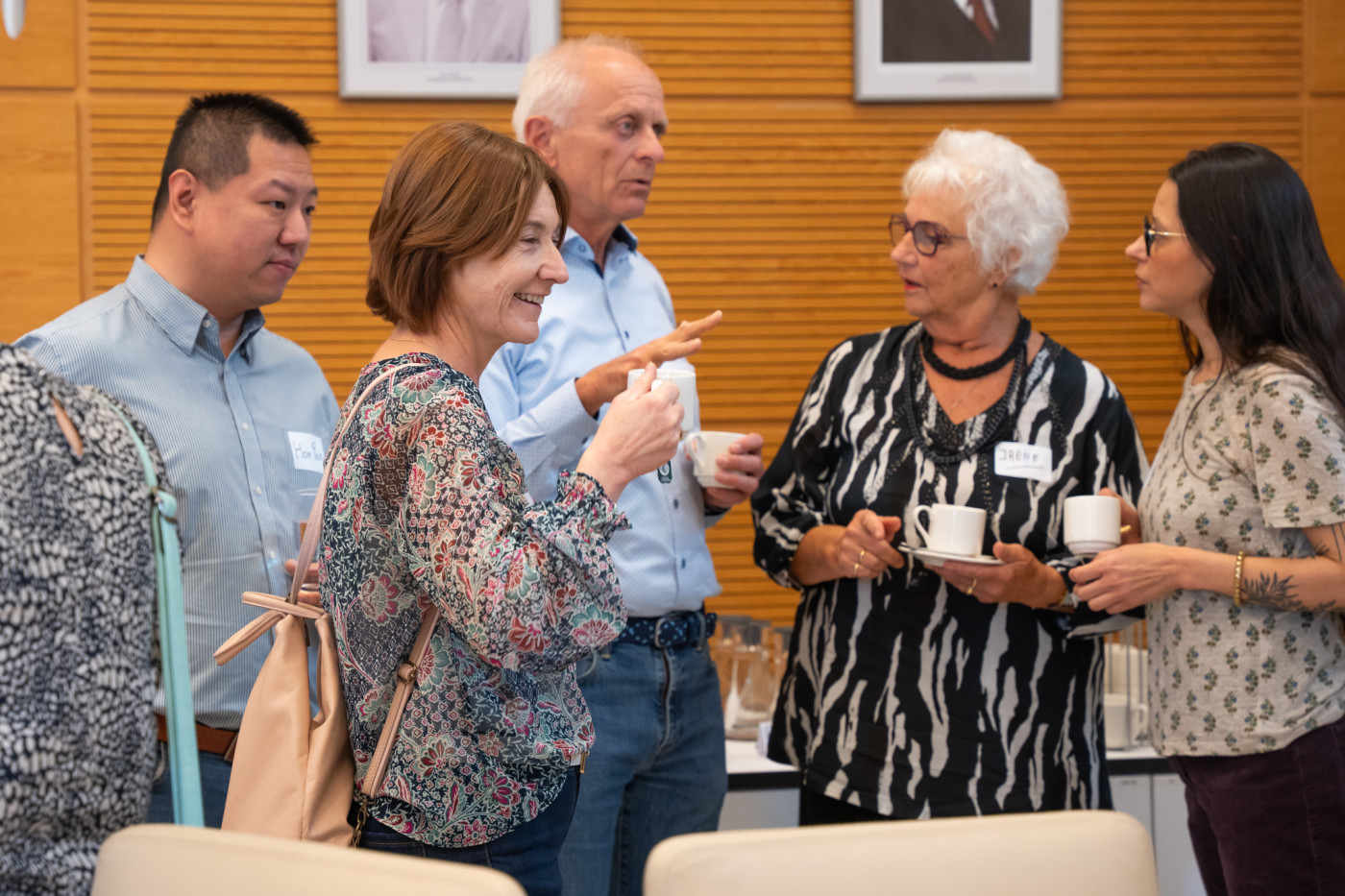
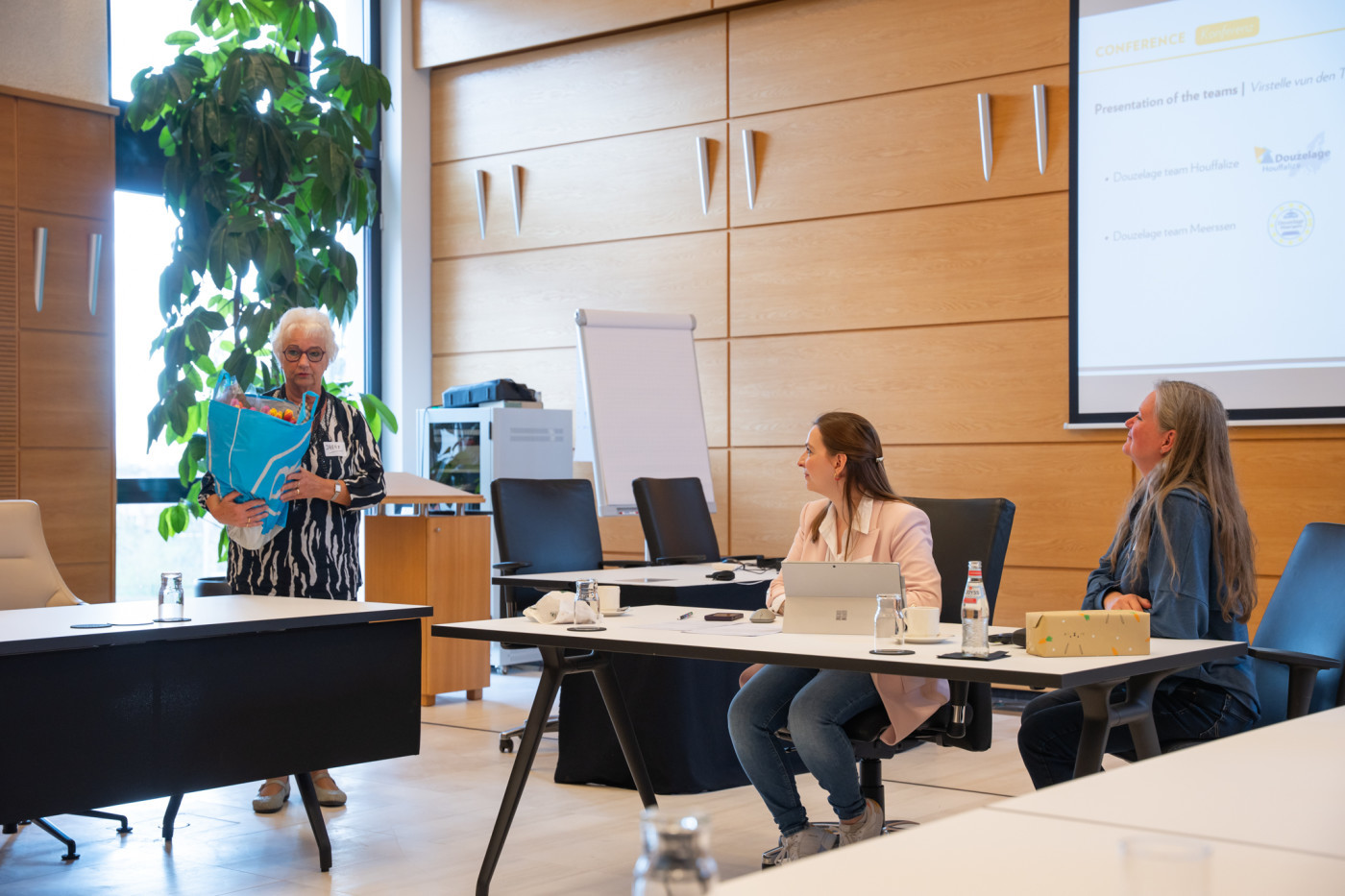
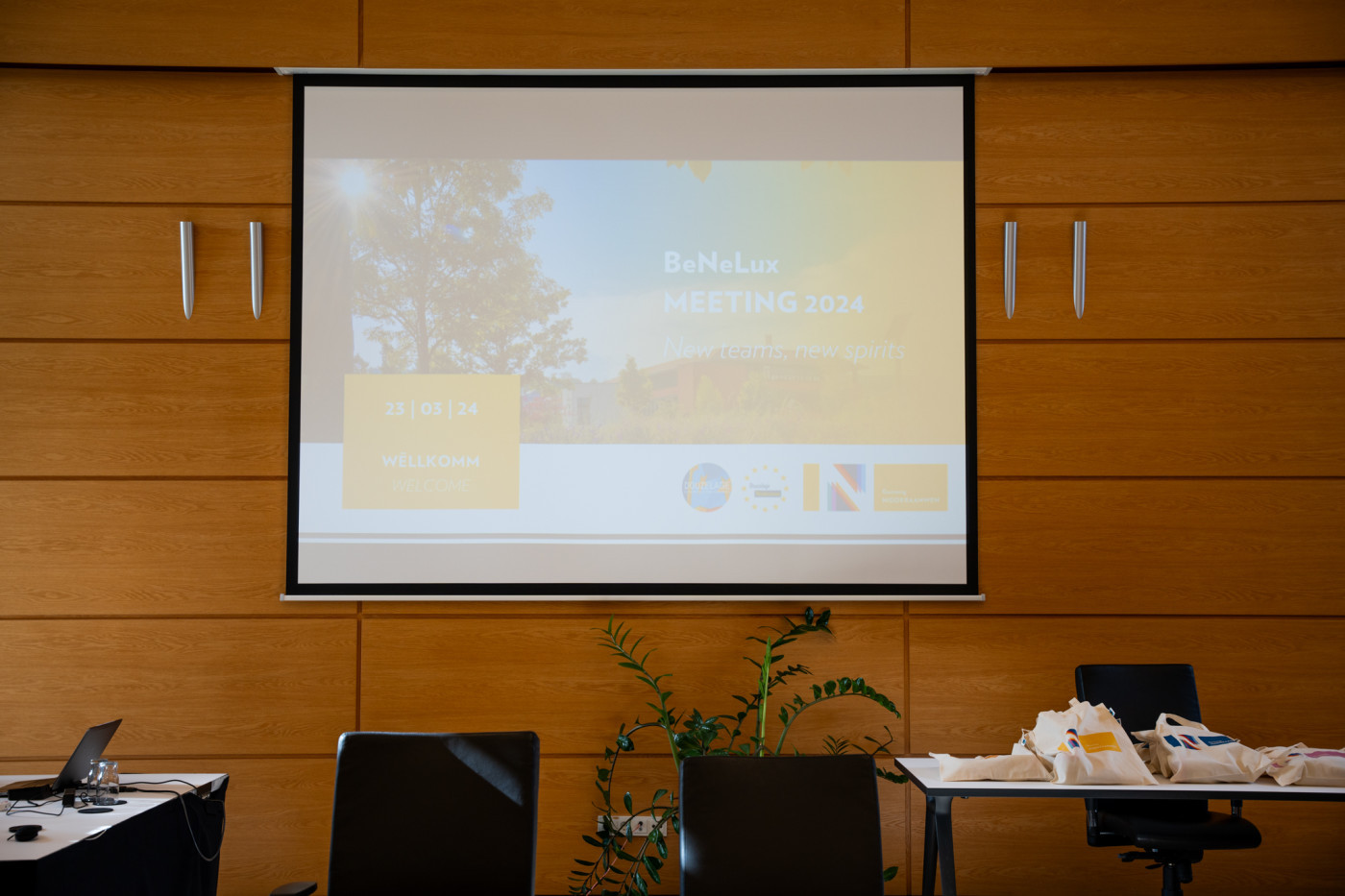
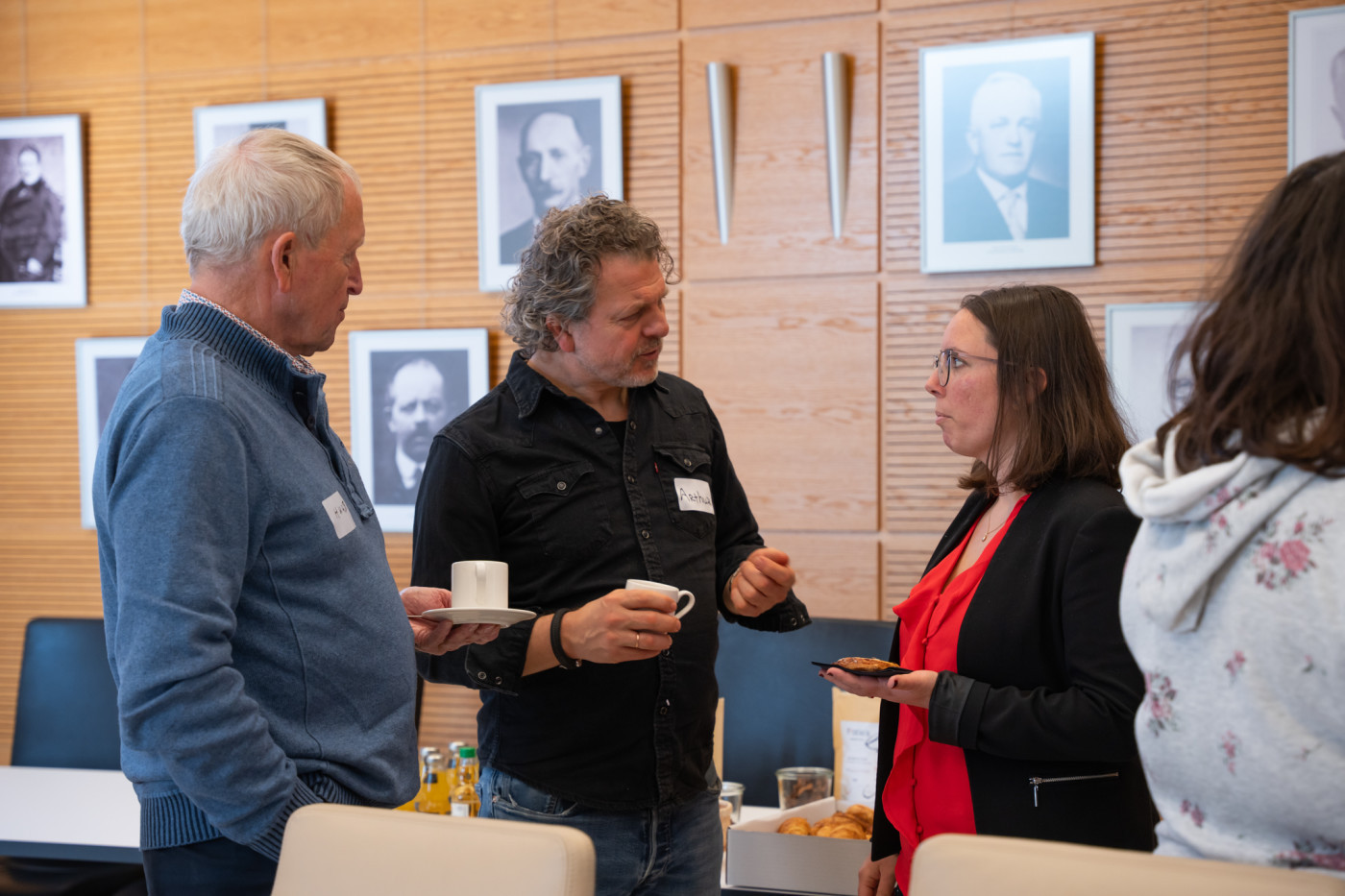
On Saturday the 23rd of March, together with our Douzelage Team, we had the great pleasure of inviting our friends from Douzelage Meerssen and Douzelage Houffalize to our BeNeLux Meeting.
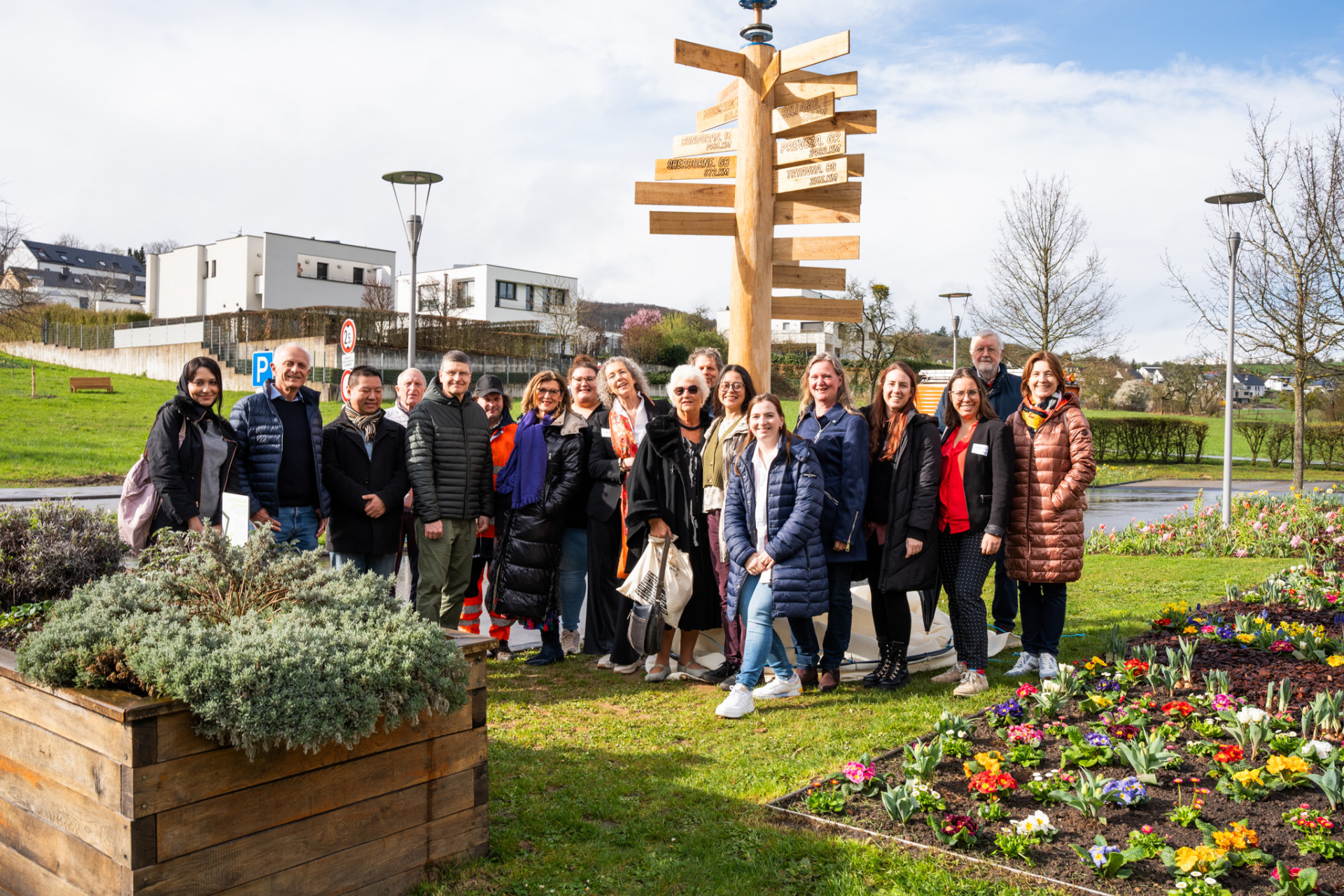
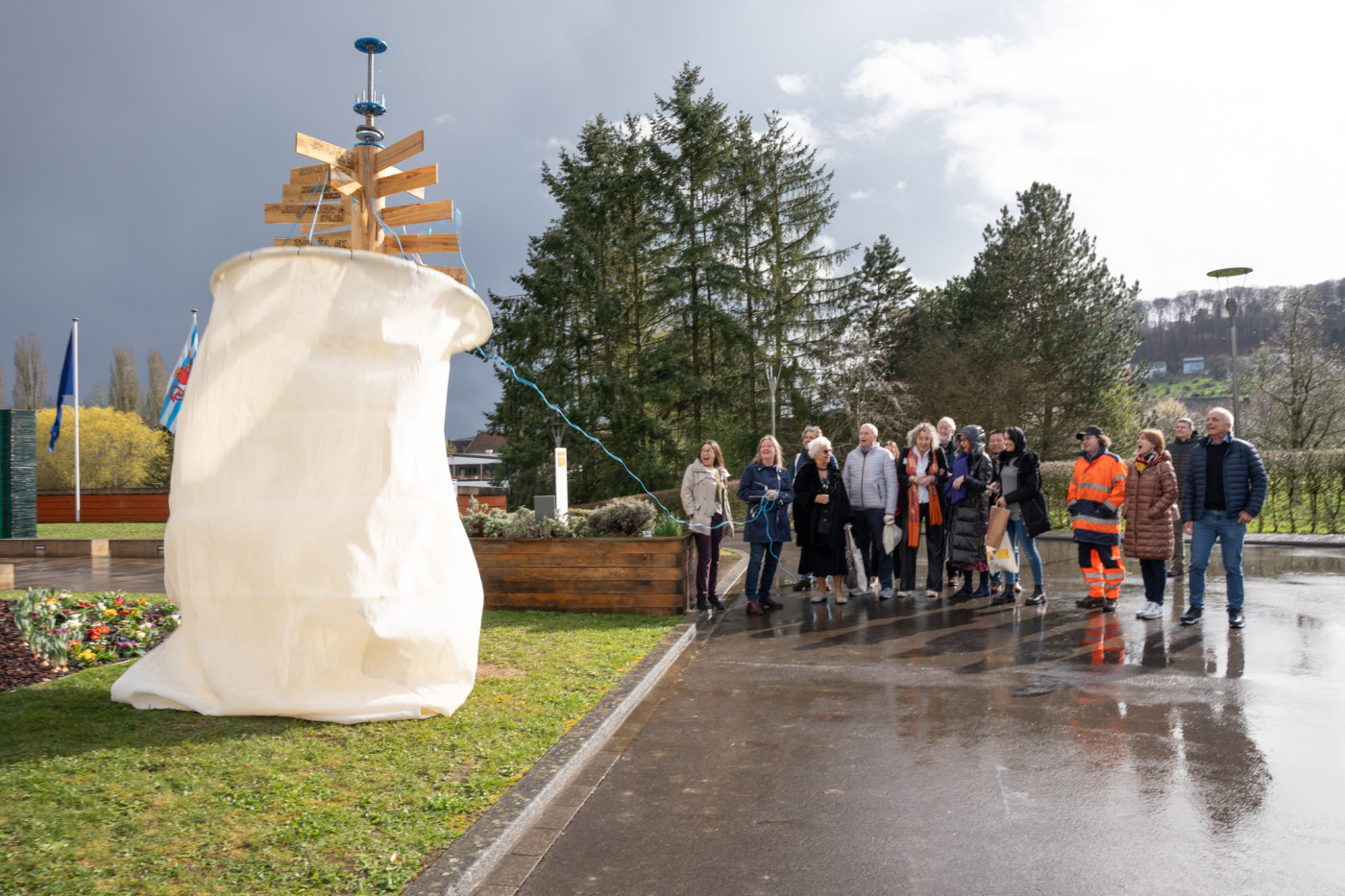
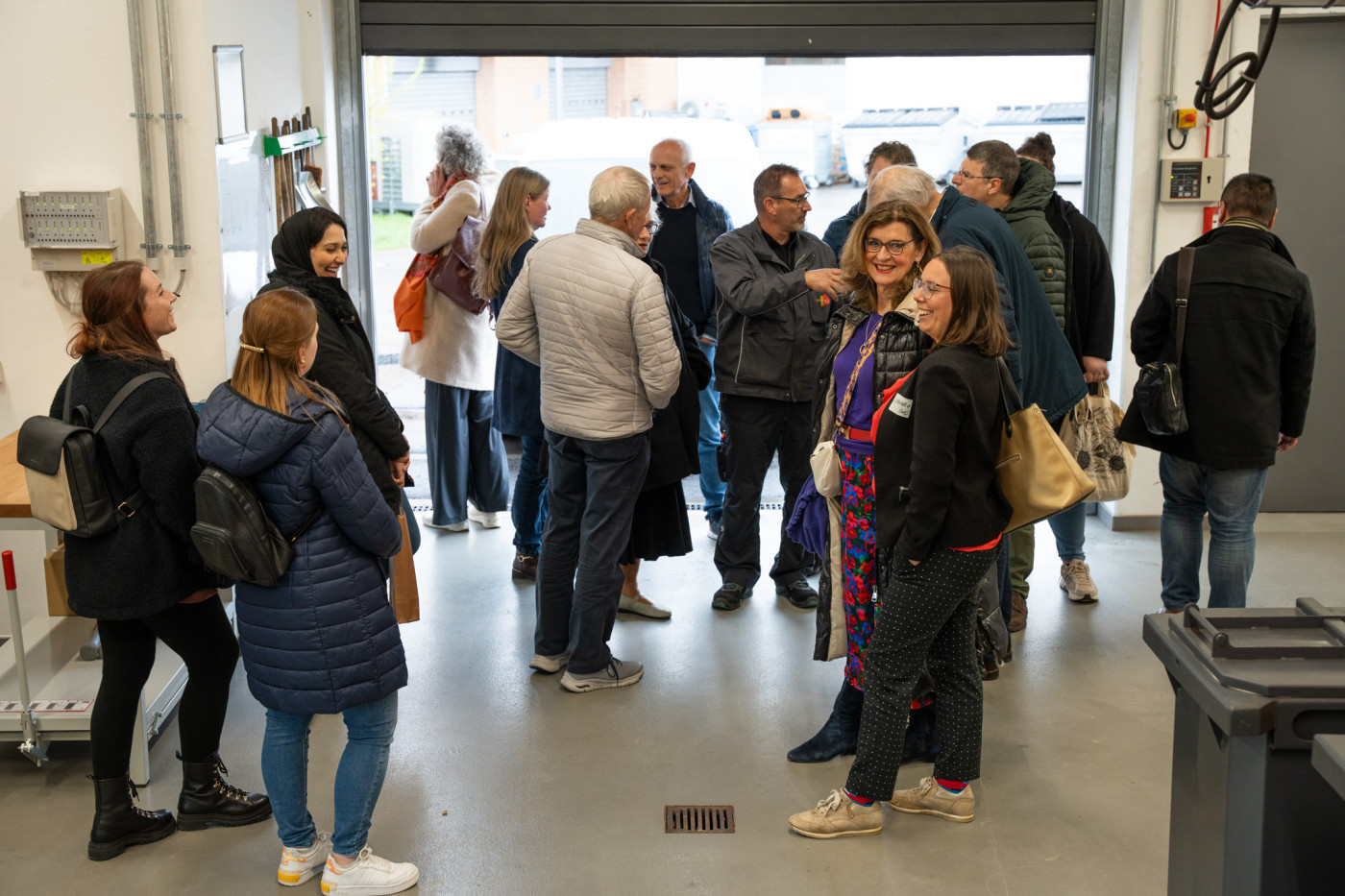
During the morning conference, we discussed current Douzelage projects and the General Meeting in Sherborne coming up in April, and exchanged new ideas, to strengthen the BeNeLux relations even more with concrete projects. We combined lunch at the CIPA Gréngewald with a tour of the building and a visit to the cogeneration plant "Am Sand". Finally, the BeNeLux Meeting was crowned by the inauguration of our brand new Douzelage totem in front of the commune building.
We would like to thank our friends from Meerssen and Houffalize for the great visit.


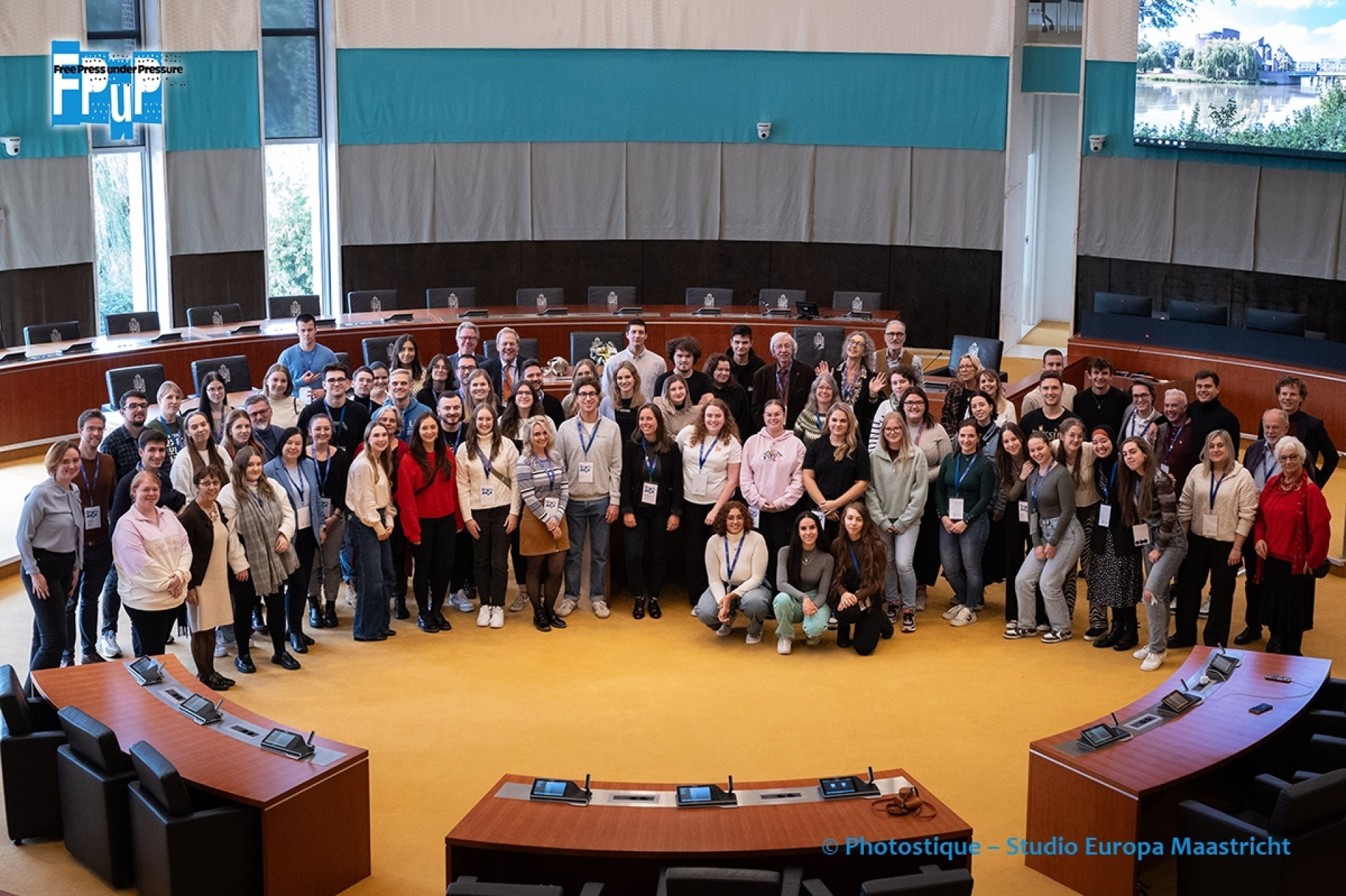
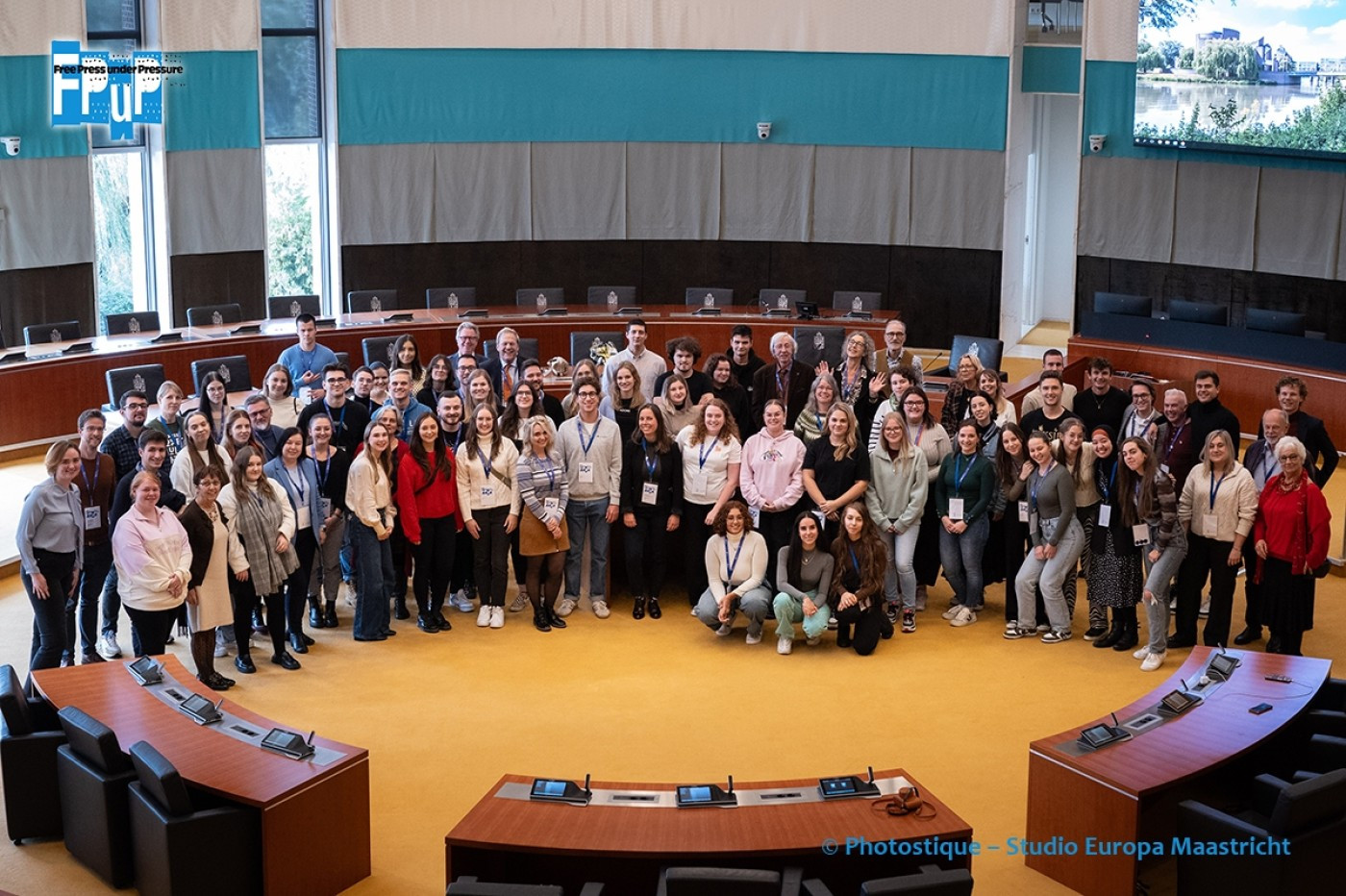
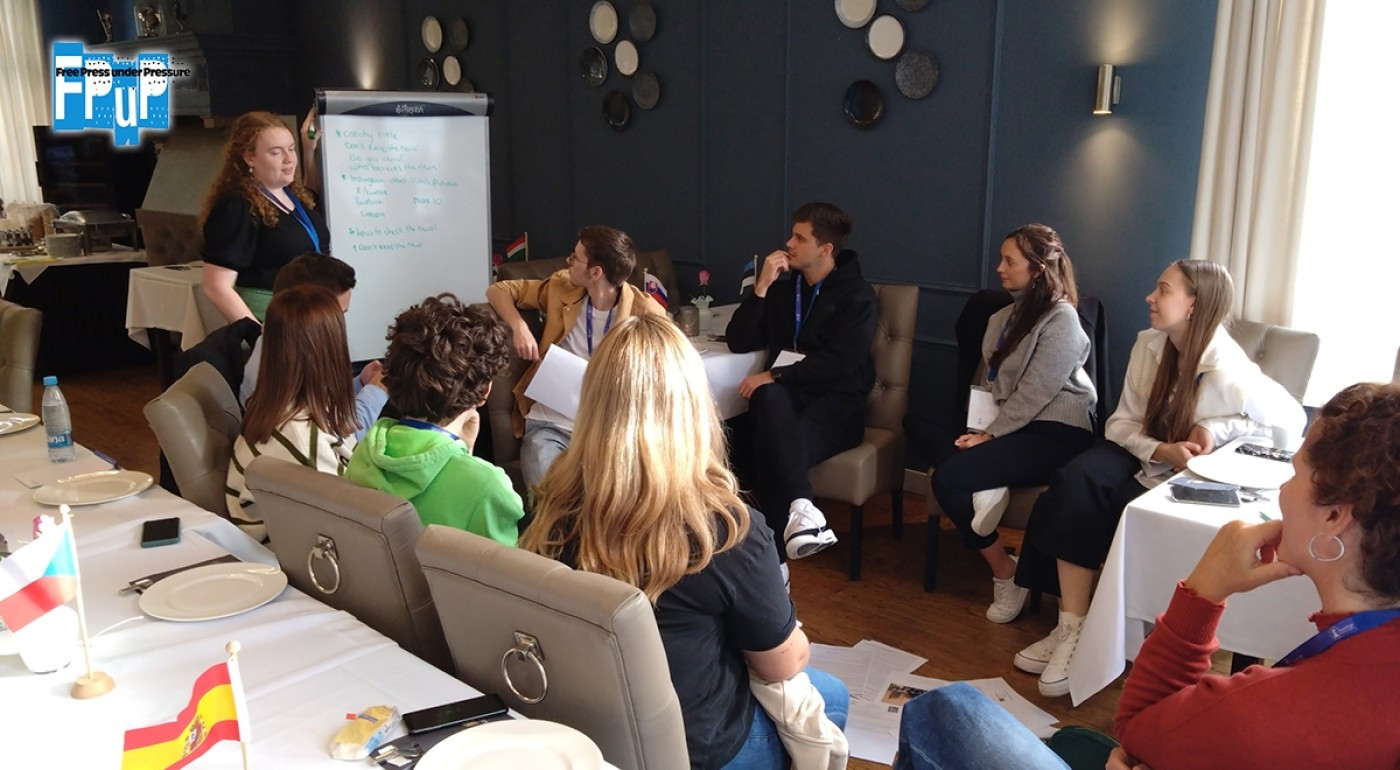
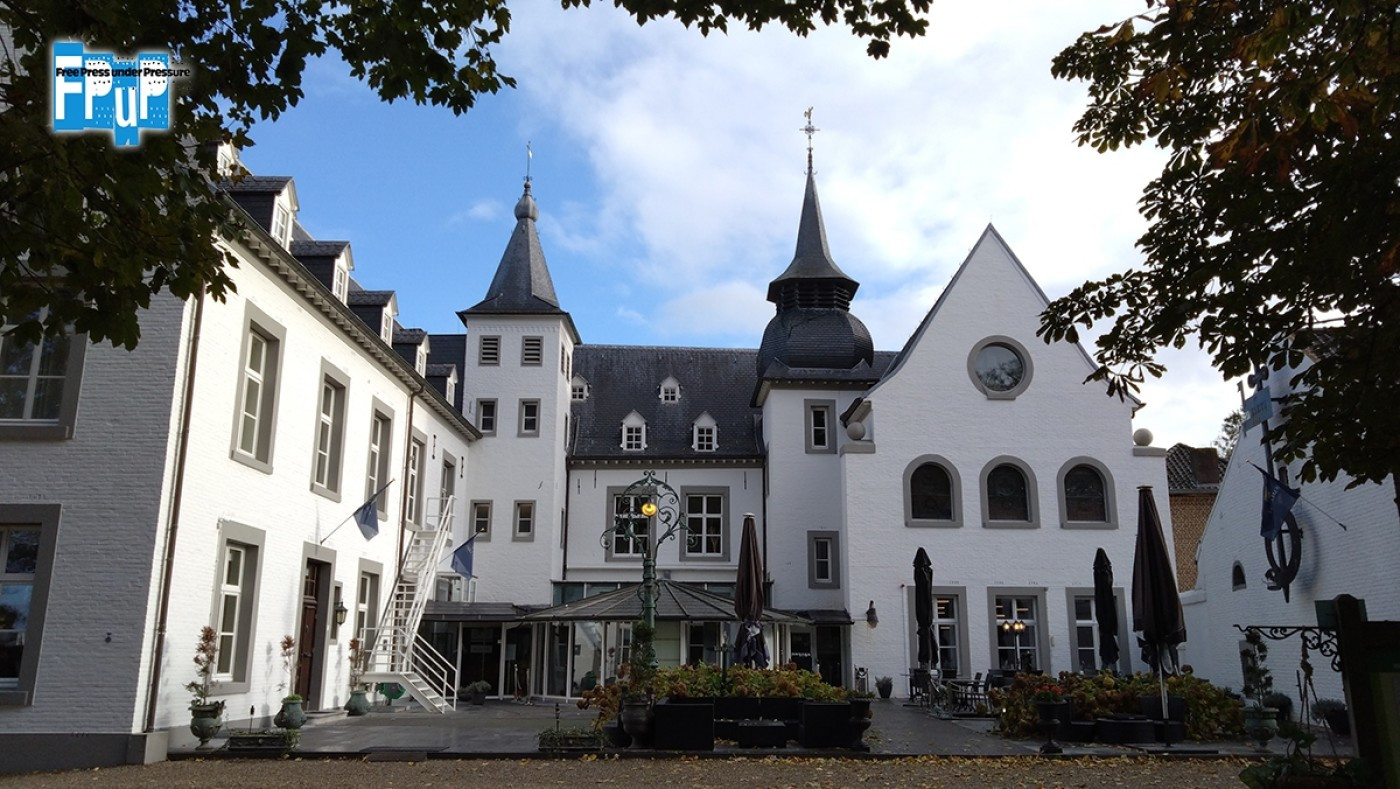
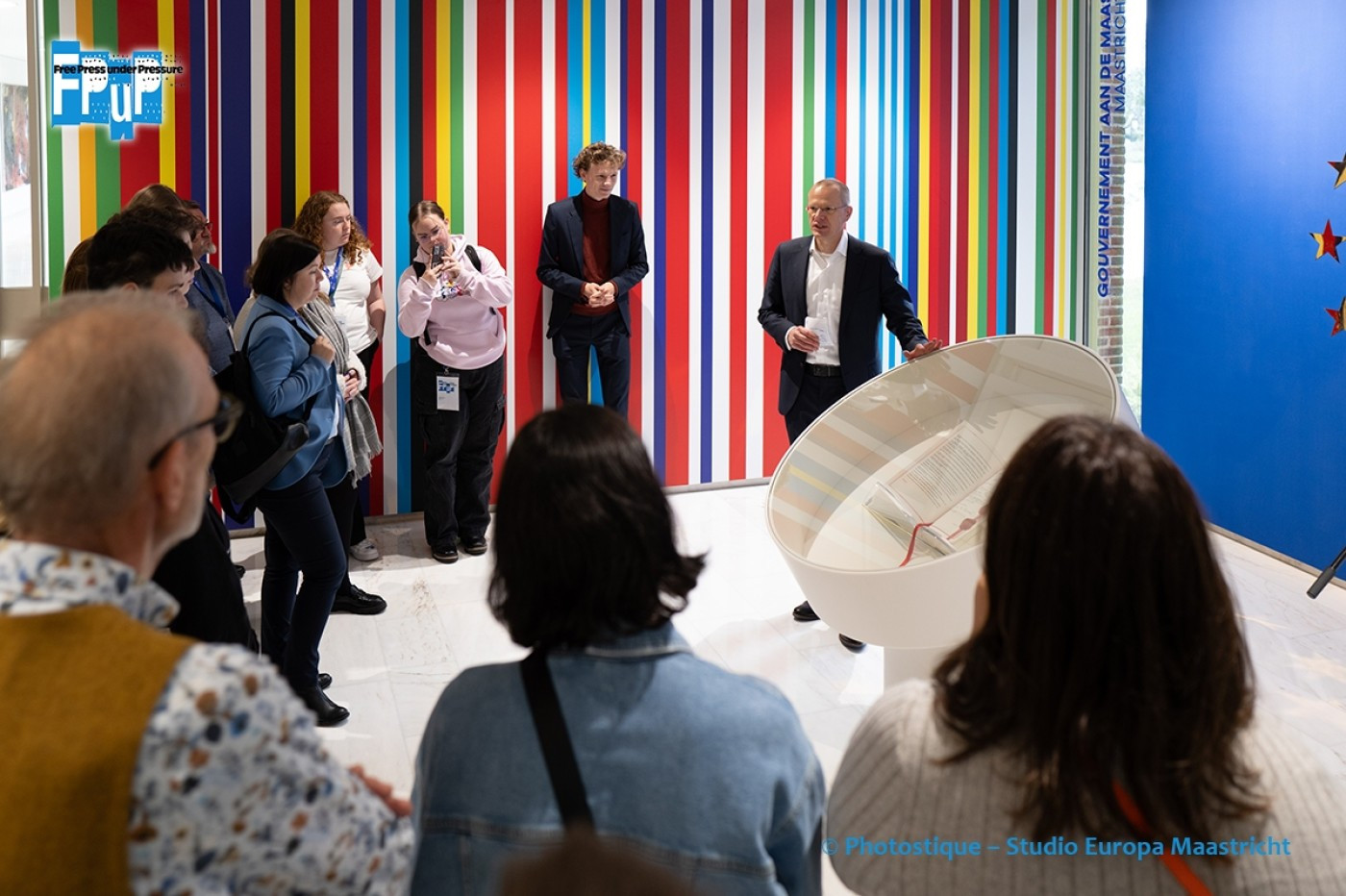
Under the name “Free Press under Pressure” (FPuP) seventy young adults from 19 member states of the EU sought for ways to discern factual, verifiable news from disinformation and “fake news”. The project was organised by Douzelage Meerssen in collaboration with Fontys University of Applied Sciences, Maastricht University, United Nations University (UNU-MERIT), Douzelage Köszeg and Douzelage Siret. The participants worked in seven workshops to develop a toolkit they can use to assess news and information and presented the results to each other. They worked with the enthusiasm and teamspirit and were a great example for older generations. The results, together with the toolkits of the young participants, were published on fpup.douzelagemeerssen.nl.
Three girls and one representative from the Commune administration of Niederanven took part in the conference, which was held from the 5th to the 8th of November 2023. The stay was combined with some superb activities and excursions, including a visit to the Limburg Provincial Government.


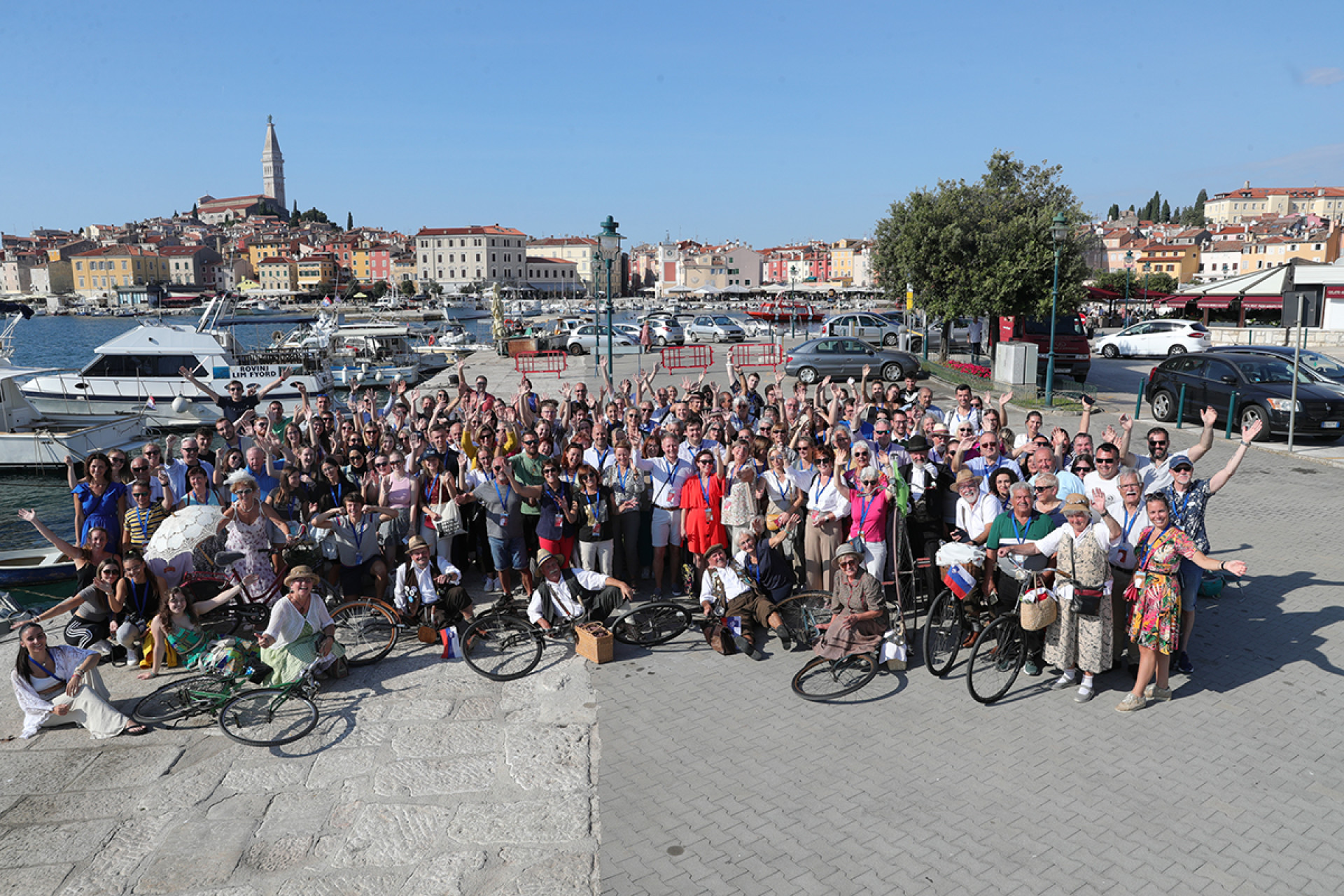
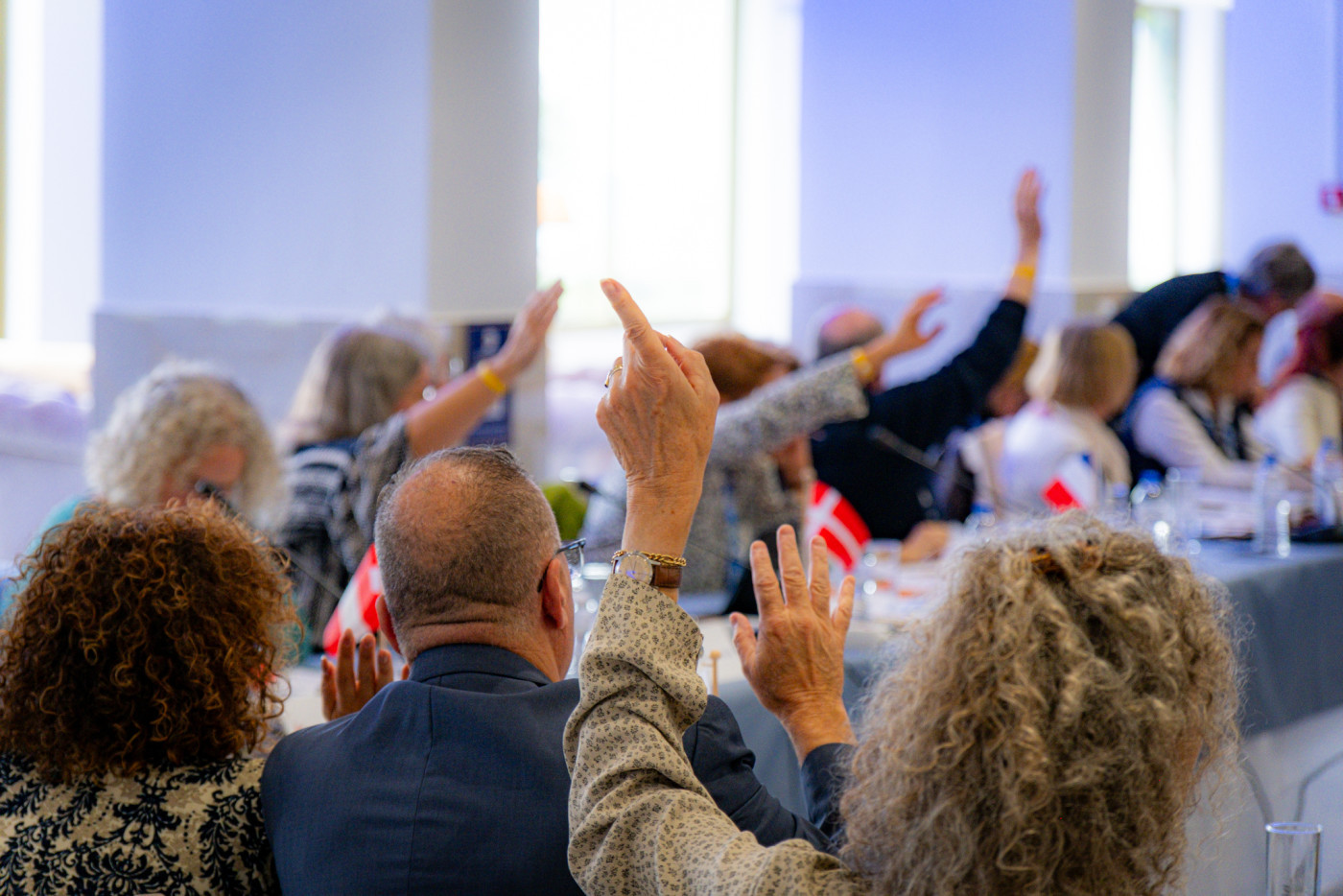
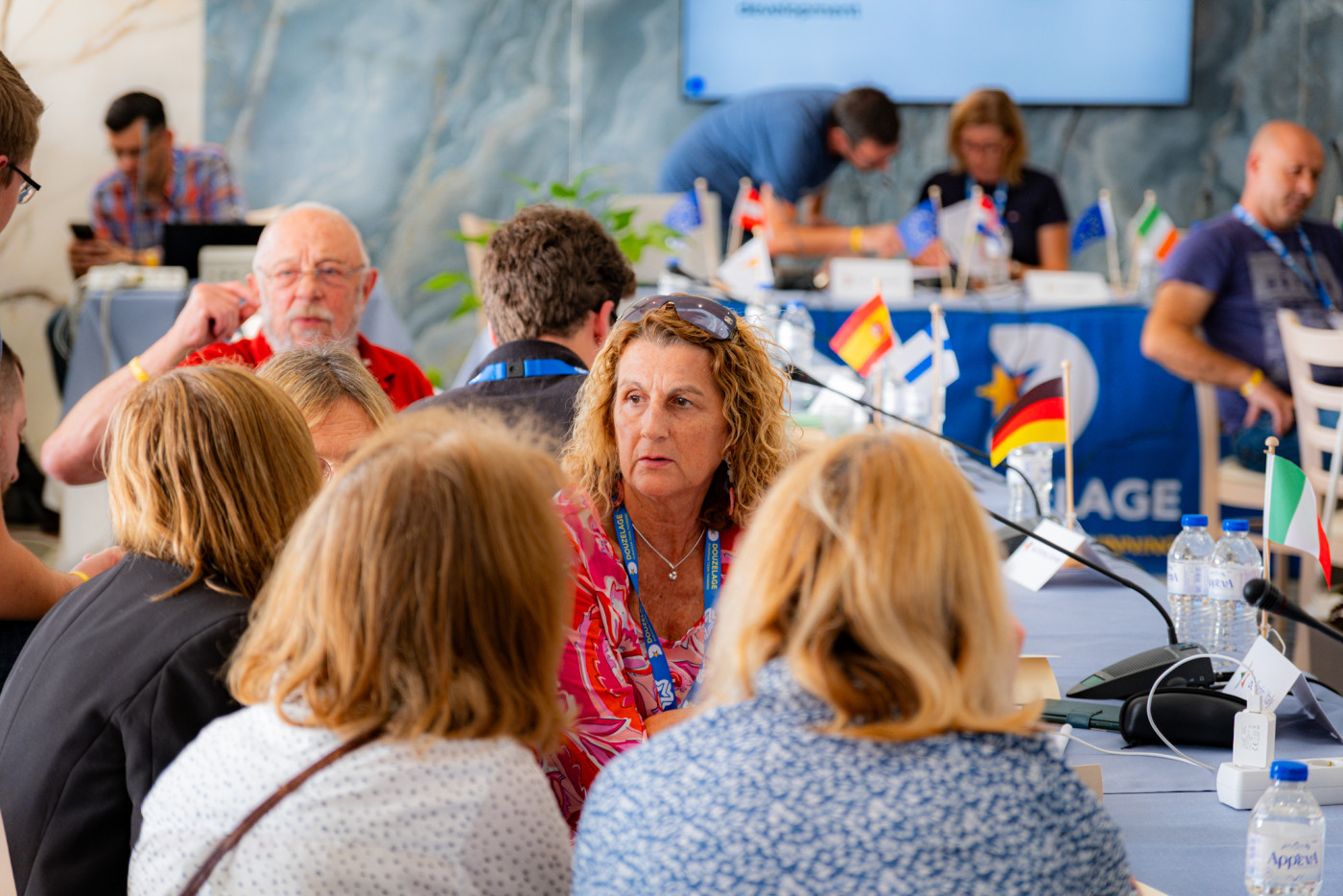
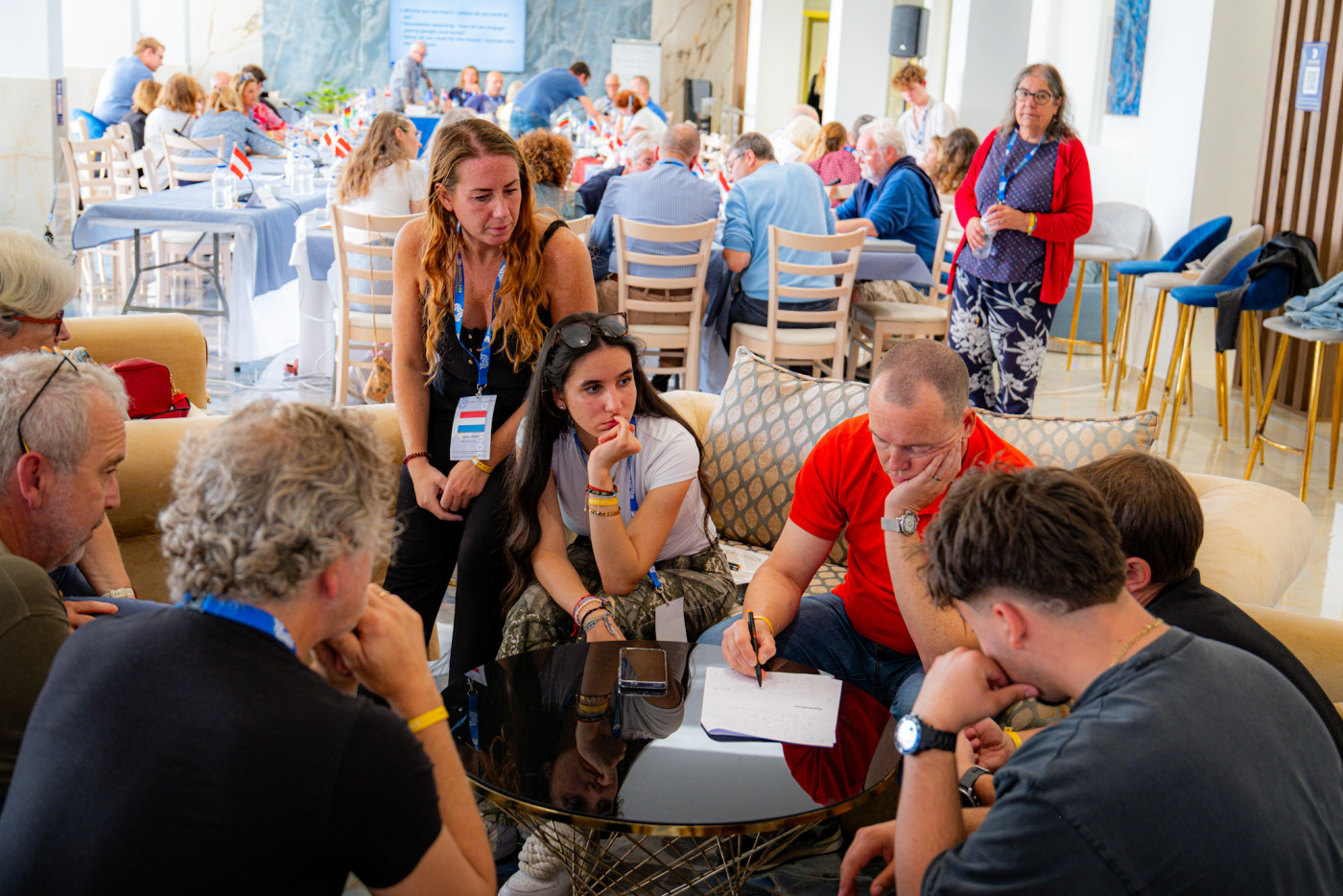
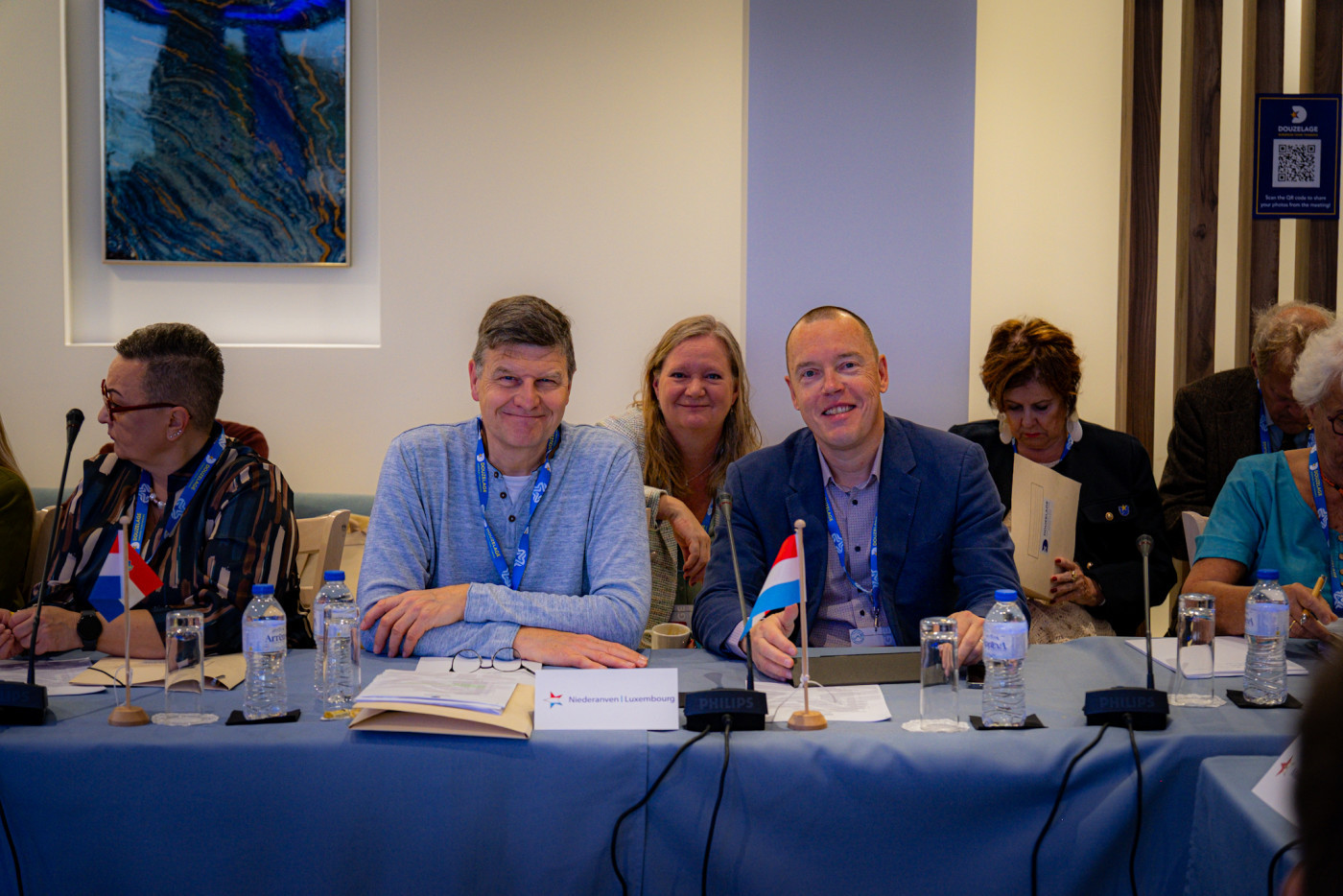
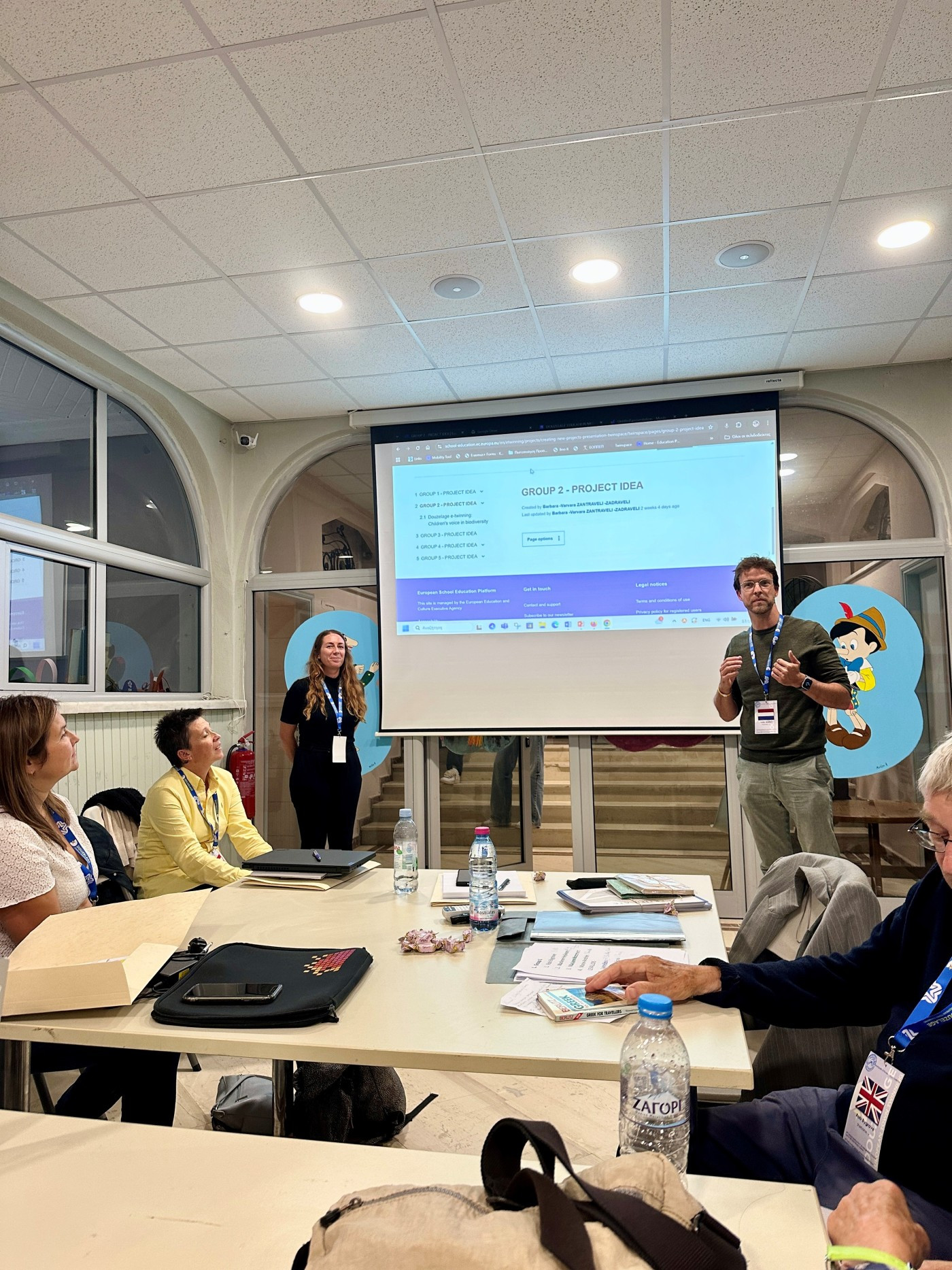
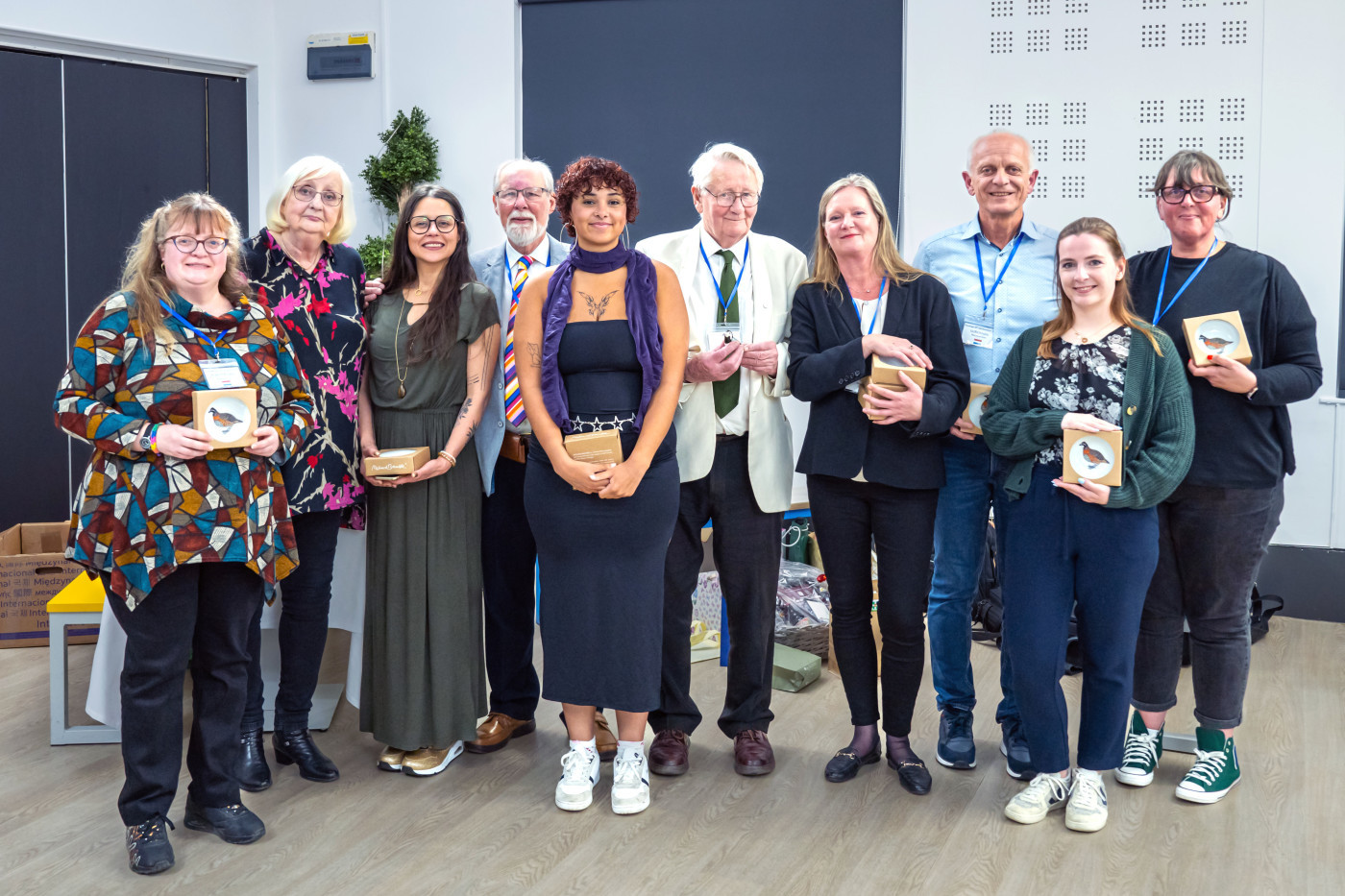
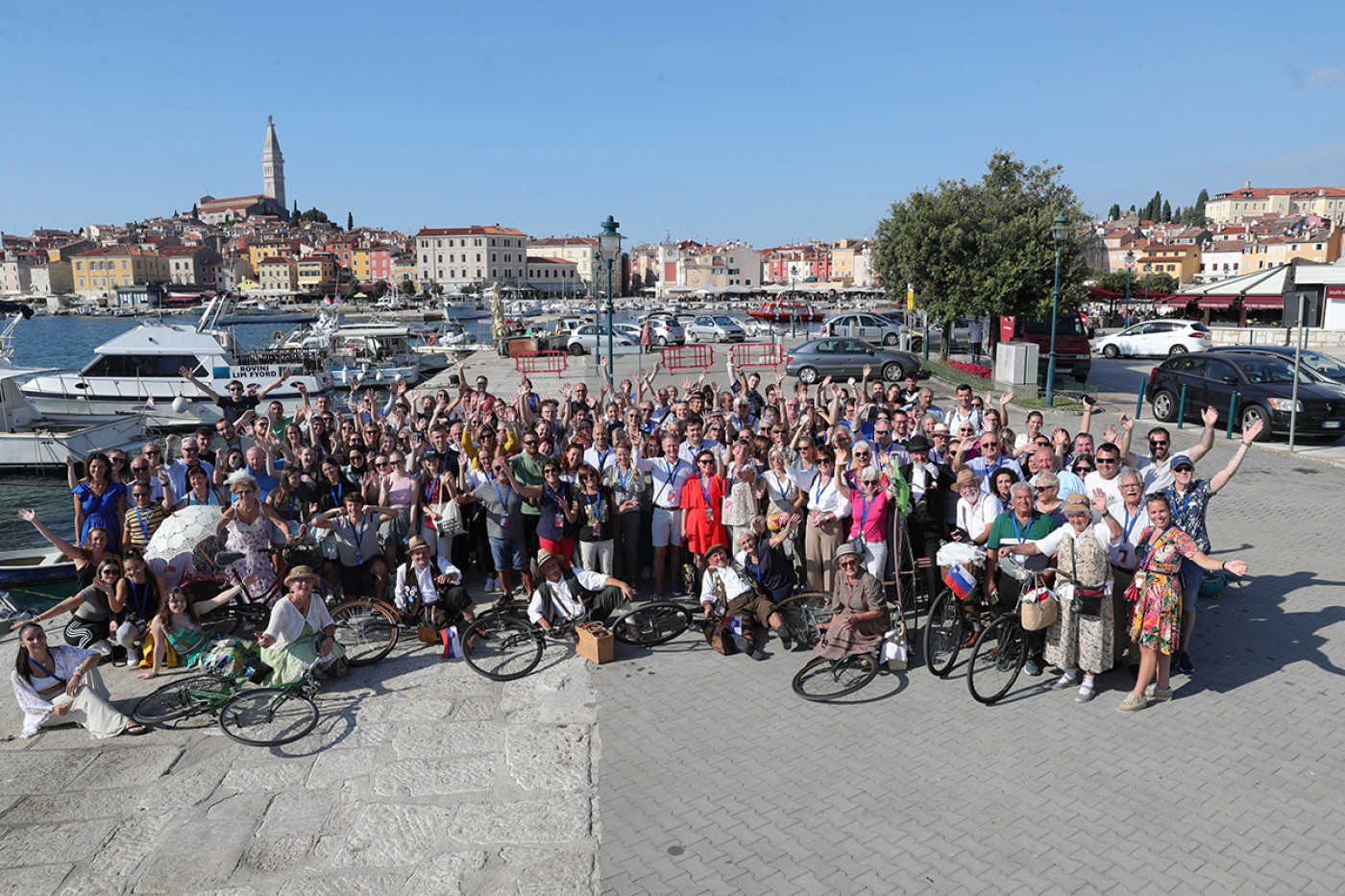
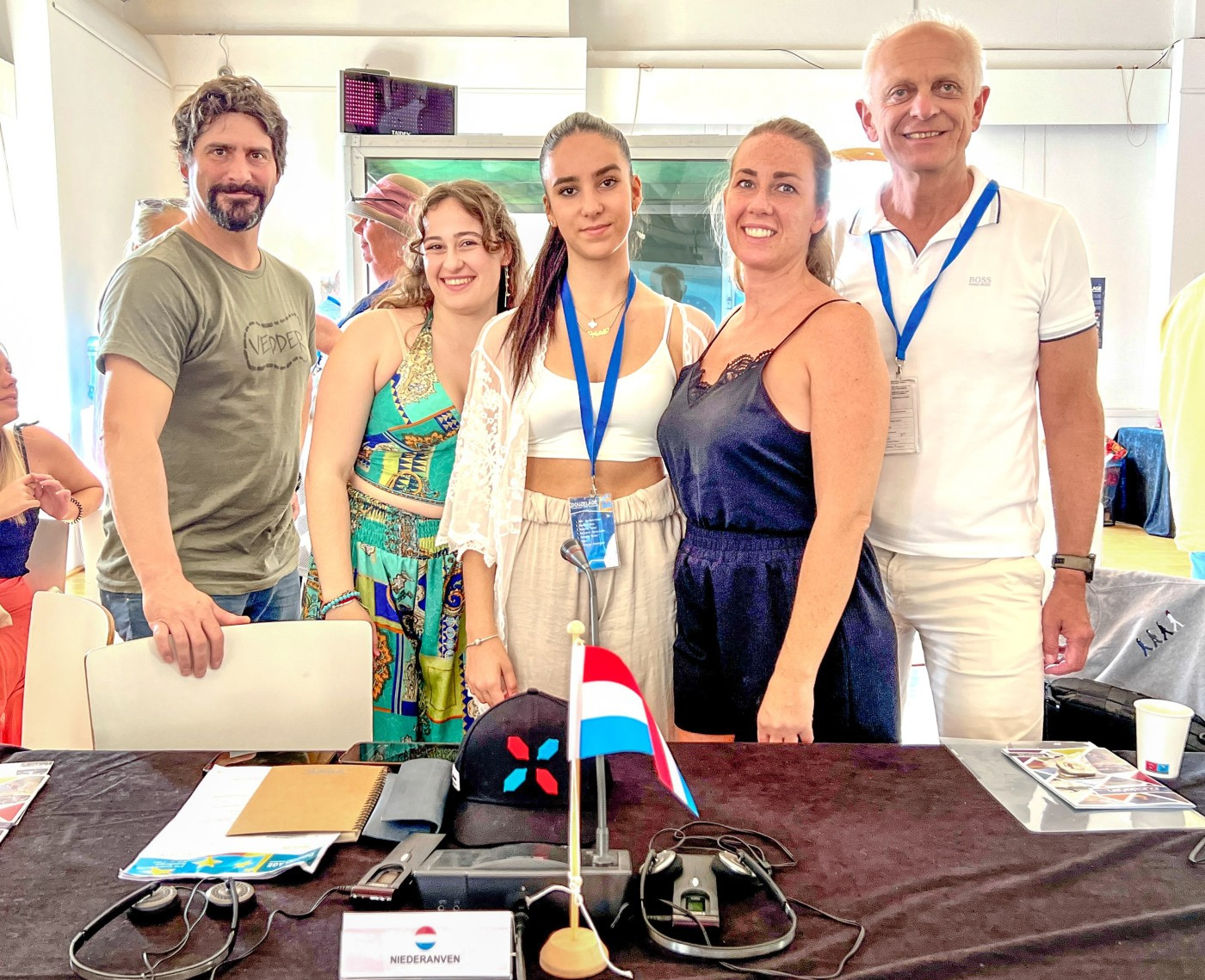
After putting out a call on our social networks and on our website, we have had the opportunity to send five official delegates to the General Meeting in Rovinj/Rovigno in Croatia from the 28th of September to the 1st of October 2023. The General Meeting, which is basically a general assembly during which delegates from all Douzelage member towns take stock of the year, is also characterised by its many workshops and activities around a specific topic.


To get to know the new Board of Aldermen of Niederanven, the President of Douzelage Europe, Mrs Annigje Kruytbosch, paid us a visit on the 16th August 2023 and at the same time presented us with our certificate for 30 years of participation in the Douzelage as a founding member.

Presentation of Our Partner Cities
In every edition of the municipal bulletin NEIES, the Douzelage team presents an article about one of our partner cities. You can find all of these articles below.
REVEZA IS CALLING!
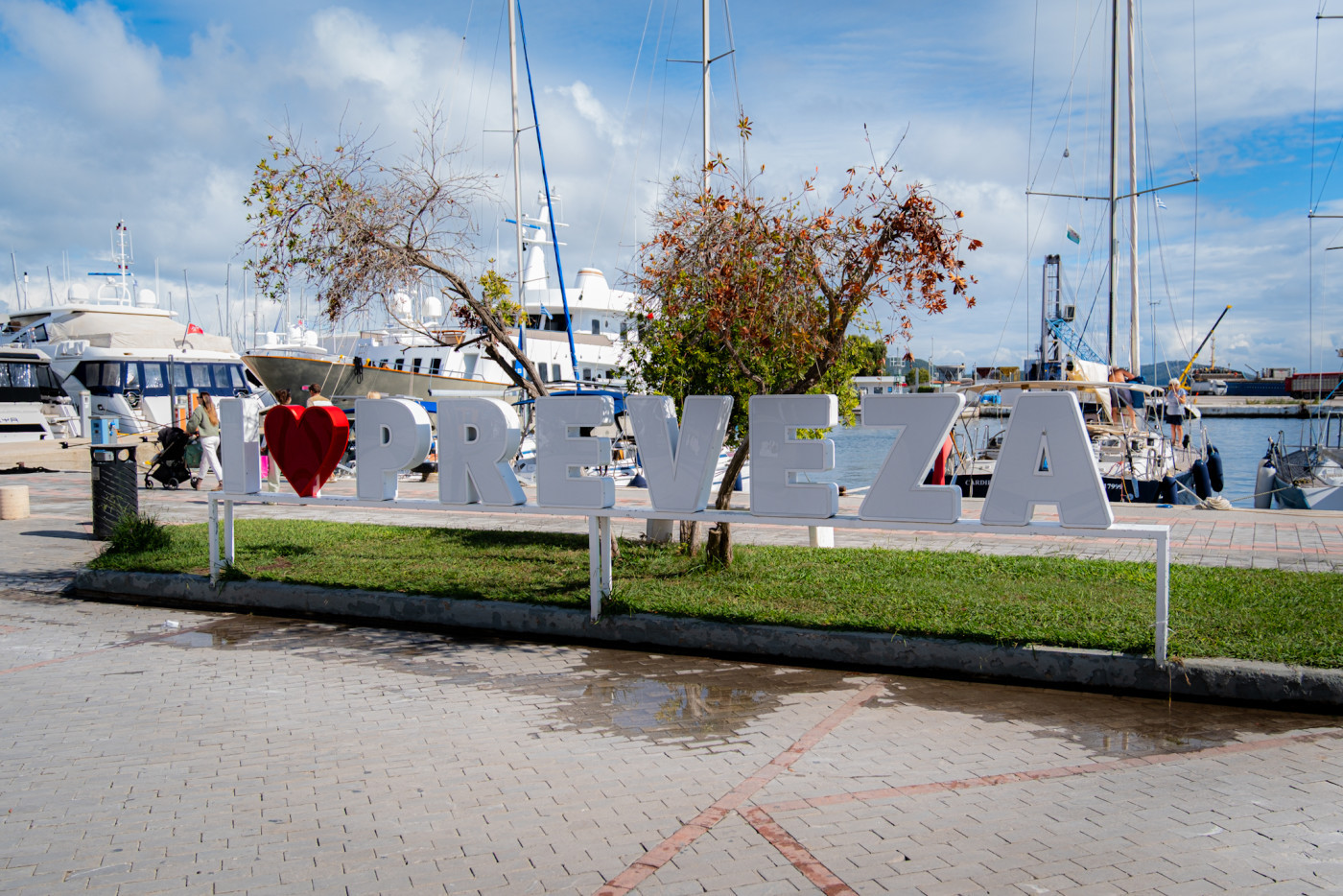
As part of our trip through the Douzelage network of twin towns in Europe, we will be visiting sunny Preveza in north-east Greece.
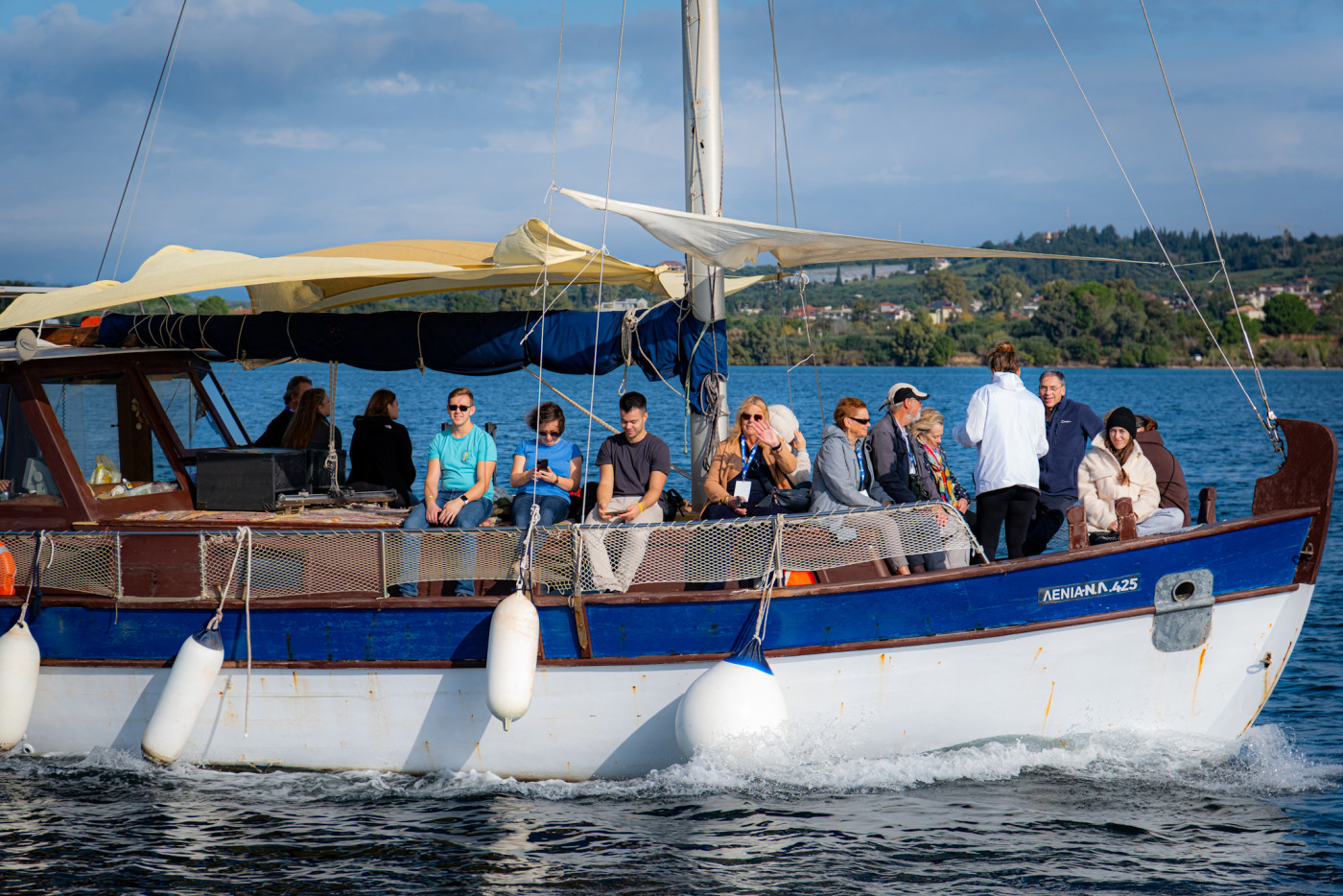
With its 21 000 inhabitants, Préveza (in Greek: Πρέβεζα) is the main city of the region of the same name, located in the south of the Greek province of Epirus. It is picturesquely situated on a peninsula between the Ionian Sea and the Gulf of Amvrakikos. A strait about 600 meters wide separates it from the locality of Aktio to the south and from the regional airport which is regularly served from Athens.
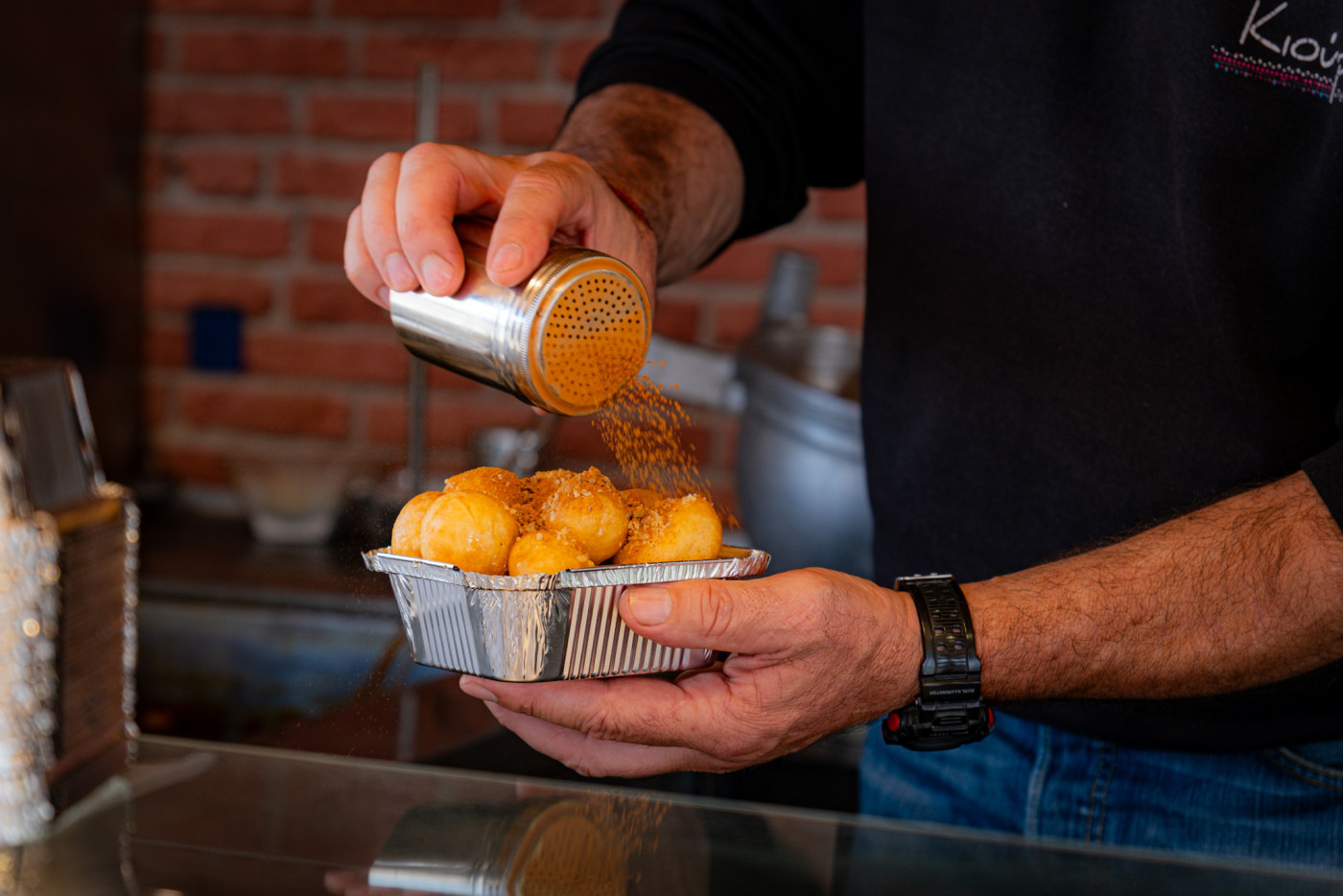
With its mild climate and Mediterranean charm, Préveza is an ideal holiday destination. During a relaxed walk through the city center, you can discover winding alleys with carefully decorated house entrances. Many cafés, ouzeries and taverns offering regional cuisine, but also influenced by different cultures, invite both locals and visitors to linger.
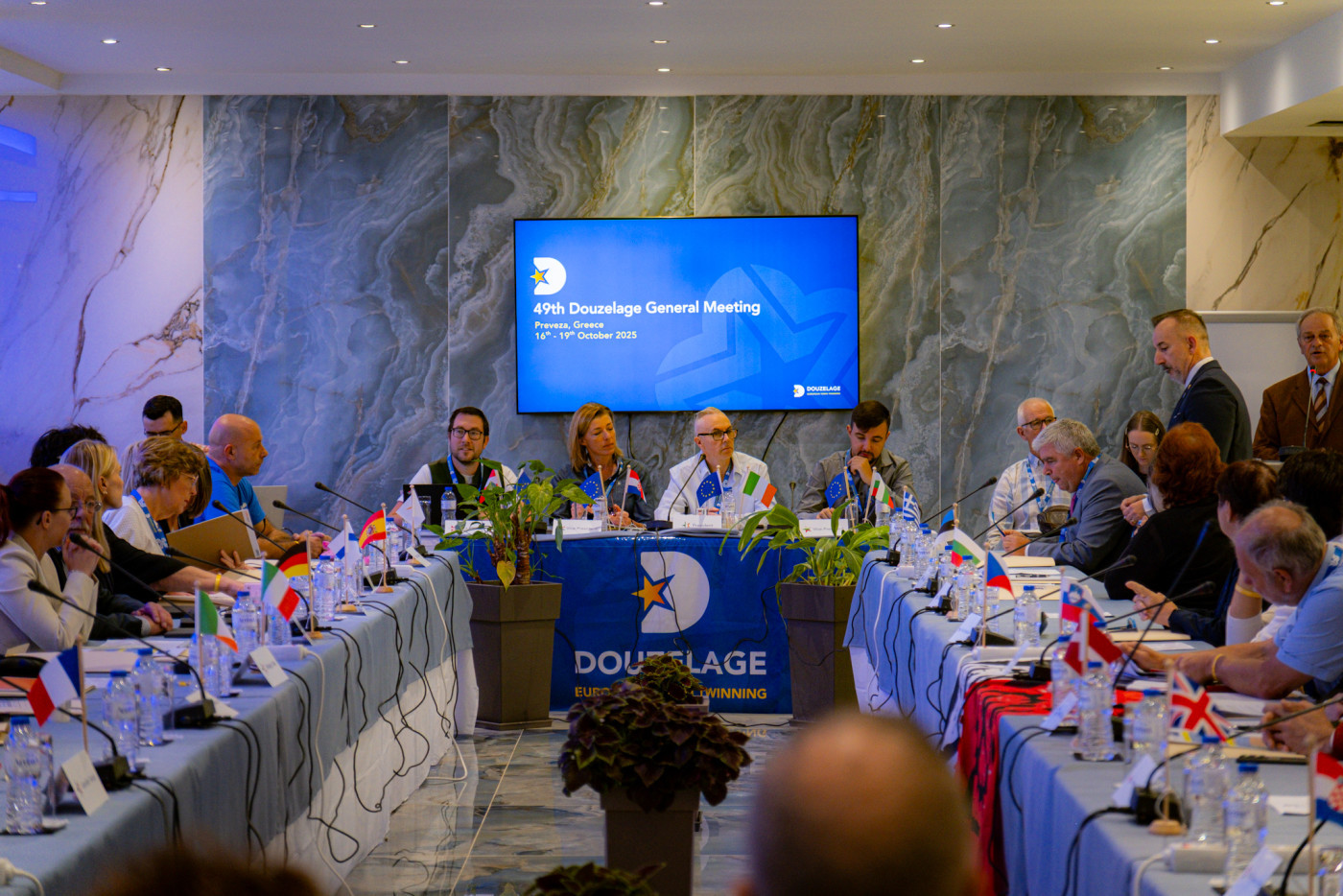
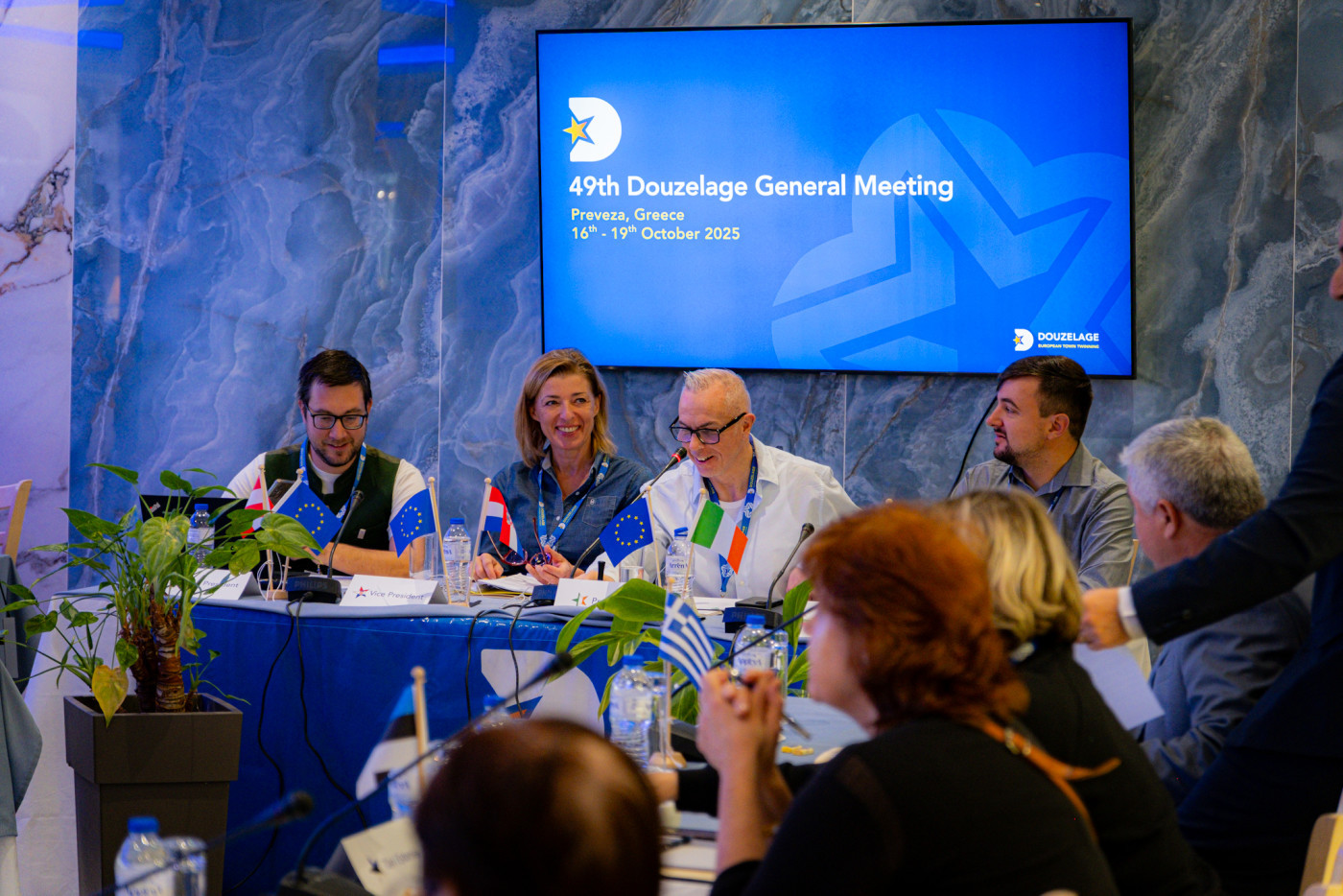
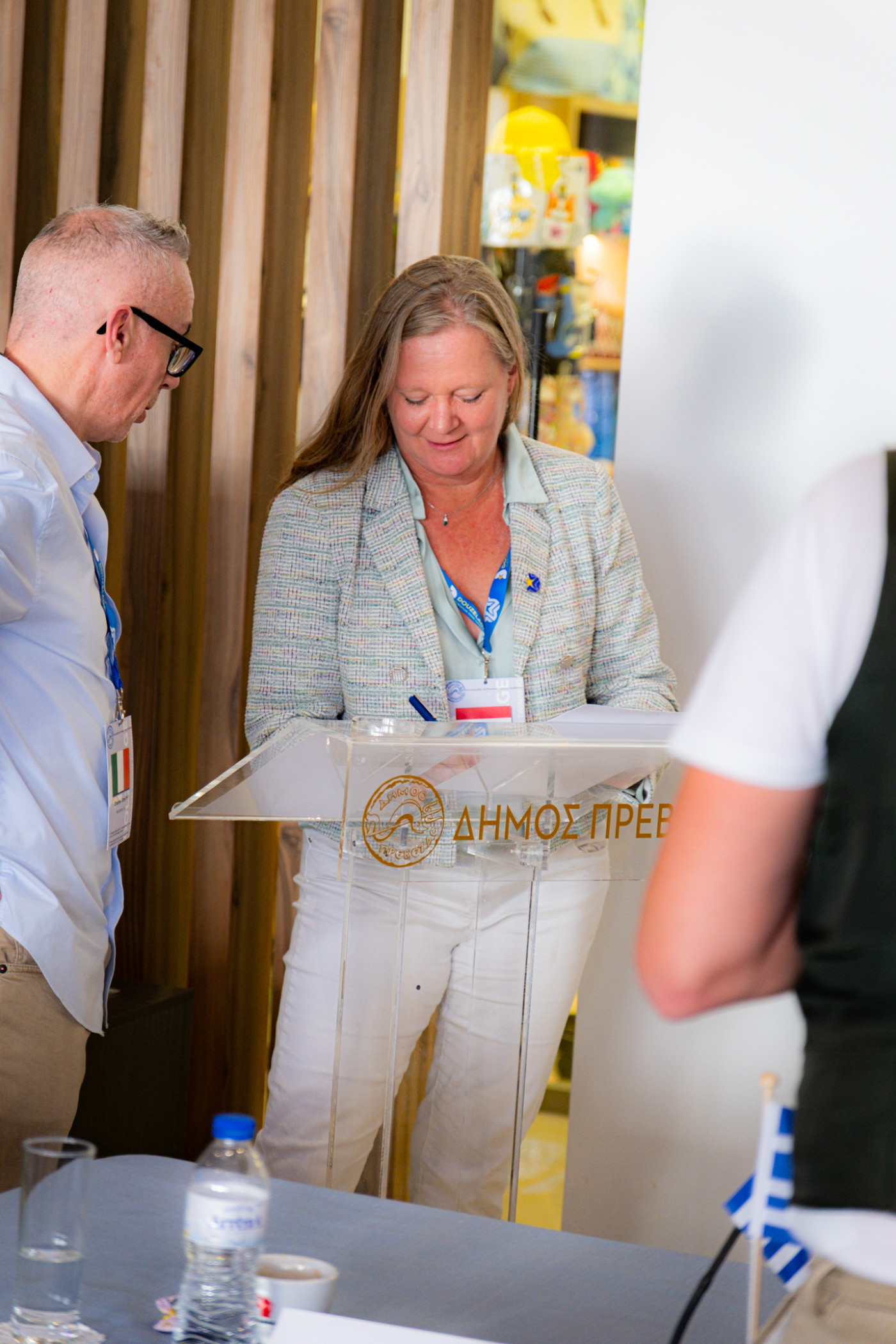
Before we take a closer look at the city, which by the way is one of the founding members of the Douzelage, it should be mentioned that Preveza will host the annual Douzelage General Assembly from 16 to 19 October 2025. Interested readers should block their agendas accordingly.
Before taking a closer look at the city, it should already be mentioned that Préveza will host the annual general assembly of the Douzelage from 16 to 19 October 2025.
With its mild climate and plenty of Mediterranean charm, Preveza is an excellent holiday destination.
Winding alleys with lovingly decorated house entrances can be explored on a relaxing walk through the city centre. Numerous coffee houses, ouzeries and taverns with regional, but also multiculturally influenced cuisine invite locals and guests to stop and spend some time there.
Well‑preserved churches from the Byzantine period can be visited, among which notably the Agios Charalambos. It impresses with treasured icons and a choir wall whose filigree carvings are decorated in gold leaf. The Church of Agios Athanasios is also worth seeing and features an impressive wooden ceiling.
The must‑see visit programme also includes the fortress of Agios Andreas in the city centre, the Pantocrator Castle, the Clock Tower, the Fort of Laskara, as well as feudal mansions and Venetian‑style buildings.
Due to its particular location, Preveza is surrounded by numerous, mostly natural beaches. The choice of beaches is large enough to conveniently spread out visitors. The beaches Kiani Akti, Paralia Alonaki and Mytikas are particularly popular.
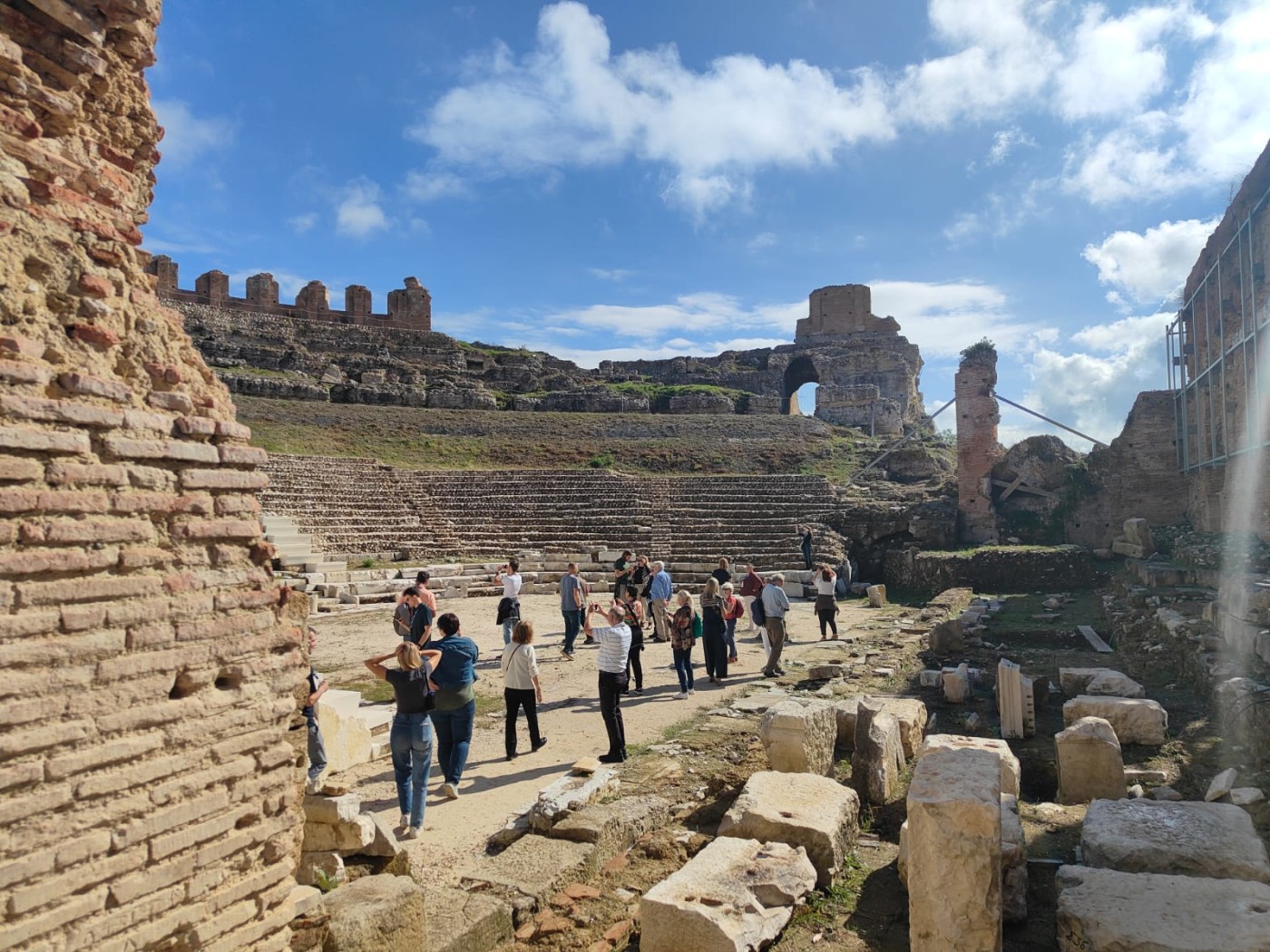
For those interested in history, it should be mentioned that Preveza appears in the historical chronicle of Morea as early as 1292. In the course of its eventful history, the city came under the rule of the Venetians, French, Turks, Bulgarians and Goths. The liberation of Preveza from the last foreign rule by the French took place in 1912, when the city was incorporated into Greece. It is therefore not surprising that a number of important historical sites can be visited in the surrounding area. These include the ancient city of Nicopolis, just a few kilometres to the north. Its founding dates back to the naval battle of Aktium in 31 BC, opposing the Roman consul Octavian on one side and Marc Antony and Cleopatra of Egypt on the other.
- Text: Dietmar DUMLICH

Fáilte go Bun Dobhráin (Welcome in Bundoran)
Our twin town Bundoran is located in County Donegal, in the northwest of Ireland, on the wild Atlantic coast. This popular Irish seaside resort has an impressive coastline that attracts visitors from all over the world.
With a population of just under 2,600 people, Bundoran is a small but vibrant community whose inhabitants are known for their hospitality and warmth. It is worth mentioning that Bundoran is located close to the “Irish Bottleneck”. At this narrow point, the territory of the Republic of Ireland is only six kilometres wide, making it the preferred route for travelling from western Ireland to County Donegal without crossing Great Britain.
A remarkable selection of attractions
Regardless of its size, Bundoran offers a wide range of activities and attractions for visitors of all ages. Bundoran Beach, a long sandy beach offering ideal conditions for surfing, swimming and sunbathing, is why the town is known as the “surf capital of Ireland”. The rugged cliffs along the coast provide impressive views of the Atlantic Ocean and are perfect for hiking and walking. Tullan Beach, located just outside the town, is another popular surfing spot.
Bundoran Adventure Park is a popular destination for families, offering rides, games and entertainment for children and adults alike. Waterworld Bundoran is an indoor aqua adventure park located right on the coast and features water slides and other attractions for visitors of all ages.
Nature lovers will enjoy the Fairy Bridges and Wishing Chair Walk, an area of striking rock formations with a history dating back to the time of the Druids. The rock arches of the Fairy Bridges on the Roguey Walkway provide visitors with breathtaking vistas of the Atlantic Ocean. According to local tradition, the area was once believed to be inhabited by fairies.
Next to the Fairy Bridges is the Wishing Chair, another well-known landmark. Legend has it that if you sit in the chair and make a silent wish, it will come true.
About six kilometres from Bundoran lies the historic Kinlough Monastery, a sixth-century ruin offering a peaceful glimpse into Ireland's rich and eventful past.
A wealth of culture and history to discover
Bundoran has a long cultural history that dates back to the 18th century, when it became known as a spa town. Visitors came to seek relief from ailments in the fresh sea air and healing waters, and this tradition continues today, with Bundoran remaining a popular resort town.
The town also hosts a variety of cultural events and festivals. The annual Sea Sessions Surf and Music Festival, for example, attracts numerous visitors who enjoy live music, surfing competitions, and beach parties during the summer. Another highlight is the Rory Gallagher International Tribute Festival, held in nearby Ballyshannon in late May or early June and dedicated to the famous Irish blues guitarist.
Bundoran is also renowned for its traditional Irish music and dance. Many pubs and venues offer regular live performances, giving visitors the chance to experience Ireland’s vibrant cultural heritage first-hand.
In short, Bundoran is a town that stands out for both its natural beauty and its cultural heritage. With its welcoming atmosphere, diverse attractions and vibrant cultural scene, it is a must-visit destination on any trip to Ireland.
- Text: Dietmar DUMLICH

Off to a birthday party in MALTA
As part of our tour of the European Douzelage partner towns, a special occasion is taking us to the southern Mediterranean, specifically to Marsaskala on the sunny island of Malta.
As mentioned in the previous issue of NEIES, Marsaskala will host the Douzelage General Assembly from 3 to 6 September 2026, marking the 50th anniversary of our European town partnership.
MEDITERRANEAN FLAIR
Marsaskala is located in the southeast of Malta’s main island and, thanks to its position on the Mediterranean coast, is popular with both locals and tourists. The town lies about ten kilometres south of Valletta, Malta’s capital, and charms visitors with its idyllic bay and relaxed atmosphere.
With a population of around 13,000, Marsaskala was already settled in Roman times but was frequently targeted by pirate raids during the Middle Ages. When a Turkish fleet of 60 ships landed in 1614 and was repelled only with great difficulty by the Knights of the Order of St. John, St. Thomas Tower was built to protect the town. This landmark later served as a prison until World War II.
Over time, the community developed from a former fishing village into a vibrant centre of tourism and commerce, with the population almost doubling during the summer months. The many bays and stretches of coastline invite visitors to swim and dive.
The name Marsaskala derives from the Arabic word “Marsa” (harbour) and the Italian “Scala” (Sicilians). It is believed that Sicilian fishermen once sought shelter from rough seas in the bay.
NUMEROUS ATTRACTIONS
In addition to the coastline, which is ideal for swimming, diving and boating, the bay of Marsaskala Creek is considered the town’s main attraction. Colourful luzzu fishing boats anchored in the water and the lively seaside promenade create a picturesque setting. From the promenade, visitors can see the traditional salt pans where salt is produced through the evaporation of seawater. The bay is lined with small restaurants offering delicious Mediterranean cuisine.
Another highlight is Mamo Tower, built in 1657.
This former fortified residence of a wealthy family is notable for its unique ground plan in the shape of a St. Andrew’s cross.
Culture enthusiasts can explore numerous churches and chapels, including St. Anne’s Parish Church, built in 1953 in a neoclassical style, as well as the chapels of St. Anthony of Padua and Our Lady of the Rosary, dating from the 17th and 19th centuries. The Briconet and Zonqor fortifications from the 18th and 19th centuries are also well worth a visit.
Marsaskala is also an excellent starting point for exploring the surrounding area. St. Thomas Bay, located south of the town, is popular with swimmers thanks to its shallow waters and small sandy beach. The Munxar Path leads along scenic limestone cliffs.
Further south lies the Xrobb l-Għaġin Nature Park, featuring the remains of a megalithic temple, a rocky shoreline and views of striking white chalk cliffs, making it ideal for hiking. Finally, St. Peter’s Pool, a natural basin with crystal clear turquoise water set in a horseshoe-shaped rock formation, offers unforgettable swimming fun for visitors of all ages.
- Text: Dietmar DUMLICH

Our next door neighbour
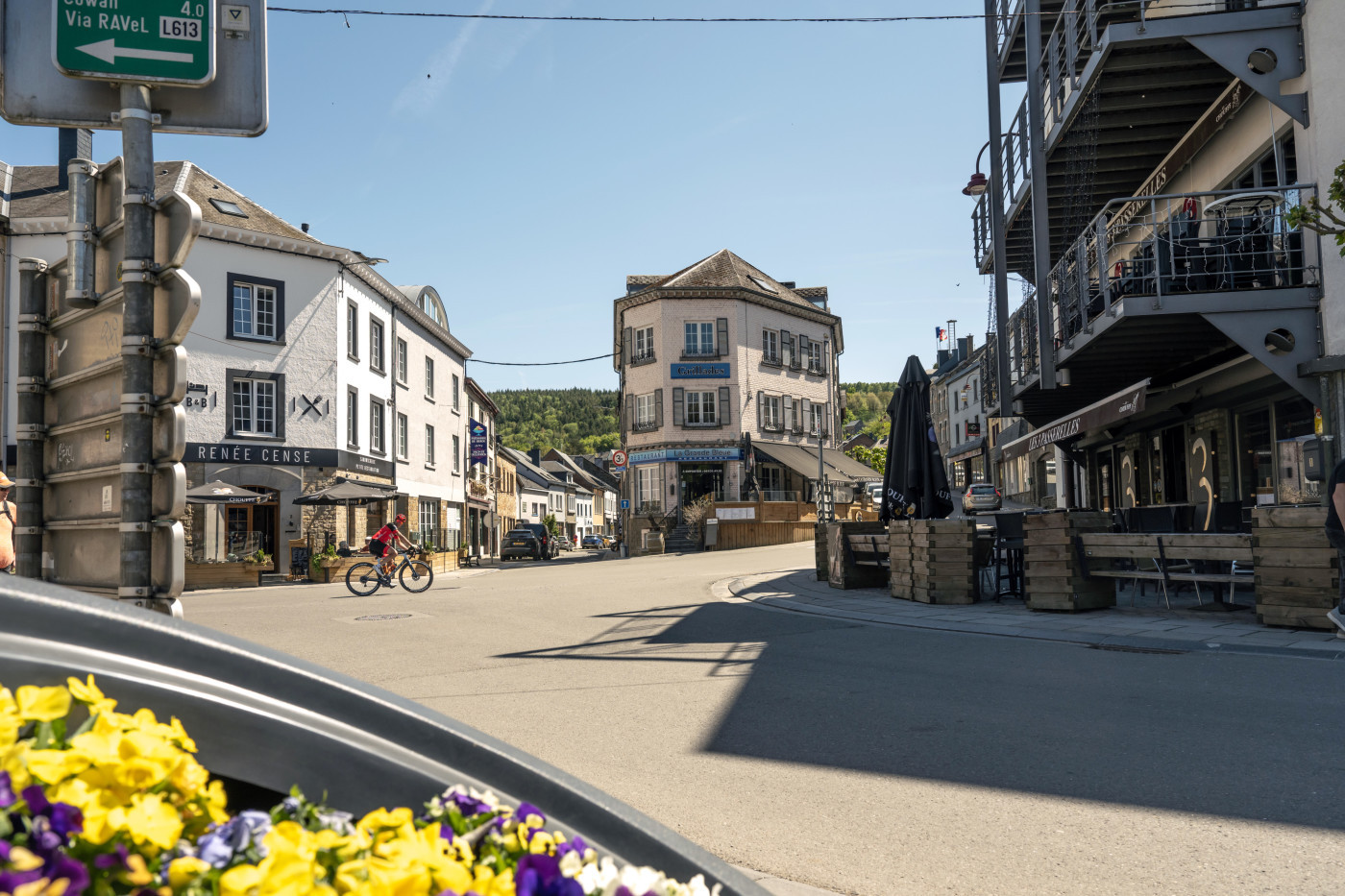
As part of our round trip to the Douzelage twin towns across Europe, today we travel to the nearby Belgian province of Luxembourg. We are talking about our twin town Houffalize. While the exact origin of its name remains uncertain, it may derive from the French expression “haute falaise”, meaning “high cliff”. This interpretation is supported by its German name “Hohenfels” as well as the rocky surroundings of the town. With just over 5,000 inhabitants, the picturesque town of Houffalize is located in the heart of the Ardennes, about an hour’s drive from Luxembourg City and half an hour west of Clervaux.
An eventful history
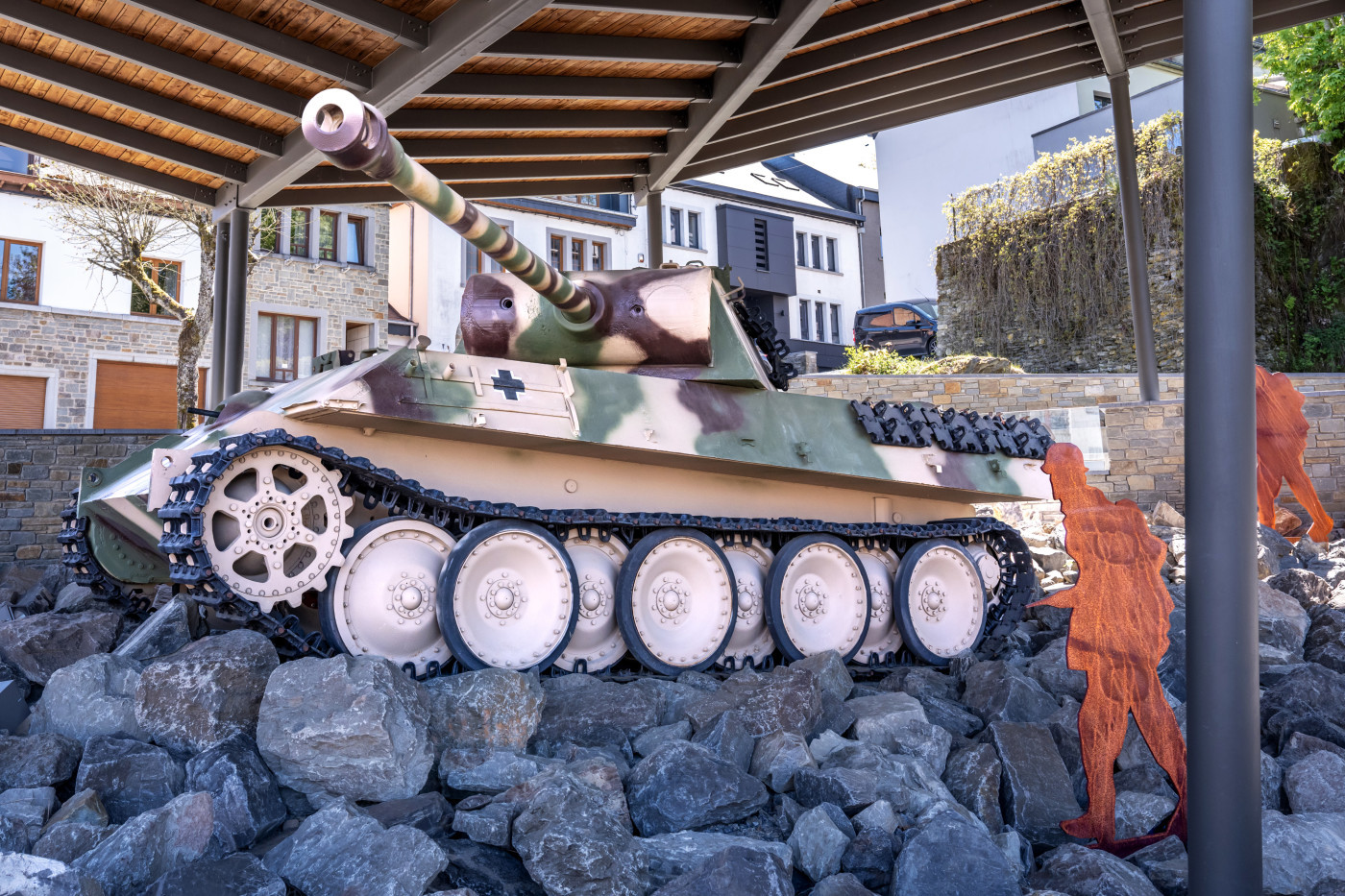
Houffalize has an eventful history. After the French annexation at the end of the 18th century, the town belonged to the “Département des Forêts”. Following the Congress of Vienna in 1814–1815, it was assigned to the newly founded Grand Duchy of Luxembourg, only to return to Belgium after the Belgian Revolution in 1830. During the Second World War, Houffalize became one of the central locations of the Battle of the Bulge (1944–1945) and suffered severe destruction. Even today, a German tank recovered from the river Ourthe and displayed on Saint‑Pair Square serves as a reminder of this dark chapter in history.
Houffalize - Postcard Views from Our Belgian Twin Town
The town centre of Houffalize is photogenically surrounded by one of the many loops of the river Ourthe, a tributary of the Meuse whose headwaters meet close to the town. It is therefore a good idea to combine a visit to Houffalize with a trip to the protected “Parc Naturel des Deux Ourthes”, which invites visitors to hike and cycle through 76,000 hectares of forest and natural landscapes. In the village of Nadrin, which belongs to Houffalize, the Ourthe suddenly encounters a colossal schist rock. Up to 80 metres high and about one kilometre long, the “Rocher du Hérou” is a geological curiosity and a popular attraction for hikers. From its summit, as well as from the Belvédère de Nadrin, those with a head for heights can look down into the deep valley of the Ourthe or let their gaze wander across the surrounding landscape. Another curiosity is the remains of the Meuse–Moselle Canal. In order to facilitate the transport of goods within his kingdom, Grand Duke Guillaume I of Orange‑Nassau decided in 1827 to connect the basins of the Meuse and the Moselle by a canal running along the tributaries Ourthe and Woltz between Liège and Wasserbillig. Work on the 2.5‑kilometre Bernistap Tunnel, the entrance of which can still be visited today, began in 1828 but was interrupted by the independence of Belgium, leaving the project unfinished. In the centre of Houffalize, on the banks of the Ourthe, stands the Roman Catholic church of Sainte‑Catherine d’Alexandrie, dedicated to the fourth‑century martyr of the same name. Built by Augustinian canons in the 13th century in an early Gothic style, it houses an exceptional lectern in the shape of an eagle with outstretched wings, cast in 1370 by goldsmiths from Dinant. Also worth a detour are the tower of the former Saint‑Urbain church in Dinez, located in the middle of a cemetery on a picturesque hill, as well as the Notre‑Dame chapel with its distinctive 17th‑century onion dome.
- Text: Dietmar DUMLICH
© Ardennes Résidences

Siret, Vorbești română? (Do you speak Romanian?)
Nestled in the northeast corner of Romania, in the picturesque Bukovina region famous for its painted wooden monasteries and churches, our Romanian Douzelage twin town Siret is located only two kilometres from the Ukrainian border. Listed as one of the oldest urban settlements in Romania, Siret holds a rich historical legacy. With a population of 6,700 inhabitants, Siret first appears in historical documents in 1339, referred to as a Russian city in Wallachia. Later it became the historical capital of the medieval principality of Moldavia. At the crossroads of Russian, Ottoman and Western influences, Siret’s historical and political environment remained turbulent until recent times. Occupied by the Imperial Russian army in 1770 and governed for more than a century by the Austro‑Hungarian Empire, Siret endured four decades of post‑war socialist rule until dictator Ceaușescu was deposed by the Romanian people in 1989.
A Point of Attraction in the Region
Thanks to its strategic location along the Siret River and the border with Ukraine, Siret has always played an important role in the regional economy, trade and culture. Although its population is mainly Romanian‑Orthodox, the town also boasts a Roman‑Catholic church in its centre, belonging to the bygone Bukovina German community. Other attractions include the Holy Trinity Church, one of the oldest in Romania (built in 1352), a beautiful Greek‑Catholic church with a striped façade, a Jewish temple and the old train station. Today’s Vicșani railway station functions as a border control point for rail crossings between Romania and the transit station of Vadul‑Siret on the Ukrainian side. Interestingly, it is the place where the rail system changes from standard gauge on the Romanian side to Russian‑style broad gauge in Ukraine, allowing seamless transportation of people and goods once the transfer has taken place in Vicșani. Famous people born in Siret include the Jewish writer and journalist Leo Katz, the Romanian‑German poet Elisabeth Axmann, the Ukrainian poet Mykhailo Ilkovych, and Archbishop Victorin Ursache.
A Valued Partner for the Road to Ukraine Project
In June 2024, Siret played a crucial role in the Road to Ukraine project, aimed at providing humanitarian aid to the city of Kamenets in Ukraine through the donation of two minibuses by a private Luxembourgish transport company. Joining forces with other Douzelage towns, Niederanven’s team drove the two buses almost 1,900 kilometres from Luxembourg to their destination, crossing Germany, Austria, Hungary and Romania. The team was warmly welcomed by the Siret Douzelage team and received support in reaching its destination in Ukraine. As a result of this exceptional effort, two minibuses will now help meet the basic needs of Kamenets’ residents, including the elderly, children and socially vulnerable groups. The contribution of the people of Siret to the project stands as a testament to the enduring spirit of community and cooperation between Douzelage towns, bridging cultures and bringing people together in peace and mutual respect.
- Text: Dietmar DUMLICH

Meerssen, a hidden gem in the province of Limburg
As part of the series “Our Douzelage Partner Cities Across Europe”, we’re taking you to the Netherlands this time, specifically to the town of Meerssen. Located in the southeast of the country, just a few kilometres north of Maastricht, Meerssen has existed since prehistoric times. It was already inhabited by the Romans and visited by Charlemagne.
A unique city with a historical past
The town, which counts just under 5,700 inhabitants, owes its special fame to the Treaty of Meerssen, signed here in 870, which sealed the division of the Carolingian Empire. The city is a popular pilgrimage site, and its main attraction, the Basilica of the Holy Sacrament (Basiliek van het Heilig Sacrament), impresses visitors with its dimensions and architectural diversity. The Propsteipark is the green heart of Meerssen, featuring an elegantly landscaped walking park with old trees, a waterfall and a tea house. The picturesque river valleys of the Maas and Geul rivers, beautiful castles, old farmsteads and a diverse natural landscape characterise the area around Meerssen. It includes the steepest hillside forest in the Netherlands, old Roman vineyards and Geulle Castle, a landmark built in 1620 featuring a historical water mill.
To explore and enjoy
Today, Meerssen is also visited for its cosy street cafés on the market square, numerous shops, a rich cultural heritage and countless hiking and cycling routes throughout the surrounding nature. A distinct art movement, the “Meerssen School”, emerged on the banks of the Geul after World War II. The extensive work of its most famous representative, Charles Eyck (1897–1983), achieved international fame.
Here, sustainability is a top priority
Not least, Meerssen impresses with its commitment to sustainability, as evidenced by the town’s inclusion in the Top 100 “Green Travel Destinations” in 2020 and 2021. This recognition places Meerssen among the most sustainable towns in the Netherlands.
In the loop right from the start
Meerssen is a proud founding member of the Douzelage. Since 1991, representatives from Meerssen have actively participated in Douzelage meetings, contributing to regular and constructive exchanges within the Douzelage “town family”. The special relationship between the Douzelage teams of Meerssen and Niederanven was reaffirmed during the Douzelage BeNeLux Meeting in March here in Niederanven, which was also attended by our Belgian partner town Houffalize.
- Text: Dietmar DUMLICH

A journey through the partner cities of the Douzelage
In order for you to learn more about the Douzelage, the European town‑twinning of municipalities from all EU countries and the United Kingdom, we would like to take you on a journey through its twin towns. In each Commune newsletter you will be able to discover more about one of the twin towns of the Douzelage, starting today with a very special city.
Let's go to Sherborne
Sherborne is a small town in the Dorset region of south‑west England. With a population of about 10,000, it is located on the River Yeo, about an hour and a half’s drive west of Southampton and an hour south of Bristol.
A unique town with a historic past
Sherborne is one of the oldest towns in England, with a history dating back to the seventh century. It was an important religious centre of the Saxon kingdoms of England and is known for Sherborne Abbey, founded by Bishop St Aldhelm in 705 as an impressive example of Gothic architecture in southern England. The abbey became a Benedictine monastery in 1075 and is now an Anglican parish church, featuring the grave of the famous poet Thomas Wyatt.
Also of tourist interest is Sherborne Castle, a 17th‑century Tudor mansion dating back to the famous explorer and writer Sir Walter Raleigh. It is open to the public and houses a collection of artwork, furniture and memorabilia from the Raleigh family.
The town is also home to several schools, including Sherborne School, an independent boarding school for boys, founded in 1550 in the abbey’s buildings. The school has produced famous alumni such as writer John le Carré and actor Jeremy Irons.
Small town – big visions
Sherborne is a vibrant and cultural town, with a museum dedicated to Sherborne’s history and heritage, an art gallery showcasing local and national artists, and a theatre. The city hosts several festivals throughout the year, such as the Sherborne Literary Festival, the Sherborne Abbey Festival, the Sherborne Castle Country Fair, the Sherborne International Film Festival and the Pack Monday Fair. The town also has numerous shops, cafés, restaurants and pubs that cater to all tastes.
Sherborne is known not only for its rich historical heritage, but also for its commitment to sustainability. The city has embraced the principles of the Transition Town movement and has joined a global network of communities committed to fostering resilience and reducing their carbon footprint. Sherborne is focusing on greater self‑sufficiency and regional solutions, particularly in the areas of food production and energy consumption, confirming its commitment to tackling climate‑change challenges in innovative ways.
- Text: Dietmar DUMLICH
© Sherborne Abbey


Laura Gaul

Jil Steyer